Five vertical SaaS insights from Sessions 2026


At the Stripe Sessions SaaS Platform Leaders Summit, Stripe Head of Data and AI Emily Sands (left) discusses AI’s impact on commerce with Metropolis Cofounder and CEO Alex Israel and GlossGenius Founder and CEO Danielle Cohen-Shohet.
Last month, thousands of vertical SaaS leaders gathered at Stripe Sessions and Stripe’s inaugural SaaS Platform Leaders Summit to discuss what they’re seeing in the market and how vertical SaaS can stay differentiated as AI changes expectations for software.
Across the more than 16,000 platforms on Stripe—serving broad categories like home services and auto repair, as well as highly specialized verticals like tattoo parlors and funeral homes—many are looking to move beyond software by adding financial services like payments and lending. They’re working to embed themselves into operations in ways that are stickier and harder to displace than any feature set alone.
Here are five insights into how vertical SaaS platforms are building for the future.
1. AI is forcing platforms to expand beyond pure software

Concerns around AI commoditizing software businesses are real, but vertical SaaS platforms have an edge because they’re ingrained in the industries they serve. In a fireside chat with Stripe President John Collison, Toast President and CFO Elena Gomez advised vertical SaaS leaders to build closely around customer workflows in ways that pure software, and pure AI, can’t easily replicate: “The companies that win in vertical SaaS are the ones that stay deeply embedded in their customers’ worlds and never stop listening.”
One of the most effective ways vertical SaaS companies can integrate into customers’ day-to-day operations is by offering payments. As AI makes software features easier to replicate, payments can make a platform more integral to the financial workflows that run a business—processing transactions, tracking revenue, and managing cash flow.
Customers increasingly want this offering from platforms. Median payments adoption rose from 27% in 2024 to 40% in 2025. But adoption isn’t a solved problem: that still leaves a wide gap between the median platform and the top Stripe platforms, which achieve adoption rates of 80% or higher.
The platforms closing that gap make payments adoption a company-wide priority. “Starting with the ‘why’ is really important,” said Catherine Beley, VP of payments at GlossGenius. “Bring to the executive team that payments is the biggest revenue driver for the company, and then translate that into tangible goals—not just Gross Payment Volume, but ARR for the entire company.”
The platforms that reach the highest adoption rates then reinforce that strategy across product, go-to-market, and customer success. Phil Acree, VP of payments at Fullbay, a platform for commercial trucking repair shops, suggests baking payments into sales compensation plans: “Our software AEs are incentivized to bring up payments in their demos, and so are our onboarders and CSMs. There’s no customer interaction where someone on our team isn’t encouraging payments adoption.”
For platforms that succeed, Tidemark estimates that each customer who adopts embedded payments generates an average of $4,200 in incremental ARR for the platform.
Payments adoption impacts retention as well. According to 2026 Stripe data, platforms with embedded financial products see 11% lower annual churn, and those with a multiproduct strategy see 49% faster revenue growth than software-only peers.
“It’s very easy to talk about payments revenue in isolation,” said Ben Brideaux, SVP, financial services at Nextech. “A real opportunity for payments leaders is that second-order effect on other revenue within your business. If you can increase retention rate and net dollar retention, you start to see these compounding effects.”
2. Embedding more deeply into operations builds a stronger moat
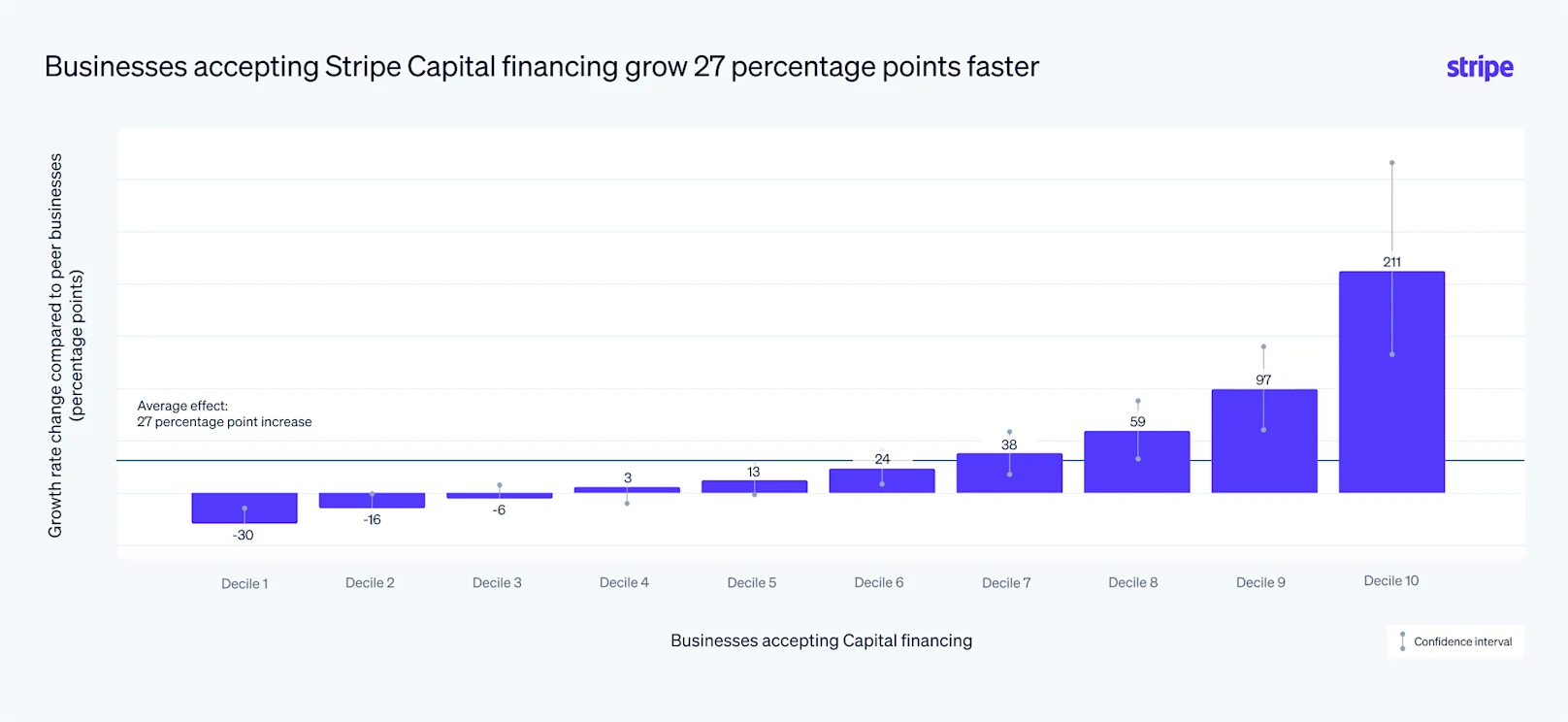
Payments adoption at scale opens the door to additional products—and further stickiness. Commerce platform Shopify now offers embedded finance products like payments, capital, banking, and charge cards. Toast began as a restaurant point-of-sale system and added payroll, bill pay, and capital.
At Sessions, Obi Omile, CEO of theCut, a booking app for barbers, shared how Stripe Capital helped his own business grow—and how he quickly realized the thousands of barbers on his platform could benefit, too. Within 24 hours of sending out Capital offers, 167 barbers accepted $788,000 in financing.
“We knew there was demand, but we were really surprised by the speed of acceptance,” said Omile. “Barbers were accepting offers within three to four minutes of receiving the email.” Omile said Capital helped barbers buy new equipment, navigate seasonal slowdowns, and advertise their shops. “We continue to hear the same three things from our barbers: Capital helps them grow their business, build resilience, and expand.”
The moat doesn’t have to be strictly financial. Moxie embeds compliance tools into its platform so medspas don’t risk losing their licenses. Slice negotiates wholesale rates on pizza boxes for restaurants.
These are also the kinds of services that are difficult for a new AI-native competitor to offer from day one.
3. Vertical SaaS is finding success offering its own AI products

Stripe CRO Eileen O’Mara (left) with Byron Deeter of Bessemer Venture Partners and Tidemark’s Dave Yuan during a fireside chat at the SaaS Platform Leaders Summit at Sessions.
While building beyond software creates durable moats, platforms aren’t ceding the software layer either: 87% of SaaS platforms we surveyed say AI is more of an opportunity than a threat, and they’re moving quickly from experimentation to monetization.
Bessemer partner Byron Deeter pointed to Canva and Intercom as examples of non-AI-native platforms accelerating growth by adding agentic tools—Canva AI, a prompt-based design suite, and Fin, an AI customer service agent. “To me, the anxiety and fear around AI should be overshadowed by a ‘think of what we can do now’ mindset.”
Top vertical SaaS platforms are adapting. Toast IQ anticipates local food trends, so restaurants can plan menu changes or improve marketing. Quipli auto-generates leads for equipment rental dealers when new permits are filed. Clio’s AI assistant helps lawyers draft documents, summarize case files, and surface client insights.
Tidemark founder Dave Yuan framed it as simply meeting customer demand: “Your customers want agentic solutions from you. They want agents that help them do their jobs, that automate the drudgery work they don’t want to do.”
4. AI pricing is an active experiment
How to price and monetize those AI features is harder to pin down. Eighty-six percent of SaaS platforms with AI features are now charging for them, but 44% expect to make multiple pricing changes in the next 12 months as they work through the right model.
Some are bundling AI features into existing SaaS fees; others are breaking them out as stand-alone products through usage- or outcome-based pricing. Yuan’s advice: test before committing. “I see a lot of temptation to bundle in AI features, and that can make sense if you’re trying to get people to upgrade or use more of the product,” said Yuan. “But the biggest litmus test of whether you’re adding value is if your customers are paying for it, so platforms should consider charging for AI features in a premium tier or charging for them separately.”
5. Platforms are expected to lead the way on agentic commerce
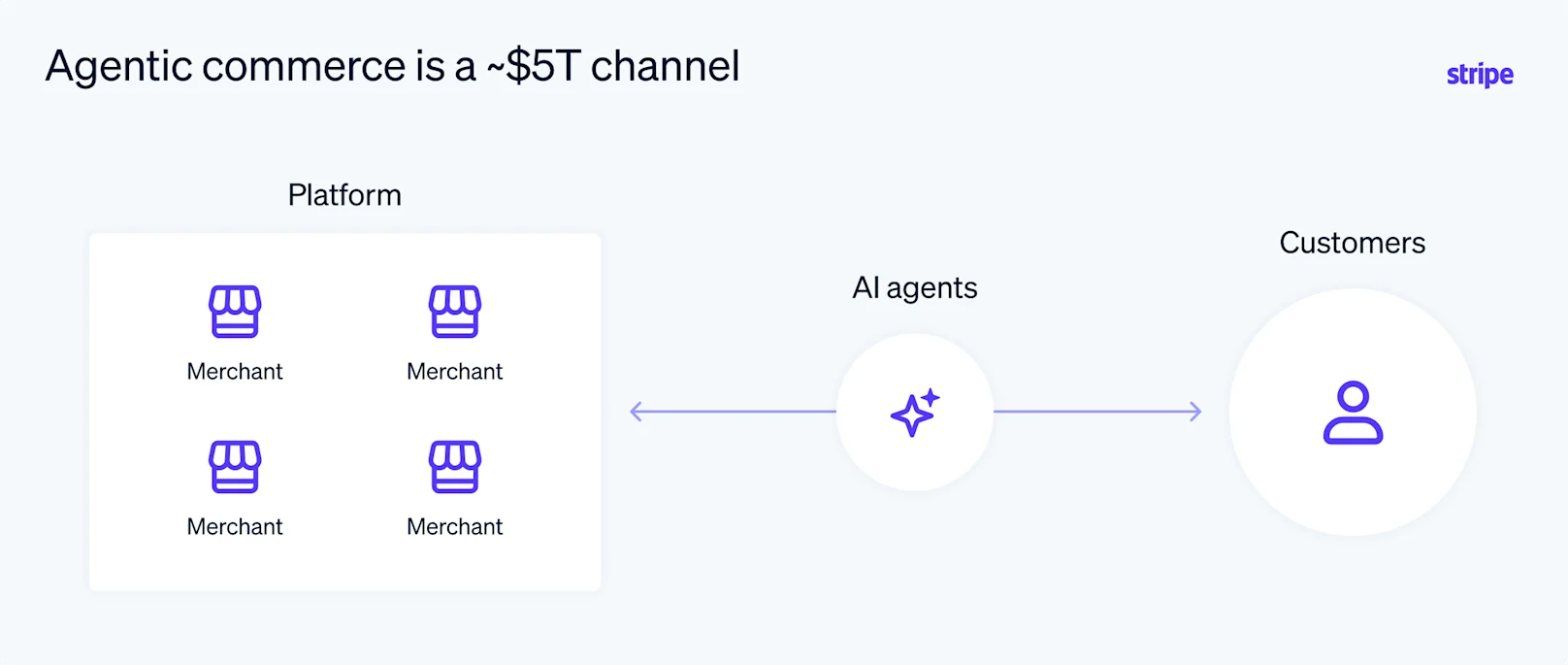
Agentic commerce is changing how transactions happen, with AI agents taking a more active role in how purchases are discovered, decided, and completed. Platforms building that infrastructure today—from agent-readable catalogs to headless checkout APIs—are designing for the $5 trillion agentic opportunity.
For retail platforms, the challenge is more fundamental. “There’s a real challenge with the quality of retail data, and all of it has been optimized for human shopping channels and SEO,” said Dirk Hoerig, cofounder and managing director at commercetools. “The customer is now changing how they search. Instead of looking up ‘gray jeans,’ they’re typing, ‘I’m looking for an outfit I can wear for a speaking engagement—what do you recommend?’ That context is becoming far more relevant in agentic discovery.”
WooCommerce, Commerce, and commercetools are working to make their merchants’ catalogs discoverable and purchasable on popular LLMs, which requires rethinking how product data is structured.
What agentic commerce looks like varies by vertical. For Playtomic, it could be an agent booking a padel court reservation end to end. Metropolis wants to automate the parking transaction entirely: AI reads the license plate, charges the card, and opens the gate with zero human interaction. In legal and healthcare, agents might play more of a supporting role, handling scheduling, documentation, billing, and follow-up while human relationships remain the focus.
The common thread across verticals is that merchants are expecting platforms to be ready for whatever agentic commerce brings. “Nobody knows which agentic surfaces will win, so we’re not betting on one channel or one rail,” said Vova Tsukur, cohead of payments at Wix. “It’s the platform’s job to absorb that complexity so merchants don’t have to.”
Building what’s next
Stripe provides the infrastructure behind some of the most successful vertical SaaS platforms in the world—from Shopify to Mindbody to Substack.
At Sessions, we announced dozens of ways Stripe supports vertical SaaS, including a Platform growth studio to help capture more revenue and a path to embed Stripe Treasury and Stripe Issuing with just a few lines of code. Vertical SaaS platforms also have additional tools to help customers onboard faster, pay expenses with cards, dispute charges, access rolling lines of credit, and become agent-ready.
Check out the full list of Sessions announcements, and watch the keynotes and breakouts on demand. Plus, sign up for a Stripe Tour event near you to meet other vertical SaaS leaders in person.