New channels on the block: Agentic commerce for platforms
Growing platform economies
Runtime
Complete form to watch full video
Hear perspectives from leading platforms in the agentic commerce space on how they’re reshaping product discovery, branding, and checkout experiences.
Speakers
Dirk Hoerig, Founder and Managing Director, commercetools
Vova Tsukur, Cohead of Payments, Wix
Lauren Garcia, Head of AMER Enterprise Platforms, Stripe
Jake Sinsheimer, GTM Head of Agentic Commerce, Stripe
JAKE SINSHEIMER: Hey, folks. I’m really excited to be here today. I’m Jake Sinsheimer, the head of agentic commerce go-to-market for Stripe. So my team looks after our relationship with merchants. That can be big box retailers, that can be consumer marketplaces, vertical SaaS platforms that are enabling merchants in all different industries. And then the other side of the role is focused on establishing and growing our AI agent partnerships. We’re super excited to announce Google and Gemini earlier in the keynote, and we own the relationship with OpenAI, Meta, Anthropic, and others. I’m here today to talk about something that will reshape how commerce works on your platforms and how your merchants do business. Just for a quick question for the room, how many of you in the last week or two have had a conversation with your team, or maybe even a little moment of anxiety about what AI or agents mean for your business or your customer’s businesses?
That’s a lot of you and about what I expected. And that’s why this conversation matters right now. We’re in the early stages of a fundamental AI-driven shift in commerce. We’re going from human-led—search, scroll, compare—maybe you open 10, 12, 15 different tabs before eventually settling on what you’re going to buy, to agents that discover, evaluate, and complete transactions on behalf of consumers and businesses. And this isn’t just some far-off future. It’s already happening. And the projected opportunity is $5 trillion. That’s McKinsey’s forecast for global agentic commerce sales by 2030. So maybe what’s most important for this room, everyone knows this, but platforms are the critical operating system for businesses of all sizes. And platforms that move early, are the ones whose merchants capture their share of that $5 trillion opportunity. We believe at Stripe that platforms will be the infrastructure layer enabling agentic commerce for all types of different businesses, of all sizes, and across all verticals.
And this space isn’t just for the largest retailers with large engineering teams and well-known brands. This is the long tail of small businesses that are the lifeblood of America and other markets, and they need our help. The merchants who chose your SaaS platform because you gave them capabilities that they couldn’t build on their own.
So where do things stand today? One of my favorite Stripe annual traditions is the annual letter. And Patrick and John shared a five-level framework on how to think about agentic commerce, sort of as, analogous to autonomous vehicles. So Level 1 is “No more forms.” I have a 14-month-old daughter, so I’ll use the example of finding her toys. I search on Google for toys for my 14-month-old, find one that looks okay, I click through the checkout page, and an agent fills out the checkout form. And it’s mostly just a glorified autofill experience.
Level 2 is more descriptive search, or where the magic really starts. So maybe I search, “Find me toys for my 14-month-old. She’s starting to learn how to cruise or walk. She loves music and bright colors. I got 50 to 75 bucks to spend.” The agent searches across a variety of different retailers and catalogs, checks inventory, compares prices, surfaces the best couple of options in a carousel, and I still make the purchasing decision and go through the checkout flow. I described a need, but the agent did the research and discovery legwork on my behalf.
Today, we’re somewhere between Levels 1 and 2. Most AI shopping is Level 1 with a chatbot wrapper, and Level 2 exists in pockets, but it’s a bit fragmented and a little unreliable. This space is genuinely nascent, and we’re weeks or months into a decade-long shift.
Level 3 is “Persistent memory.” The agent already knows. I’ve been using ChatGPT for the better part of the last year-and-a-half, it knows my daughter is 14 months old, it knows she loves that Fisher-Price drum set, it knows to avoid toys with sharp edges. I don’t need to re-explain. It shops like someone who knows my family, preferences compound over time, and it gets better with every interaction.
Level 4 is when we sort of move into more autonomy. I can delegate an agent to activate on my behalf. I sort of just say, “Order her monthly development toys, under $75, keep it age appropriate,” and something shows up at my front door a couple days later.
I set the parameters once, the agent executes and adapts. When she turns 18 months old, perhaps it even adjusts without being asked. And it can go ahead and anticipate what our needs are. It notices, “Hey, it seems like Ella’s walking is progressing.” It proactively suggests and pushes toys before I think to look. She says something like, “She’ll be ready for outdoor play by summer. Here’s what I’d order now.” It’s not reactive, it’s proactive. It’s effectively a personalized chief of staff for your family. We’re still super early in the journey across the five levels, and all of this will require working together. Climbing from Level 1 or 2 to Level 5 isn’t automatic. It needs merchant and platform cooperation. Agent and AI capabilities need to continue to advance, and consumer trust has to follow. And financial partners and infrastructure have to power this entire experience. The opportunity is enormous, but we’re still on the first rung or two.
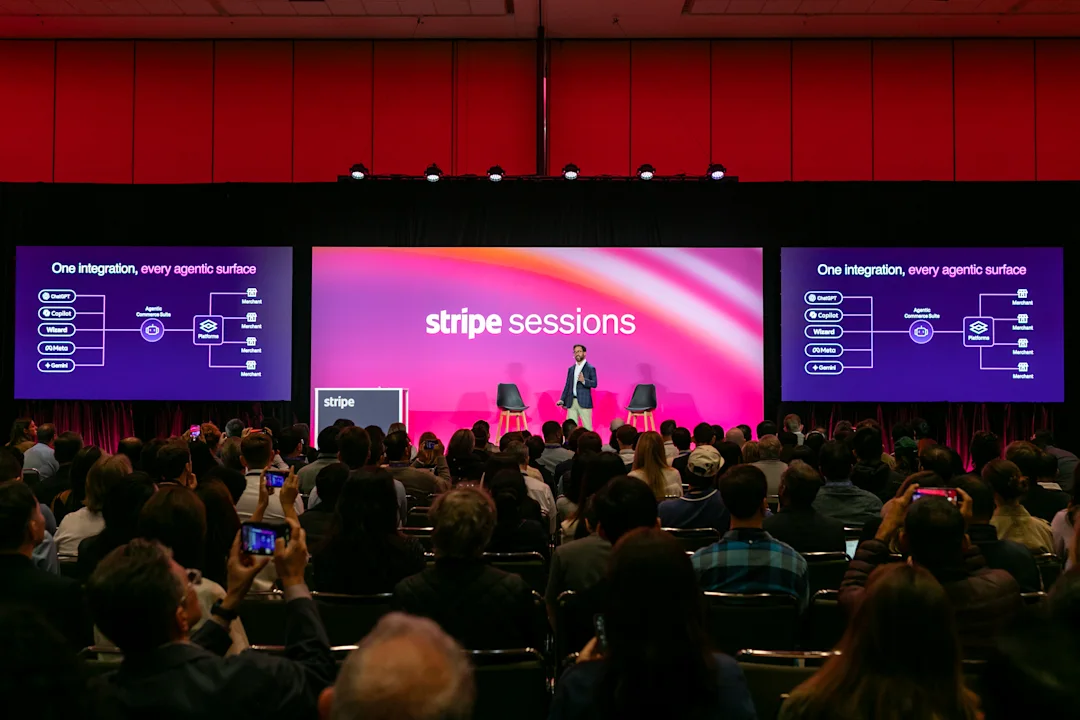
I’ve talked to a lot of platforms, and what we consistently hear is they don’t want to reinvent the wheel for every new AI channel, and they want to help their merchants acquire more customers. So we asked, “What if a single integration made every merchant on your platform discoverable and transactable across all of the AI services, today, and as new ones emerge into the future?” So that’s what we’ve built: the Agentic Commerce Suite, ACS for short. It’s one integration in every agentic surface. Stripe effectively serves as the translation layer and enables new agent integrations seamlessly as they emerge. We’re plugging in platforms that can enable their merchants to sell across ChatGPT, Microsoft Copilot, and, today, Gemini and AI Mode. We’re already live with this experience today. We have a variety of platforms who are integrating with ACS, and Wix and commercetools, who you’ll hear from in a bit, are already integrated and opening up some of these surfaces for their merchants.
We’re moving super quickly, onboarding merchants and platforms in waves, and I wanted to call out a little bit of an elephant in the room. The industry has been hyperfocused on retail, and that’s where the most mature transaction layer is, but from our perspective, agentic won’t stop there. Vertical SaaS is likely to become the critical infrastructure layer for merchants and service provider discovery by AI agents. As an example, maybe I ask my personal assistant in my pocket to book a haircut, and I want something within a mile of my house, at least four-and-a-half stars, availability between 10:00 a.m. and noon on Saturday. It could pull structured data from a platform like SQUIRE because SQUIRE has machine-readable, structured data around availability, services, pricing, location. So if you run a vertical SaaS platform for salons, for fitness studios, home services, everything we’re walking through can and will apply to you and your merchants too.
So where should you start? First, you need to be deliberate and develop an AI commerce strategy, and sit down and figure out who are you going to partner with, what data assets do you have, and how are you going to architect?
Number 2 is “Organize your information.” You need to sort of figure out what data that you have from those merchants, and how are you going to package that together to help them become AI-readable.
Number 3 is “Assign ownership of AI-specific work.” The good news is this person probably already exists in your organization. It looks like an enterprising product manager, maybe it’s even a senior leader like your CIO, or maybe it’s a savvy ops lead. It just needs to be someone, you need to identify them, and then they can drive your organization forward.
And fourth, you want to make sure that you’re adding value on top to make your merchants products agent-friendly. You want to layer high-fidelity metadata, things like rich descriptions, structured attributes, photos, third-party reviews. Agent readiness should be a default output of your platform, not something that merchants have to think about or do themselves. They should just click a button and expect that their sales will increase. Every merchant should benefit automatically. Their products get recommended over local competitors whose platforms left this to the merchant. So this isn’t just a new buy button. It’s about your platform becoming the infrastructure that powers how merchants sell in an AI-first world.
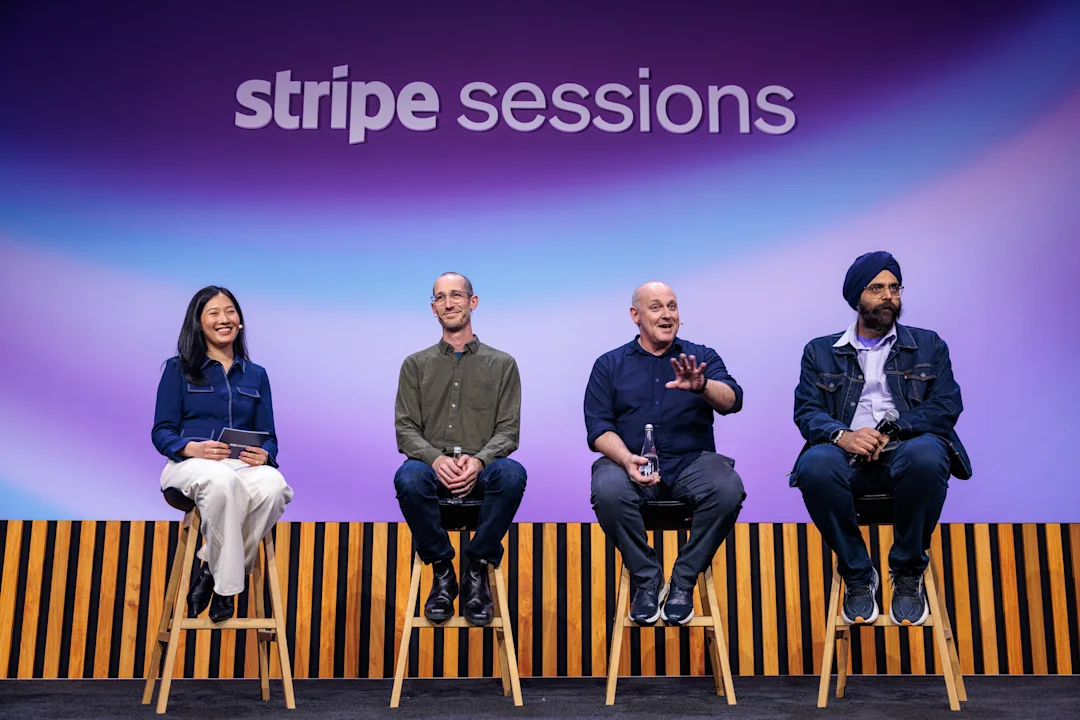
The best way to understand this is to hear from platforms already building for it. And so I’m pleased to welcome on stage my friend Lauren Garcia, who leads our work with SaaS platforms on the cutting edge of innovation, and she’s bringing on our fantastic partners, Vova and Dirk, from Wix and commercetools.
LAUREN GARCIA: Thank you, Jake. I am so excited to be here and having this conversation with both of you today. There’s obviously a ton of momentum happening around the topic of agentic commerce, but we get to spend the next 20 minutes with some folks that are actually on the ground building it. Before we dive into their real world strategies, let’s take a minute to do some quick introductions. Vova, I’m going to start with you. If you could share with the audience a little bit about your role at Wix, and give us the very brief, if you can, elevator pitch on where Wix is in your agentic commerce journey today.
VOVA TSUKUR: First of all, I want to say hi to everybody. I hope you are all in a good mood and energetic mood just like me today. So my name is Vova Tsukur. I am leading payments at Wix. I think many of you have heard about our platform, but, basically, we are a leading platform for creating websites and also web applications. We are also owning Base44 product, which is growing like crazy in the last year. And I’m responsible for all things payments. Over 300 million users are on our platform. Over 1 million businesses are running on top of it because we’re also a business operating system in addition to the creation platform. Processed around 14B in 2025. So majority of our merchants are actually small, in the smaller fraction of the SMBs, in a smaller size amongst SMBs. And we started our agentic journey back in 2024, did a lot of crazy things in 2025. We’ll talk about it.
LAUREN GARCIA: Yes.
VOVA TSUKUR: And I’m happy to, again, repeat, not to announce, because it was already announced, to repeat that we are live with Stripe ACS right now, which is super exciting.
LAUREN GARCIA: Very exciting. Thank you so much. Dirk, over to you.
DIRK HOERIG: Yeah. Hi, everybody. My name is Dirk. I’m a cofounder and managing director at commercetools. First, thanks to all of you for staying here. I think the lunch hour has just begun, so I know we have some hard competition out there. So give it 30 more minutes. I think we will make it exciting. So quickly about commercetools for those who don’t know it, commercetools is a headless commerce platform provider, basically helping companies run outstanding shopping experiences across all touchpoints. We are doing that for the enterprise market, so companies like AT&T, Sephora, Ulta Beauty, Lego, BMW, and so on, are running on our platform. We recently crossed a hundred billion of annual GMV, making us one of the largest commerce infrastructure providers globally out there. So what we are pretty proud of. And now talking about agentic commerce, we also, similar like Wix and Vova, started our discovery journey end of ’24, then did heavy investments in ’25, starting with MCP servers on top of APIs, built some on-brand shopping assistance.
And then the protocol started to evolve, and things started to become a little bit more chaotic for the brands and retailers out there. We said, “Okay, can you help us here?” So we started with the adoption and had been very happy, when then Stripe approached and said, “Hey, we are actually working here on an integration layer. Let’s partner together.” So, happy to announce, as you have heard earlier today, we are a launch partner of the Stripe ACS, getting now the first customers live also within the next couple of days. Yeah. So, looking forward to what’s coming next.
LAUREN GARCIA: Absolutely. Well, thank you both for your partnership, and also congrats on the incredible success that you’re driving across each of your platforms. Vova, I want to start with you, taking it back, you said to the year 2024, can you tell us a little bit about when you first got that signal that agentic commerce was something that Wix absolutely had to invest in?
VOVA TSUKUR: So basically we, of course, we decided to move back in 2024, when we saw all things happening with AI and also shifts in commerce and shifts in behaviors. We decided that we don’t want to sit on the sidelines. We actually don’t want to see how other products and experiences emerge, and we are not there. So we were looking for design partnerships actively in 2024 and also in 2025. So I can say the move was primarily driven by conviction.
LAUREN GARCIA: Conviction.
VOVA TSUKUR: And less by the data. I cannot say it was not driven by data. Of course, we’re looking at the data, but when somebody is approaching you and telling you what’s going to be the final product? Who will use it? What’s going to be the scale? You cannot be 100% pixel-perfect on the answers. So in the first rounds, as you move, you need to be more a believer rather than the factual person. And I think it’s important for me also to mention that we, platforms—commercetools, Wix—we exist in order… We exist because SMBs cannot produce everything they need to run the business by themselves. So we have a saying internally: “Let the baker bake.” So we understood the opportunities there. We understood that it’s an opportunity to create a much better user experience, and, yeah, decided to invest like crazy.
LAUREN GARCIA: Okay. I want to come back to that point of data versus conviction because I imagine that was probably pretty difficult to sell into your leadership team on conviction alone. But I also want to hit on the point that you made that it was really solving complex problems for your merchants, right? Which is at the heart of what you’re trying to do in that you saw that that was the world where AI was going and how AI could only help you accelerate that.
VOVA TSUKUR: Absolutely.
LAUREN GARCIA: So really interesting points. Dirk, I’d love to talk a little bit more about, this is a big shift for you internally. How did you think about structuring your teams once you made the choice at commercetools to invest in agentic commerce? Was there a particular head of AI that you put in place, or did you think it about maybe a more cross-functional rework?
DIRK HOERIG: Yeah, we actually did multiple things and probably all of it. Maybe let me get one step here, also to what Vova said. We had been convinced that the customer journey is going to change, and that conviction, similar like I think Wix got it, got to that point early ’25, where I spoke to leaders of large retailers, many of our customers, and they told us, “We see a change in traffic pattern, both what’s coming to our website and also already on page behavior.” And that’s now almost 14, 15 months ago. And so we believe similar as Jake has shown it, that the market is going towards a $5 trillion opportunity. We came to similar forecast mid of ’25, believing that by the end of 2030, roughly 30% of the market will be in some way affected by agentic shopping. And that is all of ecommerce in 2020.
So just if we put that into perspective. So as a platform provider, because our mission is to provide a future-proof platform to all of our customers. So if you want to be future-proof, and you say, “30% will happen there,” you need to go all-in or nothing. So, therefore, yes, we defined a product ahead of AI role that’s dedicated. And we said, “We need to have dedicated role or teams that are just focused on the agentic shopping part of it.” So for example, that are working with your teams on the ACS partnership and integration, then we have cross-functional teams because AI is not just happening in one team, and agentic also not. So yes, in every team, there’s something of that, but last but not least, is probably as important that you make it a C-level priority. So we said, “Okay, we need to own that. We need to drive the strategy.” So I took the hat on that, said, “Okay, I need to run our, both internal, external AI and agentic shopping innovations.” And then we enhance the team. So we have a business development role for that, we have a partner role for that, and so on. So it got broader over the last year, but similar as Vova said, it’s a heavy investment that you have to do to also then make it less of an investment for your customers.
LAUREN GARCIA: So, following the data, but then also thinking about starting with the core infrastructure with your product team, and then how did you scale out from there and making sure that you had a lead AI person across each of those cross-functional teams with that?
VOVA TSUKUR: I want to chime in with a quick comment. Our stories are very similar in this regard, and, actually, like this whole thing around agentic commerce in the companies are usually not driven by the head of AI. These are driven by the product and business people. But AI, your people who are like really proficient in AI, they’re definitely participating, and we have internally, we’re calling it the “heart of AI.” So the person, his name is Ron by the way, many things that are happening inside is because of his involvement and because of his drive. So having those people on the team is super important.
LAUREN GARCIA: Some frontrunners, some leaders that are then infiltrating it across the org?
VOVA TSUKUR: Yes. Yes.
LAUREN GARCIA: Okay. Dirk, I want to come back to you for a second because this is obviously a huge shift for the platforms in the room, but it’s also a huge shift for your merchants. We heard from Will in the keynote today that product catalogs as we know them today have been designed for human search, not necessarily for agentic search. So how did you see that shift take place, and how much of that did you decide to take on as a platform that you needed to own in that change versus how much your merchants actually had to take on?
DIRK HOERIG: Yeah. This is actually a big challenge, I would say, for literally every merchant that’s out there. It’s the quality of the data. So we, for example, help our customers manage over 200 million products across all of our catalogs, plus pricing, inventory, and so on. But all of that data had been optimized for the human shopping channels. And of course there’s SEO and so on, but as the customer journey is changing, and also what their consumers are now typing in looks way different because it’s not, “Okay, I need,” I don’t know, “a gray jeans,” with that criteria. No. “I’m looking for an outfit that I can go for for Stripe Sessions. What do you recommend me?” And that type of information, all of that context data, isn’t there yet. And this puts pressure on the brands and retailers. I think this data problem, I now spend 25 years in commerce.
And the first day, what I learned is data is becoming a problem. So our data is not good enough. Now 25 years later, data is still not good enough. I hope this is now probably the last wave that we are going through. Who knows? But, as platforms, I think our role here is evolving. It’s not any more about, we have seen from Jake and from the Stripe letter, these five steps of [agentic] commerce, getting rid of forms. It’s not only about getting rid of forms. Also, to the marketing teams and to the catalog teams, it’s also helping them to enrich the data because we are now becoming system of records, and we have to become systems of agentic execution to get that job done. So therefore we started to evolve our platform, provide agents that are helping them with the catalog enrichment and so on.
Yes, there’s still a lot of work that brands need to do, and they need to care about their own products, but I think we as platform providers can help them significantly getting better there.
LAUREN GARCIA: So like really writing the rules and shaping kind of the infrastructure that your merchants needed to adapt to for that data collection. Vova, anything that you would add to that?
VOVA TSUKUR: Yeah, there are many things which are overlapping, and there are things that I would like to add. I definitely agree with the point that we as platforms are responsible on helping merchants to make sure that they are well discoverable in the new world of agent commerce and the new. It’s not just a new channel; it’s a completely new experience. So we definitely can produce tools, again, AI-based tools, that would hint them, that will help them to actually get there. I want to say, especially it’s important for us because our merchants are smaller, and their products can look like a super small role—
LAUREN GARCIA: Probably difficult to discover.
VOVA TSUKUR: Yes, in a very big spreadsheet. So this is one thing that I wanted to point out. Another thing that I wanted to point out, which is really interesting, and we have not been talking yet about it enough, I think, is every merchant has certain code of conduct—the policies, the tone of voice, how he or she talks to the customer. And, actually, the agent who is representing that merchant, we see that it needs to incorporate those principles, those strategies, that way communication, it’s needed for both agents on the other side, but also needed for humans. So we see a big opportunity here, and this is the challenge that I think we’ll be able also to solve together with other platforms. And it’s definitely the platform responsibility to help merchants get there. Another thing which was also voiced over in the beginning of our overall talk was about services. We don’t see only ecommerce and like only retail as the forefront of the agentic experience. We actually want more and more experiences to be discovered and paid for and booked like bookings. So this is another challenge we are actively looking at. Even though we are horizontal SaaS, this is very interesting for us because we see all type of use cases out there.
LAUREN GARCIA: And how have you both felt that your merchants have been able to keep up with this? Have they been excited about this? Has it been somewhat overwhelming?
DIRK HOERIG: I think it’s both. Everybody’s excited and everybody is similarly overwhelmed, probably like everybody here in the audience. So it also had been, this morning, been amazing, the pace now of rollouts that are happening at Stripe, also at all of our companies, but you need to be able to follow up with that. And I think that we are trying to do a good job on helping our customers to embrace that pace.
LAUREN GARCIA: We’re all learning at the same time. Vova, you all are obviously very much still in your building journey. I don’t want to assume by any means that you’re anywhere near done, but as you think about where you’ve come thus far, what’s been the single biggest hurdle that you’ve had to overcome to get agentic off the ground?
VOVA TSUKUR: So basically for us, it was very hard, even though we solved this challenge, but it was really hard for us to get the priority on this whole thing internally, because again, we are the creation platform. We are not the ecommerce platform by definition. But we saw an opportunity. So we built a case, we united the teams inside Wix to make sure we had like removed the walls between… You also talked about it before that you had to remove the walls to create like certain force that is dedicated to that effort. And we did that. Also did the pitch to management, make sure it’s an internal program. And this whole path was not easy. And Ron, the person I mentioned before, he played a key role here. So that was the first challenge that I wanted to outline and probably the biggest. I’m happy to say that we solved it early enough, and that’s great. We are in the good place right now.
Now then other challenge is—which I think is important for everyone here in the audience—is how we as platforms are thinking about the next steps. Not just about the immediate next step, which is having agents talking to each other and selling, but questions like, “What is happening to the brand voice of the merchant?”
LAUREN GARCIA: I think probably closer to that like fifth point on Jake’s scale, right?
VOVA TSUKUR: Yes, yes, yes, yes. And here, really the organizational muscle I think is being tested really hard on how you can adapt, how you can pivot, how you can figure out the problems, but also actively think about solutions for those problems. And it’s important to start that process early. We are all got used, I think, to moving before AI times, to moving slower and thinking about, “Okay, we’ll wait. We’ll see how things will evolve, and then we’ll jump onto the ship.” The problem is we are accumulating risks with that approach and not accumulating knowledge and learning with that approach. So it’s really the time to shift it. Either we’re talking about agentic commerce, or we are talking about transforming our companies to be AI-native companies in terms of how we work.
LAUREN GARCIA: Okay. I want to come back to a point that you made earlier on, which was this idea of conviction and data, and that you mentioned the biggest hurdle that you had to get this off the ground was actually getting your leadership to kind of understand the value. How did you all think about that? How did you sell in the ROI when there maybe wasn’t necessarily a big number to put up on screen in the early days?
DIRK HOERIG: Well, from my perspective, there was a big number because we also put this $5 trillion opportunity in front—
LAUREN GARCIA: The $5 trillion.
DIRK HOERIG: And from that, that is the opportunity, right? So the question is always, if you are not doing that, then somebody else will go in there. Then it’s their opportunity.
LAUREN GARCIA: By the prize lost if you’re not jumping in now.
DIRK HOERIG: I think a challenge—and we spoke before about that—for both of our companies, and probably everybody in the room here, is you need to get comfortable to develop towards the unknown, and you need to do that also with conviction and at speed. And this is not how normally product development works. So, a couple of years back, it was, “Okay, we have our cycles. We plan in quarters. Then we have the biweekly sprints,” and so on. And now, you don’t know what’s being launched in two weeks and three weeks, but it might change your roadmap completely, and your teams need to get used to that kind of pace. And this is a mind shift change.
LAUREN GARCIA: Yeah, that’s a huge mind shift change. I want to pivot a little bit. Agents, they surprise us every day. Dirk, when you all have been going through this process, has there been a moment where either an agent has surpassed your expectations or done something wildly unexpected?
DIRK HOERIG: Yeah. Yeah. So probably many of you have built agents in their company, also made that experience. So for us, it started, for example, when we built a promotion agent. So promotion is a pretty important topic when you run a commerce platform, and we wanted to make the process easier for our customers. So we said, “Okay, let’s agentify some of the steps, taking the UI part out of it.” The surprising piece was when we then played around with that, already after a week after launching it, it had been able to create promotions that our platform before wasn’t capable of because it was limited to UI flows, and we have not had these UIs available for some complex kind of things. They had been in our backlog, and the product team had been asked to do them, but it would have taken them weeks. But the agent doesn’t need UI, right? So it just needs API access. You tell the agent, “Hey, this is my campaign. This is what I’m planning. This is my problem. Now help me optimize it.” Could create it. And this, then, got us afterwards rethinking how we actually further develop our whole software stack going forward.
LAUREN GARCIA: Oh my goodness. I’m curious, when you came upon that moment, have you now thought about, “how do I scale this? How do I take this kind of accidental surprise that ended up being a really positive thing and try to find more opportunity for it?”
DIRK HOERIG: Yeah, absolutely. So, for us, it’s all about, now, agent orchestration, so to providing a platform to our merchants that actually help them run their business—not do their business, right? So instead of them doing the promotions or running analyzers and so on, being able to orchestrate any kind of first-party, or third-party, agent that are running across the commerce stack. And so we officially haven’t announced that, right? So it’s going live in a few months. So, therefore, it’s a little bit of a sneak preview here, but this will be one of our big product launches in some of this year.
LAUREN GARCIA: Okay. Incredible. All right. Vova, I want to go back in the time machine, back to 2024 again when you all were just starting this journey. I imagine there were lots of pieces of advice that you were getting at that time, but if you could think to yourself, what’s one piece of conventional AI wisdom that you wish that you would have just thrown out the window?
VOVA TSUKUR: So I wouldn’t listen to the people who would say, “You have to wait to see how the ecosystem will emerge.” It’s very easy to sit on the sidelines. “Look, you have things to do, you have features to release, you have products, existing products, to take care of. Things will settle, dust will settle, then start hopping onto this journey.” And this is very much conventional wisdom back in time, and we decided to say, “Thank you, but no. We’ll still approach it.” Yeah. And it proved to be a really good investment because it also taught us. As an organization, as a company, even though we’re not doing it from time to time, but that point in time was pivotal to do it again for the flexibility and speed in how you approach new opportunities that are coming up in the market.
LAUREN GARCIA: Okay. Yeah. I know when we were chatting before, you mentioned, “You have to be in the water to catch the wave.” And that was like a big push for you all to make that decision.
VOVA TSUKUR: Exactly. Yes. Yes. You have to be in the water, absolutely, to catch the wave. By the way, I heard it—I’m a part of the trading community—and when you are trading stocks and things like that, or when you’re investing, you need to have something, you cannot choose an ideal entry point, okay? And they say, “You have to be in the water to catch the wave.”
LAUREN GARCIA: Okay. I love that. All right. In 30 seconds or less, just to kind of close us out here, and, Dirk, I’ll start with you. Could you paint us a picture of what’s your future ideal state for commercetools as a platform?
DIRK HOERIG: Yeah. So I think we did a good job for the last 10 years on being the most modern platform in the enterprise, helping our customers to embrace all touchpoints. I think if we can do that for another 10 years, helping our customers to embrace all existing human-led and also all future agent-led touchpoints on one platform and making that all of them, for them accessing easily, then I think I’m quite happy.
LAUREN GARCIA: Love that.
VOVA TSUKUR: So I will speak on behalf of the user, not on behalf of the platform, and we’ll explain the role of the platform through the user need. So I see that our users, SMBs, either small or medium-size or really big, should have a solid representation in the new agentic commerce world, where they have an agent against which others can transact. And they have it available and reflecting their brand voice, and reflecting their code of conduct, and suggesting all kinds of promotions and other things to buyers and shoppers in the way that the SMB, the business owner, doesn’t have to lift a finger. If we can get there for the majority of the shopping experience, either it’s retail or it’s vertical SaaS with booking services, I think our merchants, our customers, will be in a good place and we, as platforms, will also be in a good place as a result.
LAUREN GARCIA: Okay, fantastic. Well, I think that is a perfect place to leave it. Thank you all so much for your time. We hope you enjoy the rest of Sessions.