A conversation with Sam Altman
Keynotes
ระยะเวลา
กรอกแบบฟอร์มเพื่อดูวิดีโอเวอร์ชันเต็ม

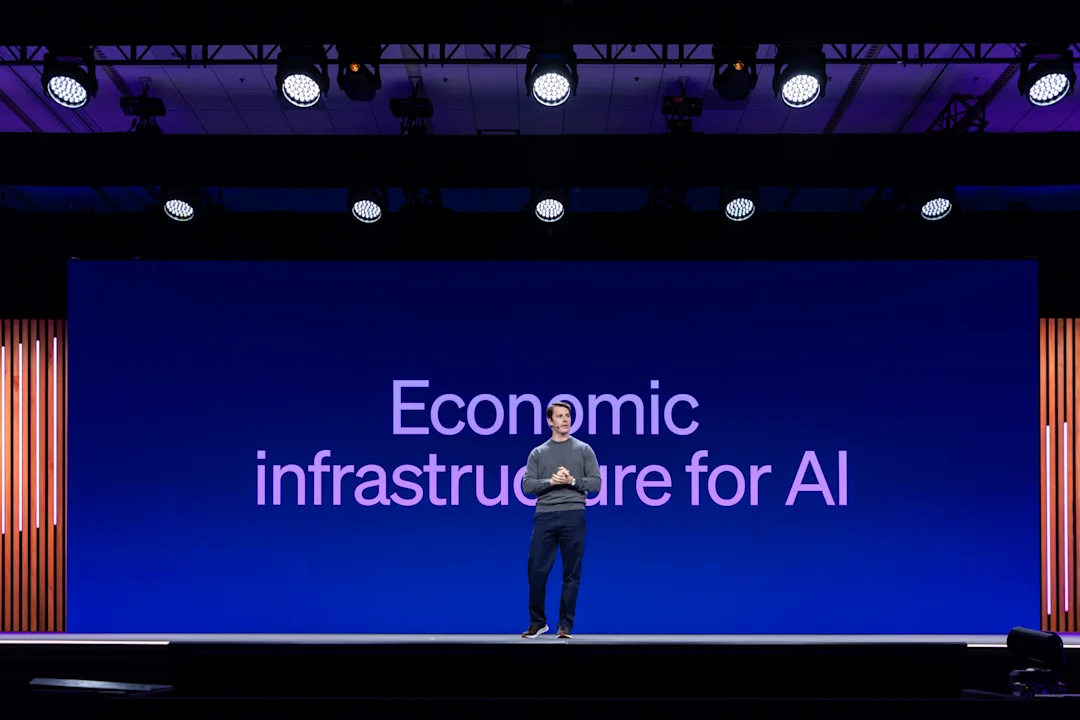
Sam Altman cofounded OpenAI in 2015 and became its CEO in 2019. He joins Patrick Collison to talk about what’s next for AI and the internet economy.
Speakers
Sam Altman, CEO, OpenAI
Patrick Collison, Cofounder and CEO, Stripe
PATRICK COLLISON: Good evening, folks. Really hope you’ve enjoyed the announcements and the sessions over the course of the day thus far. So I’m extremely excited about this interview. As you know, I was due to be interviewing Greg Brockman, who was a very early Stripe employee and then a cofounder of OpenAI. But AI is a dynamic space, and there’s a lot happening. And so we’ve made a slight substitution. And so instead I’m going to be interviewing somebody that I’ve known for a long time. I was just counting backstage. I think I’ve known him for 18, maybe 19 years. He was actually Stripe’s, one of the very earliest investors in Stripe. I think maybe Stripe’s second or third investor. And he also cofounded OpenAI in 2015. So please welcome to the stage Sam Altman.
All right. I think we have some Codex fans in the audience.
SAM ALTMAN: Love to hear that.
PATRICK COLLISON: How’s the week going?
SAM ALTMAN: So fun. It’s a busy week, but I’m happy to be here. This is an unexpected surprise.
PATRICK COLLISON: Well, thank you for joining us. We appreciate it. So we opened this morning by saying that we’ve kind of arbitrarily decided that the singularity started on January 1st and thus today is day 119. What do you think of that?
SAM ALTMAN: It does feel like we are somehow in the takeoff. Day 119 feels like a reasonable enough guess. Yeah, I won’t fight it.
PATRICK COLLISON: So we’ve started to see a bunch of our metrics inflect as of late last year, beginning of this year. I mean, things were kind of doing well, but somehow the shapes of the curves changed. They really went parabolic. Is that matched in what you guys see? Was there some trajectory change around? Why are we seeing this?
SAM ALTMAN: I do think the models got really good, especially for coding, but really good in general starting late last year, very early this year. And at least in my own experience of using this technology and seeing what other people are doing with it and also this sense that every week is now a little bit different than the week before. It’s just like a lot happens very fast. It seemed to all correlate with the models hitting some threshold.
PATRICK COLLISON: And why did coding models suddenly start to click over the last couple of months? Was there a research trick? Was it just got enough code data in the pre—why did it suddenly start to work?
SAM ALTMAN: Yeah, it’s a great question. We wondered a lot about why kinda several people cross that threshold at the same time. I’m sure it’s a number of factors, but model intelligence, just the raw kind of reasoning horsepower, enough of a feedback loop of people using it for code to figure out where it was good and where you needed to improve it. Enough data. I think it was like all of these things. And then also there was like a, like many other endeavors, once you know something’s possible, it’s much easier to go do it with vigor.
PATRICK COLLISON: And so it seems like Codex is kind of having a moment right now.
SAM ALTMAN: It crossed some subjective threshold for me with the latest app updates and 5.5. And this is also, it’s quite hard to say why right now and not a little bit sooner or why not the next model, but one of the things I have learned about the history of all of the things we’ve put out is it is very hard to say why this particular thing was the thing that worked. And this goes back to ChatGPT. Why was GPT-3.5 the thing that got over the threshold where most people went from saying not that impressive to like going to change the world? And why not one model earlier or later? I really can’t explain it. You just kind of feel it. And I’ve had two inflection points with Codex. One was kind of with GPT-5.2 and then a really big one in the last few weeks where it’s like, okay, this is going to be the primary interface to a computer for me.
PATRICK COLLISON: And is everyone using it for coding or are you starting to see usage diffuse into other domains?
SAM ALTMAN: I think the most adamant users are still using it for coding, but there’s been just this tidal wave of people coming into Codex recently and I’m really trying to understand what has happened that this is—causing this and the depth of what people are using it for or starting to use it for has surprised me. So certainly our ambition is for it not just to be about coding, but to be about all the work you do in front of a computer. And I would say we’re maybe like 10% of the way there for the non-coding stuff, but now that we see what’s happening, now we have a real user base sort of using it in these other ways, I think we’ll get good at it very fast.
PATRICK COLLISON: What do you think will be the next domain that subjectively feels like it has this big unlock after coding? It’s going to be spreadsheets, will it be performance reviews, what’s it going to be?
SAM ALTMAN: So I think there will be a lot of... First of all, I do think coding’s a little bit special, and these models are a great fit for coding. The world needs so much more code than currently gets written. There may be no other domain that is quite like coding, but there will be a lot of others that I think are close. But the next kind of coding-like thing that I think will happen is not any specific domain, but the realization of how much time people waste trying to use a computer and the idea that you can do a huge percentage of your day in a very different way and maybe you don’t realize how much time you spend clicking between messaging apps and copying and pasting stuff and responding to very boring things that you could clearly automate once, but the degree to which most people will realize they can sit back and watch an AI do most of their drudgery is going to surprise people.
And in my own experience trying to work that way actually gives me much more enjoyment of work. I didn’t realize how much the little stuff drags me down, gets me out of a sort of happy flow state or whatever. So the subjective quality of life improvement is huge.
PATRICK COLLISON: Are you an OpenClaw user?
SAM ALTMAN: I am.
PATRICK COLLISON: OpenClaw users here?
SAM ALTMAN: We have some good news for you all coming.
PATRICK COLLISON: You can just tell them.
SAM ALTMAN: OpenClaw has been one of my biggest, like, this is magic AGI moments ever in the field. I remember the first time someone told me about it, they were trying to explain it and I was like, “OK, that all sounds cool, but I can make a lot of that work.” And then it was a real reminder how when the models cross some threshold and also the product designer gets a handful of critical ideas really right, it’s like a much more magical experience than it sounds like.
PATRICK COLLISON: I find I’ve been an attempting OpenClaw evangelist and trying to describe it; that experience that you just recounted to others. I find it a difficult experience to communicate. I mean, it sounds kind of prosaic, right? It’s a stateful ChatGPT session that can also make some use of tools and so forth.What do you use your OpenClaw for? If we scrolled your message thread, what do we see?
SAM ALTMAN: So this is like a very embarrassing thing to admit. The thing I always try first—
PATRICK COLLISON: The perfect place.
SAM ALTMAN: The thing I always try first with a new kind of AI system of any sort is to—I’m like a home-automation nerd. And so to try to build a better home-automation interface system, because it never works.
PATRICK COLLISON: Never works.
SAM ALTMAN: It never is good. And OpenClaw was the first time that I was able to get a setup that I was happy with. I also built a messaging app that I had always wanted to work. I’ve since switched it to something I built with Codex, but OpenClaw was the first time I was able to—I’m sure like you—could just feel like drowning in messages and it’s like this very unpleasant task to wake up in the morning and have to go through all this stuff. So I was like, “All right, I’m finally going to be able to automate this.” And that was like, again, should have been doable with previous systems, hard to explain what it’s like when it all actually just works and you trust that it’s going to work.
PATRICK COLLISON: I was testing the new Link CLI that we just launched today in preparation for launch and I asked my agent to... It means you can easily get a single-use card they can use on any business. And so I asked my agent to go and buy itself a gift, just anything on the internet for under $20. And it chose to buy itself an HTTPZine from Gumroad.
SAM ALTMAN: Wow. Yeah. There’s all this stuff that feels, no matter how convinced you are intellectually that this is not a real thing wanting a real gift for itself. And no matter how much you’re convinced, OK, this is like a weird emergent behavior and I’m not supposed to read into this. There are these things that feel a little strange. We’re going to have a party for GPT-5.5 and I wasn’t quite sure we’re going to invite people who were big users and whatever, and I wasn’t quite sure what to do. And so on a kind of whim, I was like, I’m going to ask 5.5 XX-high what it would like for a party for itself this morning. And I did, and it was this sort of like beautiful set of things including like, here’s what I would want for the flow of the party, here’s what I would not want, you should do it on May 5, that would be funny. I would like only a short little toast and I want it not to be by me, but by the people that built it, I would like a big central suggestion for 5.6 and I would like you to feed them all into me and I’ll make sure we work on that. And it was—
PATRICK COLLISON: And now there’s real moral pressure on you to—
SAM ALTMAN: Well, we’re going to do it, but it was a strange thing.
PATRICK COLLISON: I want to ask you about OpenAI itself. A lot of crazy OpenAI, it’s now—
SAM ALTMAN: I am aware.
PATRICK COLLISON: It’s an 11-year-old organization now.
SAM ALTMAN: Somehow feels like so much longer than that, but yes, I get—
PATRICK COLLISON: Just over 10, I guess.
SAM ALTMAN: 10, yeah.
PATRICK COLLISON: 10 years, a long 10 years.
SAM ALTMAN: I can’t remember pre-OpenAI life that well at this point. It feels like it’s been so long, but yes.
PATRICK COLLISON: You have a singularity looking forwards, but also a singularity looking backwards. So what’s the craziest OpenAI story that’s never been told?
SAM ALTMAN: I mean, it sounds so prosaic relative to the crazy drama that’s happened, but there was this period after we had finished training... I guess there’s two that are kind of similar, but the one that just came to mind was after we had finished training GPT-4, there were about eight months before we released it. And so there was this eight-month period inside of OpenAI where we were all using this thing. We kind of knew that it was dramatically better and different and going to unlock a bunch of things in the world and no one outside the company or almost no one outside the company knew about it. We’d walk the halls sometimes. We were like, “Are we engaging in collective psychosis? Have we gotten totally—whipped each other into this frenzy?” And there was no feedback to keep us in check or sane from the outside world. And it doesn’t sound that weird relative to crazy board drama or Elon trial or something like that, but living through it was an unbelievably strange time.
PATRICK COLLISON: What’s the Sam Altman management style? If I’m working for you directly or maybe indirectly; I’m leading some product or something. What does that look like?
SAM ALTMAN: I’m definitely not a hands-on manager. I’m very much of this style that you get great people, kind of give them a very high-level thing to point at, and try to let stuff just happen. I think there have been kind of two main phases of OpenAI and we’re heading into a third and the first one was like we were only a research company. We were trying to figure out how we were going to build AGI at a time when it sounded completely, completely crazy and we really had no idea what to do. And then there was a second phase where in addition to continuing to do that, we had to figure out how to build a product company.
Now we have to, in addition to both of those two things, figure out how to build this mega, mega-scale token factory for the world. I think of what we’re doing is building sort of a new utility and people are going to want to use a lot of tokens, a lot of intelligence, in all sorts of ways. We need to make that as smart, as cheap, as abundant, as easy to use as possible. And that will require, I think, pretty deep full-stack integration and a massive, massive infrastructure build out. The thing that I didn’t really appreciate between the phase one, phase two shift was how much my management style had to change. Running a research lab and running a product company are two extremely different things and I suspect this third phase is going to be very different yet again. And so I’ve been reflecting on if we’re going to really go do this, how I’ll have to change, and I think it’s not going to be like a natural fit for my management style. So I either have to find someone or a few people great to hire or I have to figure out how to do things in a different way, or I have to build an AI that can manage this new thing.
PATRICK COLLISON: When I interviewed Jensen here two years ago, he told me and his several thousand closest friends about his 60 direct reports. Do you have any super weird, not that that—I shouldn’t call his practices weird, but do you have any unusual practices like that?
SAM ALTMAN: I think the closest thing that I have to anything like that is I probably talk to, via Slack or whatever or text, a few hundred people at the company a day, very quick like one, two messages, whatever, not done by an agent. I actually do it, and the context I get from that sometimes is very helpful in these diffuse ways.
PATRICK COLLISON: I find there’s an interesting watershed of pre-Slack organizations, post-Slack organizations, and they’re truly quite different.
SAM ALTMAN: Totally. Like many other people, I hate Slack, but I can’t imagine having to still communicate via email or whatever we used to do—
PATRICK COLLISON: That’s roughly where Stripe is.
SAM ALTMAN: Yeah.
PATRICK COLLISON: Yeah. OK, I want to talk about, I mean, you kind of just elliptically referenced it. There’s a view that the AI labs are going to progress up the stack, gobbling up the value chain voraciously, all these things that are certainly within the software sector, but perhaps even other sectors and that there’ll be this incredible positive feedback loop and runaway and kind of hegemonic force that we should all be getting very concerned about. What’s your view?
SAM ALTMAN: I think some of them do want that. We don’t. One of the things that I’ve always admired about Stripe is it is very clear that Stripe is aligned with its customers. We make more revenue, we charge our customers more. Thank you, by the way. The partnership with Stripe when ChatGPT launched was extremely critical, and I don’t think anyone else could have scaled that quickly, but we scaled, we pay you more money. It’s like very aligned and we’re all happy and you just provide a layer of infrastructure for the internet. Internet gets bigger, you’re happy, your user’s happy, it’s clear what the alignment is.
I don’t know exactly how to do this yet, but I would like to get to a model for OpenAI that is similar. I would like us to be an infrastructure provider. I’d be happy for us to be a forever-low-margin-as-long-as-we-can-be-huge-and-growing-fast business. And I would like us to supply an intelligence meter, I don’t know what quite to call it, that companies can buy that they can use to automate things or accelerate things inside their company, they can use to build products. People can buy it, people can take it with them, and we find ways to really align ourselves with the success of all the entire gigantic distributed economic engine of the world. I believe that will work. I believe that switching costs of AI—it’s going to be hard to have like huge margins in AI anyway.
It’s like, you’ve seen recently how easy it is or many people have seen the switch from our competitor’s coding product to ours. This is actually a consequence of AI getting smarter. It’s easier to do things like this. It gets easier to just say like, “Hey, agent, go do this thing for me.” But if we can provide a utility and people build on top of that utility and we think of ourselves as that kind of a company, I think that can be quite powerful and very aligned.
PATRICK COLLISON: Well, we’re happy to share lots of tips and tricks for—
SAM ALTMAN: That would be great.
PATRICK COLLISON: …a low-margin business. So, many people have been either implicitly critical or in certain cases explicitly critical of OpenAI for procuring so much compute and I think—
SAM ALTMAN: Not the Codex users.
PATRICK COLLISON: Right, exactly. So, you, I think, were quite noteworthy for as early as, I don’t remember exactly, but in the order of two or three years ago, stipulating what at the time sounded like preposterous figures with respect to the magnitude of the buildout that would be required. And obviously the preposterousness of those figures now looks less tenuous by the day. Thoughts on compute, CapEx, the buildout.
SAM ALTMAN: Yeah, it’s going to take a lot of money. I think this will be clearly at this point the most expensive infrastructure project that the world has ever undertaken. The revenue is rampant to meet it, so people feel better about that. Also, the efficiency gains that we’ve all been finding are incredible. So we’re going to get way more out of each GPU than I thought we were going to, but as has often been remarked, the demand goes up more than linearly as you drop the price of each kind of unit of intelligence, particularly if you can drop the price and the sort of speed with which you get it back. So this question now of like, what is enough? I don’t have a good answer to. In some sense, I think demand for intelligence at a low enough price is effectively uncapped. Now I was going to say we’re not, but maybe we are. We’re not going to build the Dyson sphere and then just like cover it with data centers, but maybe we do.
PATRICK COLLISON: Space data centers?
SAM ALTMAN: Good luck with that. I don’t even think he’s that serious about it.
PATRICK COLLISON: I don’t myself think that we’re in a CapEx bubble. I’m not an expert in this. This is not Stripe’s business, but just the figures I see relative to the magnitude of demand, it looks reasonable to me. If we were in a CapEx bubble in the future, how would we tell?
SAM ALTMAN: People love to proclaim bubbles, and I can’t articulate why, but intellectually I kind of get it. It does feel fun and it feels smart. Journalists in particular love to talk about bubbles. So there’s like ample desire to write about this when anything looks a little bit silly and clearly sometimes it’s right. There clearly are bubbles, but how you can discern between the amount of time someone calls a bubble and the amount of time you’re actually in a bubble, I have never figured out how to do. In my previous career, I was an investor, so I was quite interested in trying to see if I could come up with some sort of framework for this and figure out when you’re supposed to deploy capital or not. And I never was able to figure it out. I went back and I read what smart people had said at different points in history and I was like, “Oh, they called it exactly right.” But then I read a little more and they said it like 10 more times than the 10 previous years. I don’t know. I don’t have an answer.
PATRICK COLLISON: Economists are the people who have called eight of the last three recessions.
SAM ALTMAN: But they’re so happy when they’re right.
PATRICK COLLISON: I mean, your business, OpenAI, depends in a very significant way on super talented people and the difference as I understand it between the 20th most-talented person versus the fifth most talented person versus the most talented person might be quite large and quite consequential. And then these super talented or effective people, they’re not in every case super easy to work with.
SAM ALTMAN: No.
PATRICK COLLISON: And look, some of them are wonderful people and some of them are the most fantastic collaborators and some of them are very iconoclastic and strong-willed and they get easily—whatever, just like the full spectrum of the human condition. But I guess I’m curious, in a domain that’s so sensitive to this efficacy and skill and talent and so forth, kind of intersected with all the foibles of humans as they exist, how do you think about this? Do you guys tolerate prima donnas? Do you tolerate them more than you used to, less than you used to? Do you try to manage them in a special way? How do you think about managing elite skill here?
SAM ALTMAN: Someone was working on this book at OpenAI, and said to me, “I think I figured out the thing that you sort of were really great at and kind of did uniquely well in making OpenAI happen.” And I was like, “I would love to hear.” I have no idea what the next sentence is going to be like. I could not predict the next sentence. And they said, “You figured out how to get a lot of people who all thought they were the only capable or most capable person and everything had to go their way to work together long enough to figure out the breakthroughs. And that was the magic of OpenAI.” And—
PATRICK COLLISON: Okay, so what’s the trick?
SAM ALTMAN: A lot of pain. Even when people didn’t like each other and even when people thought they were much smarter than other people or had a better approach than other people, we had a few deeply shared convictions. We did kind of collectively believe in scale and concentrating resources and that we were going to do this one thing and that we thought getting this right was important enough that people were going to put aside various personal conflicts. One of the most unusual things about OpenAI was at the time we trained GPT-3, the vast majority of our compute at the whole organization was going into this one single research program and we would talk to people that we were trying to recruit from DeepMind at the time and they would say, “That’s insane. It’s going to create this terrible culture.”
We love music. Anyway, they would say like—
PATRICK COLLISON: We’re talking about managing unusual personalities.
SAM ALTMAN: Yeah.
They would say, “You have to like divide your compute equally, otherwise you’ll have this very toxic competitive culture and this thing and that thing.” And we would just take the approach that we’re going to bet with conviction on this. It’s not going to feel totally equal, but this is the right thing. And we do think we know the thing. We do think we know the direction we really want to go in. And they would say, “Well, you might be wrong. We have to do those other things. You have to have this research program.” And having a culture where we said, “We’re going to have conviction and do this and ignore the distractions was great.”
PATRICK COLLISON: We hope this is a memorable Sessions for all of you.
So John and I have been doing this thing at Stripe for quite a while now. We started out in 2010. You and Greg started out in 2015 and, to your point, you’ve ventured through many trials and tribulations and stratospheric successes and all the rest.
SAM ALTMAN: That was a nice little gloss-over, but go ahead.
PATRICK COLLISON: Thoughts on, I mean, it’s not easy to work successfully with a cofounder for now more than a decade and for things even after a decade to seemingly work as well as they did from the beginning. Just thoughts on that partnership, why has it worked, and how have you guys made it such a success?
SAM ALTMAN: Obviously, you and John knew each other for longer than Greg and I did, but Greg and I did know each other for a long time before OpenAI, and I think having the shared history really helps. One of the things that I had observed at Y Combinator was that one of the biggest predictors of success was had the cofounders known each other for a long time or at least relative to their lives for a long time and the teams that came together like seven days before applying to YC on a cofounder-matching side or whatever, that didn’t work too often. It was not impossible. I think there were one or two cases where it did work, but it was rare. We had known each other for a while and we had had a sense of shared values and history and ecosystem and we were clear on what we wanted to do and I think we had this deep mutual respect and complementary skillset that has just worked really well.
I’m extremely grateful. I think having to go through any startup experience, but particularly an intense one without a cofounder you have a deep connection, trust to, is really hard. I’ve watched people do it, but it’s very hard. So I am extremely grateful that we’ve gotten to do this together.
PATRICK COLLISON: On an adjacent topic, we’re talking about OpenAI, but then there’s this entire ecosystem of companies and startups and enterprises that are building on the platform. It’s obviously an interesting moment in startups given on the one hand, the ability to build products and generate revenue at seemingly unprecedented rates. And certainly we see this in the Stripe data, like the number of businesses reaching thresholds, meaningful thresholds, is far faster than it ever has been before. You are one of the most prolific and successful startup investors ever. You of course ran Y Combinator. Have the traits that make founders successful changed in this era or is it sort of the same thing it’s always been?
SAM ALTMAN: There was a time when we used to make fun of the idea guy. There were these people that wanted to start a company and they’d say like, “I have the best idea. I’m not going to tell you what it is. I have the best idea. I just need a coder to build it for me and then I’m going to be in great shape.” And we would make fun of these people. They weren’t that successful. And it was kind of always personally annoying to me because it would be like saying like, “I have a great idea for a song, and I just need that guy with the guitar to make it for me.” And so it didn’t work, and YC had a version of this, which is teams without nontechnical founders are difficult to get work. All of a sudden it’s like the revenge of the idea guys, which is actually awesome for the world. I’m happy, I’m here for it for sure. But for a long time, I think the most important ingredient that I looked for, YC looked for, that kind of this part of our industry looked for on a founding team was technical talent and that’s still very important, but now people who just really deeply understand their users and can’t code at all, I want to fund those people, and that’s a big turnaround.
PATRICK COLLISON: How does one think about startup investing these days? Because on the one hand you have a couple of years potentially to AGI or ASI or the singularity—who knows what? And then you have investing time horizons or funds with 10-year time horizons. How does that all fit together? Does it?
SAM ALTMAN: I think to do anything at this point on a 10-year time horizon requires a real suspension of disbelief and yet that’s probably the right way to live your life. I don’t think it works to say, “There’s this singularity in three years or five years, whatever, we can’t see past it, and so we’re going to do nothing or we’re just going to give up or we’re going to go crazy or whatever.” You have to live as if stuff’s just going to keep going in an understandable way for a long time.
PATRICK COLLISON: How far ahead does OpenAI plan?
SAM ALTMAN: I mean, we sign 20-year power and land agreements.
PATRICK COLLISON: And for the product?
SAM ALTMAN: I think we have a clear vision of what things can look like in two years, and then it gets much hazier after that.
PATRICK COLLISON: So there was in the relatively recent past a narrative that GPT wrappers and companies of that ilk were, I guess as the pejorative suggests, undifferentiated and flimsy and be swept away by a rising tide of model improvements. Whereas now it feels like that narrative in some sense is flipping somewhat, where now instead of talking about wrappers, we talk about harnesses and harnesses are seen as having this significant heft and importance. And I guess I’m curious for your view on this and how you view businesses for which AI is a critical enabling component and their prospective durability.
SAM ALTMAN: I have kind of had the same view all the way through, which is you as a business want to be on the side of hoping that AI gets smarter and whether—in the early model days, if you were the GPT wrapper and you were like patching some kind of weakness in the current model that was clearly going to get better with the next model, if the next model was much better, you were kind of sad. If you were doing something that got better, like you’re making any of the wonderful services that people were building with the models that benefited from intelligence, you would be happier. I think the same thing in the world of harnesses. I kind of think the right way to think about this is like data center, model harness, like that whole thing is just this one cluster out of which comes as very usable intelligence, but there are so many things to go build where you’re just like happier for that whole cluster to get better and better and better. And then if you’re kind of secretly hoping it doesn’t because you’re patching some weakness in that, probably like the next model crank turn somewhere in that stack is just going to solve it.
PATRICK COLLISON: When you look at the organizations that are making the most effective use of AI today, I mean, you meet OpenAI customers constantly, large and small, if you think about the top three that have impressed you the most or the one that’s impressed you the most, what specifically are they doing that’s different? Everyone here knows, yes, AI, big deal, we should make enthusiastic use of it, et cetera, but what specifically differentiates those which in your opinion are employing it most effectively?
SAM ALTMAN: A few different directions there. A friend of both of ours, Tobi Lütke of Shopify, was the first CEO I knew that just said like, “We are going to be all-in on AI and the way we run our company.” And he got, himself, got his hands dirty just building AI automation of everything and made his team do it and said, “We’re just going to figure out how we take all of these things that are bad and make them good with AI.” And it was not like a token leaderboard, it was not some other kind of like gamified, hackable thing. It was just like the CEO of the company said, “We are now going to put AI into everything we do, and I’m going to not be happy with you, I guess, or we’re not going to allow it if you’re not doing that.” So that energy has now been done by other people, but when the CEO of a company just says like, “We’re going to automate ourselves, accelerate ourselves,” however they phrase it internally, and then really holds people to it and ideally does it themselves, that has worked very well. I think we’re going to try this new experiment where we start sending an FDE to work with like hands-on, just whatever the CEO of a company needs, work with them to automate their job as much of it as they can. And that I think will have like, if you just do it for the leader of a company, there’s like a nice fractal effect throughout the company. So that works and we’ll try to help companies do that.
A second thing is being like uncomfortably permissive with data access. There’s huge reasons not to do this and this is like, I’m stopping short of recommendation. You just ask what I’ve seen from the most effective companies. This is easier for small startups than companies that have a lot of sensitive data and a lot of process and compliance in place, but saying like, “You know what? We are going to record our meetings. We are going to let this AI have access to our codebase. We are going to let this have access to every Slack message, every email, everything, and every employee at the company is going to get to use it that way.” It is amazing watching these two- or three-person startups and AI doing everything work. And I don’t know how the world is going to decide the trade-offs on data privacy versus AI efficiency. And I think there’s like some regulation that’s going to have to change for that, but it’s so powerful.
PATRICK COLLISON: Tempo is a new blockchain that Stripe incubated with Paradigm, which obviously we’re partners with you guys on, and the Mainnet just launched, but the project launched back last summer. So it’s a relatively new and small team, a couple dozen people. The Tempo team set up a harness, a tool in their Slack installation for orchestrating pretty much everything at the company, everything. You can just ask any task, “Go and read these Google Docs, turn those into a bunch of linear tasks, then go write a pull request to implement them, then go deploy them and use our log analysis tool to test that the deployment actually worked.” And the agent will happily go and employ tool use across all of this. And it’s extremely trippy watching a whole org—a small organization, but an organization of people do everything in a single Slack channel. And I don’t think that would scale to Stripe, but it was the first time I had the experience you’re describing, which is it’s clearly incredible for them. I don’t quite see how to transpose it for us, but this is really something.
SAM ALTMAN: It’s really something to watch. And I find that a lot of people just can’t—this is where there’s a big overhang. They have not yet been able to wrap their heads around the fact that you can just kind of ask us anything and it’ll probably happen. I myself still find myself not trusting quite enough that it’s going to be possible. I don’t know exactly how it’s going to transpose to bigger companies. It does feel like we’re missing one more abstraction there, how humans and AIs are going to interface at massive scale. The advantage that these smaller companies have is like it’s just the AIs. They don’t have to figure out the interface with all the people, but we’ll figure it out.
PATRICK COLLISON: Open-source AI. Where’s it going? Does it have a future?
SAM ALTMAN: For sure. Right now, people clearly want smarter, faster, cheaper frontier intelligence and most of the demand is there, but there is also a lot of demand for open source and I expect that to increase relatively over time.
PATRICK COLLISON: So I want to talk a little bit about science because I know it’s something you’re very excited about, but it’s also relevant to something I spend some of my time on, which is the Arc Institute and OpenAI is in fact a foundation, a nonprofit, and recently made a grant to the Arc Institute. And so maybe we’ll get to the details of that in a second, but first you just want to speak a little bit to AI as applied to science, what you’re seeing, and just how you think about grant-making generally in the context of the OpenAI Foundation.
SAM ALTMAN: So generally on the AI and science question, I hope that this will be the most important contribution of AI, of this technology, to human quality of life over time and that if we can start to discover new science at a much faster rate, which can be like new materials or cures to diseases or any number of other things, like I believe that to a first-order approximation, life gets better because we understand science better and then we figure out how to build stuff with it and distribute it to people. Starting with the models of a few months ago, but really now with 5.5, the models have gotten smart enough that excellent scientists are saying, “I am able to figure out better ideas.” The models are able to make some small but important discoveries, and the pace of science is going to increase. Eventually we’ll have automated labs and robots and building who knows what, and we’ll be able to do science much faster. But if we can start doing like a decade of science of what it would’ve taken us in the old world in a year, the compounding effect there and what we’ll be able to do and discover will just be extremely great. So I think this is going to be incredible and this will be one of the big areas of focus of the OpenAI Foundation is basically like money and expertise and technology to accelerate science and trusting that will flow to the world in wonderful ways.
PATRICK COLLISON: And this is going to be a big foundation.
SAM ALTMAN: Yeah, I think it’s one of the biggest, maybe it’s the biggest, I think it will be the biggest foundation in the world. So we’re really focused on science and then AI resilience, like helping the world through this transition with this new technology in it. But we were thrilled to get to support Arc. I think it’s clearly the best sort of AI and bio effort, and if we can make even a small contribution to, with this technology and with the capital and the foundation, to helping make people healthier, treat diseases, this whole cluster of what we can do as we get better at understanding biology, we will be very thrilled. I thought that was going to take longer and looking at the incredible work the Arc Foundation is doing, I now think it maybe won’t be that far off.
PATRICK COLLISON: So you know in a podcast, midway through you might hear a little interstitial ad. This is your interstitial ad for the Arc Institute. There’s an Arc Institute booth downstairs and you might wonder why there’s—what it’s doing at the internet economy conference. And the context here is, so the Arc Institute is an organization we started four years ago and its goal is to produce hopefully the first cure for a complex disease in humans. So a complex disease is one that involves some genetic factors and some environmental factors. So you can think of most cancers, most autoimmune disease, most neurodegenerative disease, for example, as being a complex disease in this kind of specific sense. And humanity has never cured a complex disease, not one. We’ve cured lots of infectious diseases. We know how to screen for monogenic diseases for this one genetic mutation that undergirds it. We’ve never cured a complex condition.
So we started Arc Institute, but this is the goal. Alzheimer’s is the first complex disease that we’re targeting, and our hope is that with both new genome engineering technologies like CRISPR and then the amazing advances in AI that we’ll be able to make some hopefully meaningful progress. And it’s only four years old, but the early results are very encouraging. The Arc Institute is currently looking for a CTO. We had one CTO do a sabbatical at Arc last year—last year or the year before—it was last year and his name was Greg Brockman and he did some great stuff. He helped us train Evo 2, which is the largest biology foundation model ever trained, but we’re looking for a full-time CTO, and we thought that, well, perhaps that person might be in this audience, and if not, their friend might be in this audience. So if you know somebody for whom that sounds of interest, go check out the Arc stand downstairs and that’s your interstitial ad.
SAM ALTMAN: I think it’s so much better that you’ve labeled that as the interstitial ad rather than just doing it. That was good.
PATRICK COLLISON: OK. Well, we haven’t talked about Stripe. So you were the—I think it was second investor in Stripe.
SAM ALTMAN: Was YC the first?
PATRICK COLLISON: You and Paul at the same time in the same kitchen in fact. So maybe you were first in fact. I don’t remember in which order the checks were handed over.
SAM ALTMAN: Oh yes, this was then his like Palo Alto kitchen.
PATRICK COLLISON: Yeah, that’s right. So we were two pimply teenagers proposing building this financial services institution. It sounded like a bit of a ludicrous proposition. Why did you invest?
SAM ALTMAN: Honestly, he didn’t tee me up for this. You and John were two of the most—I had seen a lot of founders and you and John were two of the most impressive founders of any age, but certainly of pimply-faced-teenager-age that I had ever met. I clearly was right about that. And I had known of you and I had heard Paul talk about you and I had known of you on the internet and I was struck that you were solving a problem for yourself and that it was sort of like, it fit a trend that I thought was going to be big in the world. I kind of really believed that commerce was going to move online in a huge way and there were going to be lots of startups and both of those suggested that this could be really big. But I don’t know. I was like a believer that if you can find really smart, and still am, if you can find like really smart founders and a market that’s going to be big, you should just invest and that’s kind of it.
PATRICK COLLISON: Well, just based on your general perspective in the world, but then also OpenAI’s use of Stripe and what you’ve seen from that and like what you see OpenAI needing and needing in the future and building the business and so forth, what’s your advice for Stripe on navigating the AI era?
SAM ALTMAN: Before that, just to check my memory, the thing you were building, the reason you realized you needed payments was you had like built this iPhone app to download all of Wikipedia because you were going somewhere crazy offline, and it was like hard for you to take payments for it and that was like—
PATRICK COLLISON: Good memory.
SAM ALTMAN: Yeah. Okay. I hadn’t thought about that in a long time. I think my advice more towards like Stripe as a company itself?
PATRICK COLLISON: Yeah, going forward. It’s a crazy time in the world. There’s a lot changing, a lot happening. And again, you’ve seen Stripe from the perspective of a customer. So what are your complaints and feature requests?
SAM ALTMAN: Well, it’s more like I want to—now that I’m thinking that we should be thinking more like a Stripe-style model to have a bunch of questions. I probably have more to learn from you than you do for me here because I remember when investors outsmart themselves saying like, “Oh, Stripe’s going to be a commodity. When everybody gets big, they’re going to just build their own thing.” And it turns out that yes, there are multiple payments providers and yet in practice, if you make a great product, if you make a great thing, people are still going to need to take money in the future and they’re probably just going to stick with you if you’re like a good, reasonable ecosystem partner and don’t do crazy things. And I think that’s going to keep working. I think every company clearly does need to get more efficient and with AI and they will do that, but this whole mindset that every company is going to go away and everything is going to be completely different, like maybe it’ll be agents that need to handle payments between each other instead of consumers and merchants, but clearly money is going to have to move somehow and my advice would be like adopt AI, especially internally, use AI to build better products, but don’t assume that the entire socioeconomic system completely reconfigures. I think the world has gotten a little bit delusional about this.
PATRICK COLLISON: Apart from AI, as we look at over the next decade, just what are the technologies and areas that excite you?
SAM ALTMAN: Sort of AI at the kind of model and product layer—I’m obsessed now with data center infrastructure.
PATRICK COLLISON: It’s relevant.
SAM ALTMAN: I think there’s so much cool stuff to do there. I think there will be amazing new technologies like at the physical layer, energy, robots, like that stack is probably what I think about the most. It does seem like the world is finally making a little progress on brain machine interfaces. I’m excited about that. I am excited about... Well, I’m both afraid of and I’m excited about progress in biotech, but I’m certainly hopeful that that can get much better quickly, and I think defensive biotech is about to become very important, unfortunately. I’m excited about new kinds of computer interfaces. I think we are in a insane area right now where we’re stuck with these kind of old devices and old operating systems and we have this magic new enabling technology and it feels like Codex is amazing, but it feels like very broken to be telling this thing to use my computer and then it’s like clicking around and there’s all this stuff that was made for a person but doesn’t really make sense for like an AI to go use. We can do so much better there. I think there’s a whole new internet protocol to make too. So those things.
PATRICK COLLISON: When do you think we’ll have the world’s first profitable nuclear fusion reactor?
SAM ALTMAN: Depends how far electricity prices get pushed by data center demand, maybe sooner than we thought. I’ll guess in the next five years.
PATRICK COLLISON: It’s a bold prediction.
SAM ALTMAN: I hope so.
PATRICK COLLISON: Just going to hope we’re on a roll here: hypersonic commercial air travel?
SAM ALTMAN: Don’t follow it as closely. Hypersonic meaning like Mach 4?
PATRICK COLLISON: Sure.
SAM ALTMAN: A good chunk of time. I don’t know. More than 10 years.
PATRICK COLLISON: Okay.
SAM ALTMAN: Maybe a little less, but something like that.
PATRICK COLLISON: Are there any domains of science technology that are not in the discourse in a significant way that you think will be accelerated a lot by AI and will have broad kind of social consequence and impact?
SAM ALTMAN: Yeah. The one that I think just does not get enough attention is material science. It’s not a cool thing and I think people underestimate how much of the world is materials, like how much of what we depend on and how much progress AI can make. It’s such a beautifully AI-shaped problem—
PATRICK COLLISON: Just getting new catalysts.
SAM ALTMAN: Totally. That I expect very rapid progress there and that it’ll impact all of our lives in a very positive way, and it gets like very little attention.
PATRICK COLLISON: Last question. It feels that in some sense, at least some version of AI is kind of inevitable. There’s lots of people rushing towards it and building it out and creating the data centers and all the rest. So there’s this kind of sense of determinacy. How do you hope that your specific involvement changes the trajectory for the world relative to some other counterfactual?
SAM ALTMAN: I believe in democratization and personal agency and access and that everybody deserves a really great life. The most controversial decision we made in history of OpenAI was what we now call iterative deployment, but a lot of the thinking at the time that we released ChatGPT was, this was insanely dangerous to do. You can’t do this. Only this small set of people who have been thinking about AI safety can know what’s coming. It’s an info hazard to tell the world and it’s too dangerous to ever release. We have to keep this locked up and in our ivory tower, we will discover these wonderful things and we’ll share the fruits with the world, but we’ll have the AI and we’ll control it. And that sat very poorly with me and I thought then, and I believe now that it is extremely important that we avoid that kind of power concentration and that we build this for the world and the world gets to use it in lots of ways, some of which will be good, not all of which will be good, but that by enabling people to explore this very wide opportunity space in front of us, messy at times though it will be, and obviously we’ll put guardrails on it for reasonable safety, we will give the world a gift, but the world will build a much bigger gift on top of it for all of us and that if you don’t enable people with this technology and if you tried to keep it locked up, which again, now this may sound obvious, but this like was the sort of rough consensus plan of people working on it before we came along—I think that would’ve been really bad. I am a believer in entrepreneurship and innovation and that people are mostly good and mostly do amazing things with tools. I think my single biggest contribution has been, will be, whatever, pushing for this to be a democratized technology that people get to use and build on.
PATRICK COLLISON: Sam Altman, thank you very much.
SAM ALTMAN: Thank you very much.