Prime time: Building infrastructure for the next era of streaming
Designing adaptive revenue models
ランタイム
動画全編を視聴するには、フォームに入力してください
Learn how media companies are staying agile as they face the shift to direct-to-consumer models, increased pressure for profitability, and the fight against churn. Plus, get a behind-the-scenes look at how FOX One built a new streaming platform from scratch with Stripe.
Speakers
John Fiedler, EVP, Product and Engineering, FOX
Raphael Daste, Global GTM Lead, Media, Entertainment, Gaming, and Sports, Stripe
Max Walden, Implementation Consultant, Stripe
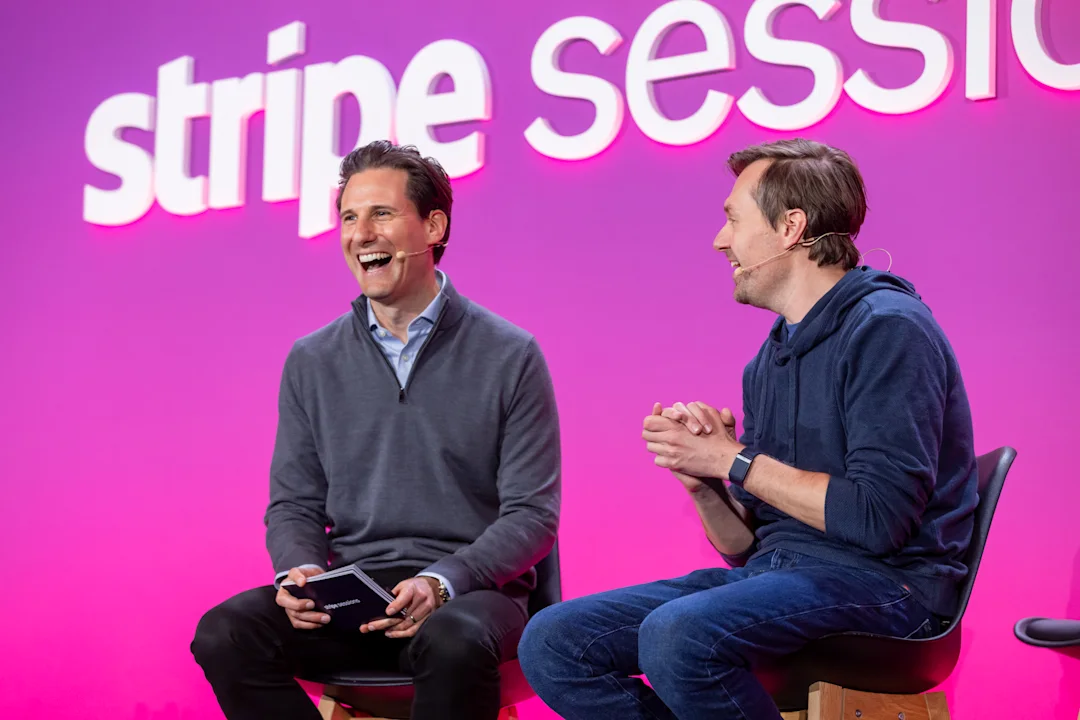
RAPHAEL DASTE: Hello and welcome. It’s wonderful to have you all with us today. Whether this is your first Stripe Sessions or your second or your third, or if you’ve been with us since 2019, I hope that you’re all feeling as invigorated and inspired as I am about all of the great things Stripe is building and all of the promise still to come for the internet economy. My name is Raphael Daste. I lead media entertainment, gaming, and sports for Stripe. I will be your moderator for today where we will be talking about what it takes to build a world-class streaming service. Joining us will be John Fiedler from FOX, where he is the EVP of product and engineering. And later, Max Walden will join us from our ProServe team to really go under the hood to show you what it takes to make that happen.
Allow me to set the stage. Like many, I’m a huge fan of Game of Thrones. In 2017, my subscription had lapsed, which I only realized moments before the season premiere. It seems that I wasn’t alone as millions of others in fact had the same issue. So card in hand, I went to hbo.com, ready to subscribe. As it turns out, the site crashed. Not only was I left in a position where I was not able to watch the season premiere of Game of Thrones and the White Walkers and the zombies and all of the juicy entertainment that I wanted to consume, but it was a moment like this, right? A moment of intent, high intent, card in hand, ready to convert, and the infrastructure failed. Millions were left without the ability to subscribe at that precise moment. And I think given the broader attention economy, it is critical that your ambition matches with your infrastructure, reliability, and onus to convert your subscribers when they’re there and ready for you.
Getting payments right matters for every moment, not just the big launches, whether it’s presenting the right payment at the right time to the right consumer. Whether it’s giving the subscriber the ability to upgrade or downgrade seamlessly. Having the right features to scale natively could be the difference between linear growth and parabolic exponential growth. Today, we’re going to take you behind the scenes for FOX One, which bet on live streaming across news, entertainment, and sports. Let’s take a look here.
[VIDEO]
RAPHAEL DASTE: I’m excited to join John on stage. Please. Hey, welcome, John.
JOHN FIEDLER: How are you?
RAPHAEL DASTE: Awesome.
JOHN FIEDLER: So that’s a good looking product. Very excited.
RAPHAEL DASTE: Indeed, indeed.
JOHN FIEDLER: Thanks for having me.
RAPHAEL DASTE: Yeah. Well, please have a seat. So as we get started, John, would love to just hear a little bit about you, your journey, your scope at FOX.
JOHN FIEDLER: Yeah. Well, thanks again for having me. And I’m honored to be here and honored that all of you are here. Also, a quick shout-out. I’m up here speaking about FOX One. The whole journey for FOX One was this great team effort behind the scenes from people at FOX, many of whom are here in the audience. I won’t call them out by name, mostly because I don’t want any of you to hire them. However, they are incredible and the partnership between FOX and Stripe throughout this whole experience was really amazing. Also, just a quick thing. Raphael and I have spent a few moments talking about this session in the last few weeks, and then at dinner last night, this is a true story. Great restaurant, wine is flowing. I’m on East Coast time because I’m from New York. Right as I’m leaving, exhausted. He’s like, “By the way, I have some ideas for changing the session.” I actually don’t remember anything of what he said. I think he said AI a few times. I’m not sure. But anyways, this should be a good conversation.
RAPHAEL DASTE: We’re here to keep the suspense for the audience.
JOHN FIEDLER: Exactly. Even suspense for me, which was unexpected. So my journey at FOX is actually... I’ve been at FOX for 20 years, but there’s a slight funny story here. When I was much younger in the 1990s, whereas my kids call it the 1900s, I operated a fan website for The Simpsons, a huge Simpsons fan. And FOX at that time found out that it existed. And it turns out you cannot just take Simpsons’ IP and do whatever you want with it on the internet. Shocker. Yeah. So they sent me these things that were called cease and desist letters.
RAPHAEL DASTE: Never heard of them.
JOHN FIEDLER: No, I hadn’t either. And so I tucked them away under my bed as they were coming in and this went on for a couple months. And then my parents found them and they were like, “What is all this lawyer legal stuff that we found?” And anyways, long story short, FOX had me shut down the website.
RAPHAEL DASTE: Men with a three-letter acronym didn’t show up outside your door at least.
JOHN FIEDLER: Yeah. I think I was moments away from that probably.
RAPHAEL DASTE: Good, good.
JOHN FIEDLER: But long story short, I then ended up applying for a job at FOX after college, and here I am 21 years later working there. So my responsibility is running what we call product and engineering across FOX. That’s largely any consumer-facing digital property, whether it’s FOX Sports, FOX News, FOX Weather, FOX Business, mobile apps, websites, et cetera, and our latest sort of shining star, FOX One.
RAPHAEL DASTE: Brilliant, brilliant. So maybe sometimes we get some students joining Sessions. So for any students in the audience, maybe the best way to join a potential employer is not in fact to steal their IP.
JOHN FIEDLER: Correct. Correct.
RAPHAEL DASTE: That’s the takeaway here.
JOHN FIEDLER: I would not recommend it. It worked out for me, but I might be the first case.
RAPHAEL DASTE: Cool. So thank you, John. I think fair enough to say that streaming has really become the industry standard now.
JOHN FIEDLER: That’s right.
RAPHAEL DASTE: And investors have really shifted from subscriber growth at all cost to really sort of a focus on profitability on ARPU. There’s a lot of shifts happening in our industry. I think fair to say media and entertainment at large is really at the forefront of so much disruption. What were the catalysts for FOX One and particularly sort of at this time?
JOHN FIEDLER: Yeah. So for those in the audience who may not quite have the background in media and what’s sort of happening in the ecosystem, media, of course, for a long time, video media and streaming media, the cable industry, the traditional cable industry has long dominated. And as the internet began to rise and streaming platforms like Netflix started their journey, the growth of cable began to plateau. And so what we began to see is that more and more consumers were preferring video streaming platforms over the internet and through their TV. And so what that led to was a lot of media companies beginning to pivot and spin up streaming platforms, and as you infer, sort of growth at all costs. And so lots of heavy content investments and ultimately some of that, of course, to the detriment of that cable plateau. And so we started to see some further decreases in cable and streaming was growing.
And so for us at FOX, we admittingly sat on the sidelines of that because the cable business is a good, strong business and we wanted to pick the right time for us to enter the business with our linear cable assets and not do it too early where we make the steep or where we make the curve of the cable drop more aggressive than it already was. And so again, we stood on the sidelines, but it reached that point where we saw that there was roughly 60 to 65 million consumers in the marketplace who are cord-cutters, cord-nevers, as we call them. And at some point, those consumers demand the ability for us to provide them FOX’s content. And so the time was right. Again, to be fair, we were probably the last large media company to enter the space, but it was a pivotal and monumental moment for us to finally make that move and to bundle up all of our video assets into a single product and put it out of the marketplace. And we’re thrilled to do it.
RAPHAEL DASTE: Brilliant. Yeah. And I mean, I’d say FOX is certainly a leader in the AVOD space through obviously your Tubi offering, and I think now this is very complimentary from an SVOD perspective.
JOHN FIEDLER: Absolutely. Yep.
RAPHAEL DASTE: So for the builders in the room, what was the blueprint for FOX One? And from your perspective, what was it sort of working? Ideally, what was the perfect state for you for FOX One?
JOHN FIEDLER: Well, the perfect state was to launch in the short window of time that we were given to launch. That was the definition of success. I think the irony when building a product like this is because we were the last entrant, major entrant into the streaming space, sort of in the media ecosystem, the product challenge was actually that there had been years and years of development of features, functionality, concepts on the product side that all of a sudden when we were given seven months to launch this, those became the table stakes bar for a streaming product that we had to meet. And so we’re all looking at each other like, everyone else has had years to build this stuff, and we had a couple months to basically get up to the level of quality and feature set and parity that our competitive set had. So that was ultimately the definition of perfect for us, which is, get a fully functional, robust product into market that worked, that scaled, and had a few bells and whistles that we could hang our hat on as well when we got out the door.
RAPHAEL DASTE: Yeah. Very, very impressive and certainly a daunting task, it sounds like.
JOHN FIEDLER: Yeah, yeah. Definitely a big team effort.
RAPHAEL DASTE: How did Stripe, as your partner, your financial infrastructure, how did Stripe handle the launch?
JOHN FIEDLER: So Stripe was actually probably one of our first phone calls. It was, we knew that one of the critical touchpoints for the product and for this kind of product is that commerce component. And when you think about what this product really is, it is all about live. It is about live news, it is about live sports, it is about live moments. And as such, anybody who works in digital experiences around live content, we know what the thundering herd looks like. You actually alluded to it during the Game of Thrones example, where suddenly there’s this tune-in moment and you have just a stampede of people trying to get through the front door. And so in order for that launch to go well, we were also launching on the first weekend of college football, and there was a huge game that weekend, Texas game, and we knew that this was a potential problem.
And so we got you guys involved early and we architected what is actually a relatively complex system. And I say that in such a positive way. Just to peel back a bit on the product itself and what it does, there’s a few things that are really interesting from a commerce perspective that we worked really closely with Stripe on. One is that the product itself actually allows for what we call add-ons within the product. So you can enter the product in sort of a base tier, but then you can purchase additional services within. So we have a premium service called FOX Nation, which is a separate SVOD product that you can actually now buy directly within the FOX One product. And then we have something called Big Ten Plus, which is almost an extended version of the Big Ten network that we have within our portfolio.
And so it’s basically a product within a product and a marketplace within a product. And so that’s one layer of complexity that’s interesting. The other is that within the media ecosystem, this idea of bundling partnerships is also prevalent. And our first bundle that we went to market with was with ESPN. And so being able to execute a bundle, a complex bundle offering where somebody can enter in through either ESPN or through FOX One and get access to both services, highly complicated. So we worked together for the months up to launch to construct something that performs extremely well, and thankfully we all walked away from that first weekend relatively unscathed, which is good.
RAPHAEL DASTE: Brilliant, brilliant. Yeah. I mean, the ability to bundle both sort of FOX-owned services with partners in the streaming ecosystem just presents a tremendous amount of value and stickiness with your subscribers.
JOHN FIEDLER: That’s right. Yeah. The more that you can make that package of content and products more sticky, whether it’s content, product features, et cetera, then the less likely people are to churn through the service. So it’s a great opportunity for all of media to come together and start to think of ways to work more collectively together to help drive the entire ecosystem.
RAPHAEL DASTE: Cable 2.0, if you will.
JOHN FIEDLER: Yeah, you could call it that. There is a little bit of rebundling concept that’s out there for sure.
RAPHAEL DASTE: Brilliant. Well, listen, to dive in a little bit further and pull back that curtain, I’d like to welcome Max to the stage to join us. Hey, welcome Max.
MAX WALDEN: Hey everybody. I’m Max. I’m with Stripe professional services. We work with users like FOX directly to embed alongside their teams, some of whom are here tonight, today, sorry, to design the integration, take them from ideation all the way through change management, and going live. We were there as we released the gates for the thundering herd.
RAPHAEL DASTE: Awesome. Welcome. So launching a new streaming service is a massive project and undertaking. And I think, especially hearing from John, sort of the scale, right? We’re talking about a service that is really sort of focused on live streaming, which is even more difficult than video on demand. So Max, could you walk us through a little bit the architecture of what that experience looks like? And I’ll pass this over to you so that you can get into the details.
MAX WALDEN: Yeah, sure thing. So when we first start with a new user, we always try to get a lay of the land first. So we spend a lot of time mapping out the architecture of FOX’s tech stack, which like many large organizations is complicated, disparate. And rather than just throw Stripe into the mix, the goal was to try to make it the connective tissue between those different systems. So we’ll walk through the whole thing. In the top left, we’ll start with our user. The user logs on to foxone.com, chooses a plan, maybe adds a bundle, and then enters their payment information using the Stripe payment element. That is a PCI-compliant UI widget that FOX branded to look and feel just like the website so that users didn’t even know that they were actually interacting directly with Stripe so that FOX doesn’t have to take on that PCI compliance burden.
At the same time, the customer enters their billing address. We just required the ZIP code in that case, so that Stripe Tax can calculate the relevant tax amount to add to the subtotal. So based on that customer’s jurisdiction, we know, okay, we need to add 5% sales tax. At that point, the customer is choosing what payment method they want to enter, and we might see this in just a minute. We have options for wallets like Google Pay, Apple Pay, cards. Obviously we’ll have PayPal as well. And as they enter that payment information, Stripe Radar runs behind the scenes through a lot of different rules that we worked with the FOX team to create to evaluate certain attributes that could be suspicious indicators of potential fraud. So think suspicious IP addresses, bogus email addresses, mismatches between the card and maybe the billing address. All that then would either block or allow a payment to go through.
And once that payment goes through, it hits the processor. In most cases, that’s through Stripe Payments, but in the case of PayPal, PayPal’s not available currently in the US on Stripe, so that went externally. Then the processor tells us, “Hey, that payment succeeded.” At that point, we create kind of the heart and soul of this connective tissue, the subscription in Stripe Billing. That subscription we can use to manage the payment lifecycle. So every month or every year, we’d cut an invoice and charge the customer. And then that would fire off a whole host of events that go to some of those disparate systems. So the FOX backend would receive an event saying that subscription’s been paid. We would use Stripe Data Pipeline, which syncs every three hours out to FOX’s data warehouse, Snowflake, for all the architecture or sorry, all the analytics.
We also would shoot off events to Braze for the customer messaging. So that welcome email, that receipt. You can also think like renewal emails when the subscription renews or upgrades, even win-back campaigns, Stripe events will help trigger. And then finally, we also update Salesforce, the CRM. So that’s the entire infrastructure. We designed it such that Stripe could kind of keep all of those other systems in sync, reduce a lot of complexity for the FOX team.
RAPHAEL DASTE: Thanks, Max. It’s amazing how the level of complexity on the backend is entirely invisible from the subscriber view. So John, would love to hear from you, what is that subscriber experience? Yeah. Could you talk us through a little bit?
JOHN FIEDLER: Yeah, that’s right. So we have a video here that walks you through the actual consumer experience. You could see somebody clicking on the FOX One. This is the base plan. Typing in an email address into the flow, this is somebody who already has an account through FOX. Type in your FOX password. And then you get into this link UI where you can just easily enter the code that gets sent to you, put in your billing name, your ZIP code, and you’re in. That is as simple as the process possibly gets. The Radar piece is extremely noteworthy and unique, we found. And if you think about the type of content that we have on FOX One, this is our most valuable content. This is premium, linear content. It is sports, it is news, it is entertainment. It is extremely critical that we don’t find that people are gaming the system and trying to work around the system.
And so that detection is extremely noteworthy. You can also see on this animation, the bundling and the plans that exist. So there you can see the ESPN bundle, you can also see the FOX Nation bundle and how you can then get access to easily upgrade your existing base tier and plan into additional content beyond the actual base tier.
RAPHAEL DASTE: Speaking of bad actors, was there any sort of deliberate prevention in terms of fraud and free trial abuse?
JOHN FIEDLER: Well, I would say that the topic of free trials is interesting in general in this space especially. I think when you’re dealing with premium content, especially in some cases where the content that you may be there for is a short-term piece of content. Imagine a big NFL playoff game or the World Cup coming up. I think there’s always a question mark around whether you should even have a free trial. And I think what you will always see is people seeing that there’s this opportunity for a free trial and maybe trying to figure out ways to work around that. But through the partnership that we’ve built and the technology stack that we’ve built, I’m speaking on behalf, I think of the entire organization. We feel extremely confident about where we are from a fraud prevention point of view. And we just want to ensure that the experience for the bulk of the consumers who are trying to acquire the service is as seamless and easy as possible.
RAPHAEL DASTE: Great. So we’ve spoken a lot about the build and what it took to launch. So once you flipped the switch, you launched, you made it in time for the Texas game.
JOHN FIEDLER: That’s right.
RAPHAEL DASTE: How were the results? How did this go for you?
JOHN FIEDLER: It was incredible, actually. That initial weekend, obviously all hands on deck for the team, and we were watching the traffic come in and watching this velocity of users come into this new product. It’s always exciting as a product builder to see such a big launch and see consumers using the application and reading what users’ experiences are. And of course, with any big launch, especially in a short timeframe, you’re going to run into some edge cases and issues that you’re trying to patch. We went through this initial period post launch of what we call hypercare, which is just really addressing and jumping on with the full force of the team, every bug and issue that came up. But it was a tremendous effort across the team and everyone’s really excited. The product as it sits today is we’re a few months in. We launched in August of 2025, and we continue to grow extremely happy with the results of what we’ve built together and the number of users that we have on the service today.
And then what you’ll see as you begin to use the service, especially as we get into World Cup, is a slew of new features that I think are going to be really impactful and really fun. So stay tuned. World Cup’s going to be an awesome event on the platform. You should definitely watch it there. You’ll see things there that you don’t see on other streaming services, and it’s going to be awesome.
RAPHAEL DASTE: Well, we’re very excited. Personally, the World Cup is my favorite sporting event of all time. Yeah, really excited to tune in. Moving to a new platform and launching a new service at this scale is always complex. It’s never easy. So would love to hear from you, we always believe that we’re not done yet. And so what could we have done better? What were some challenges that maybe you had with us?
JOHN FIEDLER: I would say it’s never too early, first of all, to get you guys involved in a product like this and a project like this. I think building from the very beginning, architecting solutions together, is the most critical, rewarding thing you could possibly do. And again, it’s never too early to make that phone call and have that conversation and begin that dialogue. This only works when you look at that architecture, we made it look simple on the slide, I would say. There’s a lot going on behind the scenes, of course, and that whole system doesn’t work perfectly unless everyone is on the same page and everybody’s working together. So I would say, I think we actually did a good job with that. I know the question was more about what could we have done better, but I would say that had we not gotten you all involved as early as we did, things could have gone really poorly very quickly because sometimes folks like us might think we know better or that we don’t need that yet. We can wait a couple months, et cetera. But I disagree and I think that we should absolutely always try to have that conversation early.
And then the other thing is just that ongoing communication. I think that that’s also hugely critical. Having the Stripe team in Slack channels with us and with our engineers and with our product people and having every single conversation together and trying to drive transparency, I actually think together both sides can continue to work on that. What are we working on that’s affecting the product that may impact or may not impact the payment flow, us doing that with you all. And then of course, Stripe doing that with us through those same communication channels, I think is also hugely valuable because you guys are also racing in tons of directions and it’s awesome to see, but there’s so much that we also want to take advantage of at the same time.
RAPHAEL DASTE: Well, listen, the partnership is very much sort of critical for us and we appreciate the trust on both sides.
JOHN FIEDLER: Likewise, yeah.
RAPHAEL DASTE: So as we look ahead, and obviously this is Stripe’s Sessions, we index very heavily on the future and what’s to come. As you think about FOX One, what’s top of mind? I think we saw some really cool features announced yesterday and today, things like the platform Grow Studio where you’re able to potentially understand the needs of your subscribers at a level of detail and for a level of personalization, whether it’s some of the bundles you mentioned, making sure that you’re sort of meeting them, maybe even sort of something along the lines of transactional commerce. Just curious, we’ve got agents on the horizon. How are you thinking about the future of FOX One?
JOHN FIEDLER: It is a whole new world out there, as everybody knows. I think as a product person in general, I think about extremes. I think about, you see where technology’s going and you start to wonder what if people don’t use UIs anymore? And what if they actually don’t use apps and websites? What if everything that is being done is getting orchestrated through these sort of AI agents, then what? First of all, what is the role of true product design to a certain extent? But also how do we enable our content and our platform to work within those environments? So I think the AI stuff that Stripe walked through yesterday, especially around like the Link wallet and basically allowing an agent to execute a transaction on your own behalf, I think is extremely fascinating. The question is, if you’re in a ChatGPT and you say, “Hey, I want to watch this NFL game or I want to watch this World Cup game,” can we actually execute a registration login into FOX One payment and then surface that content all sort of under the hood back into the interface? It’s a crazy thing to think about given everything that we’ve built on towards to this point, but it feels like that’s where things are going.
Everyone wants to be able to orchestrate directly through an agent interface. And so I actually think solving the payments thing is great. Maybe there’s a bit more work to do around account creation and password storage and how we actually handle that. Making sure that from an entitlements perspective, entitlements platforms can interface with AI agents. But man, it’s going to be really interesting to see how this all plays out.
RAPHAEL DASTE: Agreed. And John, I want to thank you for the partnership and just we’re really excited to continue building with you to better serve FOX subscribers and fans.
JOHN FIEDLER: Thank you. Thank you, Stripe. I appreciate it. Thank you.