Unified commerce for vertical SaaS platforms
Growing platform economies
Längd
Fyll i formulär för att titta på hela videon
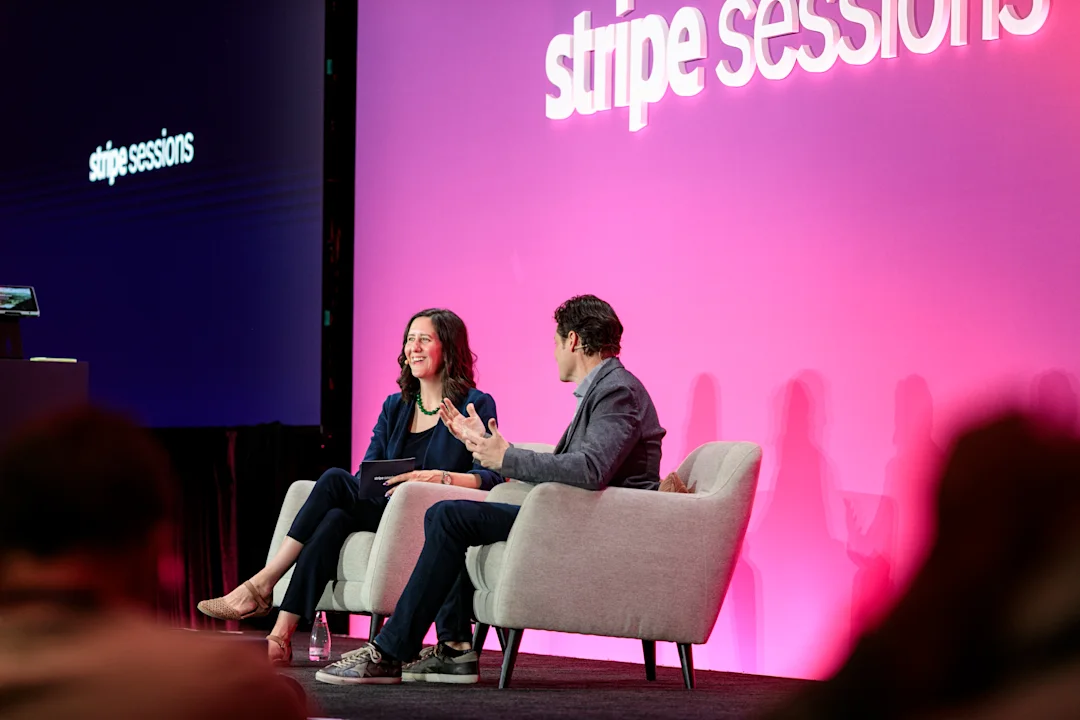
Simplified hardware logistics. Consistent customer experiences. Global reach. This session explores how one platform achieved all three by deploying Stripe’s unified commerce stack across online and in-person channels.
Speakers
Kyle Kolich, VP Product, Payments, Lightspeed
Kate Brennan, Business Lead, Terminal, Stripe
Kelly Moriarty, Product Manager, Stripe
KATE BRENNAN: Hi, folks. My name is Kate Brennan. Welcome. I lead Terminal at Stripe. Today, you’ve been hearing a lot about agentic commerce. And for good reason, because one in four consumers are discovering products using AI. And while this change is massive, and digital commerce is going to continue to be transformed and automated, so will in person. But in person is not going to go away. In fact, nearly two-thirds of consumers visit stores to see and touch the products that they discovered online. And this makes the in-person payments experiences crucial for your brands. So to turn those visits into lasting loyalty, it’s imperative that you help them connect the in-person checkout with the rest of the shopping experience. But building in-person payments can take years. From integrating a processor, securing certifications, to managing hardware—and then doing it again for every country over and over.
To make this easier, platforms like Shopify, Mindbody, and Housecall Pro have partnered with Stripe Terminal to unify commerce across channels. Because for platforms, the challenge isn’t just going live in person. It’s actually keeping online and in-person commerce connected as they grow. Terminal? We help you do that with a single integration. It enables you to accept in-person payments globally with hardware, fleet management, and access to a plethora of partner connections. The good news as well is that Stripe Terminal works with products you know and love from Stripe. Connect, Billing, Invoicing, and so much more. So that you can connect the payment flows from online and in person for a unified view of your customer. Today, I’m going to share with you three ways that Stripe Terminal helps you grow your business with in-person payments.
First, we give you choice—choice of hardware. And these are the devices that you need to accept payments across a variety of in-person settings. We give you fleet management capabilities, so that you can manage and monitor the health of those devices.
Second, you can customize those in-person experiences, which is incredibly important for advancing brand loyalty.
And third, global expansion. You can expand to new markets using the existing integration with Stripe. To close, you’re going to hear from Lightspeed—Lightspeed is one of our fastest-growing platforms—about how they monetize in-person payments with Stripe Terminal. Let’s get started.
In-person payments are incredibly important, but hardware? Turns out it’s pretty hard. You need different readers for different environments. Countertop, handheld, kiosk. The list goes on. The good news is with Terminal, we give you flexibility. You have a wide range of Stripe built and designed readers, and we are partnering with third-party partners to give you more choice. And today, just with platforms alone, we have over 400,000 active readers and even more when you add Tap to Pay with iPhone and Android.
Later this year, we’re going to be adding more readers to the portfolio. And this includes a fully weatherized, unattended reader for use cases like EV charging stations. Now, once you’ve chosen the right device for your users, you do need to help them manage inventory and fulfillment. And this? This all starts with ordering. With Terminal, you can incorporate hardware ordering right into your user experience. Users browse and purchase devices right on your platform rather than be redirected to a separate site.
One option: you can build it yourself, and you can opt to use the hardware ordering API for this. You own and manage the entire hardware ordering flow and the storefront experience. Stripe will manage the warehousing and fulfillment on your behalf. Mindbody, which is a platform for wellness businesses, integrated hardware management into their experience—leveraging the API. Their staff used to spend hours ordering and fulfilling each reader, but now their customers can order directly within Mindbody. Another option: you could drop in the embeddable component. This is a ready-made experience, a one-time, low-code integration, and this is great depending upon whether or not you want to deploy your resources and technical resources towards this or not. Stripe in this instance still takes care of shipping, fulfillment, localization, taxes, and the ordering flows. So you have a lot of choice with us. If you hear nothing else from me today, it’s about the flexibility we provide, so you can grow your business the way you want to.
Now, getting devices into your user’s hands and making sure they work: this is another area where platforms can lose time. With Stripe Terminal, we simplify hardware logistics to get your users started quickly.
Phorest is a platform for salons and spas. They used to manage hardware ordering themselves, and this included warehousing and dispatch. With Stripe Terminal, they were able to deploy 1,000 readers in just six weeks, because Stripe—we ship the readers directly to the salons on their behalf.
myKaarma. This is a platform for auto dealerships. So they used to need on-site IT resources to get the devices up and running. Now with Stripe Terminal, they can ship preconfigured devices directly to their dealerships. Okay. So once the reader’s in their field, now you want to be able to easily manage and monitor them. Stripe, we give you a unified dashboard. So you can see the health of your devices, push firmware updates if you need to, and it’ll flag any fixes that you might need to make, so that you can fix the issues before your users ever encounter a negative issue.
We’ve talked a lot about hardware. We talked about fleet management, but there’s another way to take payments in person quickly, and this is with Tap to Pay. You can turn any iPhone or Android reader into a certified card reader, monetizing more in-person payments quickly and getting started with the phone in your pocket.
SQUIRE is a platform for barbershops. They added Tap to Pay, and in doing so and adding it to their app, their barbers can quickly transact in seconds—no additional hardware needed.
All right, let’s talk about customizing those experiences. From veterinarian clinics to restaurants, your users choose your platform because it fits their unique needs. However, if the checkout is outdated or generic, you lose the strategic advantage in why they chose you. With Stripe Terminal, you can customize the on-reader experience to match your brand. At its simplest, this might just be a branded splash screen.
If you take it a step further, that might be custom forums with additional fields. And if you really want to go all in, you can build your own app with a custom app deployed to readers, built specifically for your user’s workflows.
INDY Cinema Group built their own dine-in ordering system and deployed this app to Stripe readers. This enables servers to take food and drink orders anywhere in the building—without ever having to walk back to a fixed terminal. And on top of that, the INDY servers could see what returning patrons like to eat and drink. This enables them to make personalized recommendations. And this actually matters because as a consumer, nearly 60% of us do expect brands to remember our preferences for further personalization. All right, so we’ve shared hardware optionality, customization, how that might accelerate your business, but I’d love to see it in action. Today, we announced Stripe Reader T600. It’s the newest first-party reader from Stripe. It has an eight-inch landscape touchscreen display. It enables you to have more opportunity to engage with your customers. If you use T600 as a customer-facing display, you see a plethora of use cases.
One might be a med spa showing a release form for clients to sign. The next might be a coffee shop subscribing to a bean of the month subscription on the reader. And the next one could be a retailer, prompting for products that a customer might also want to review or buy while they’re reviewing their order. With Apps on Devices, you can take it a step further and use this as an all- in-one device. I’d love to see it in action. Hopefully you want to see it in action, too. And to do so, I’m going to welcome Kelly to the stage.
KELLY MORIARTY: Hi, everyone. I’m Kelly, a product manager on Terminal, but today I’m moonlighting as a store associate at an outdoor equipment retailer. My store uses a platform with a point-of-sale app. I’m running right here on the Stripe Reader T600, and you’ll be able to see what’s happening live on the reader, on the screens behind me. All right. My customer Kate is here, and she’s ready to check out with a hoodie and a duffel bag. I simply add her items directly on the reader, and then I can flip the reader to face Kate’s side of the counter, so she can review her cart. My point of sale also has a simple upsell built into the checkout flow that automatically suggests items that I stock next to my counter. Kate chooses to add a water bottle. Okay, Kate, please click “Pay” when you’re ready. Kate is choosing to pay with her digital wallet.
Today, the T600 supports cards, digital wallets, and QR-based payment methods like WeChat Pay and Affirm. And just like that, the payment is complete. But since Stripe powers all of the payments for my platform, my point of sale can recognize the card fingerprint that Kate just used from a previous online transaction to automatically fill in her email address for the receipt—but that’s not all. We recently launched a loyalty program, and I can easily advertise its benefits on the T600’s larger screen. All Kate needs to do is click “Sign up.” And then, my platform can use Kate’s combined purchase history across both online and in-store channels to show her points balance. She left with a larger shopping bag and enrolled in my loyalty program, all with a seamless experience. That’s unified commerce on the Stripe Reader T600. It’ll be generally available to order later this year, and you can join the waitlist today. Thanks, everyone.
KATE BRENNAN: Thanks, Kelly. All right. Once you’ve got the right hardware and the custom experiences to win and retain users, there’s one more growth opportunity, and that is global growth. Two-thirds of platform leaders have shared with us that they plan to expand internationally in the next year. Historically, launching in-person payments in a new market meant a lot of things. Integrations, country-specific certifications, fragmented logistics, and so much more. Today with Terminal, you can onboard users with hardware in 25 markets, and with Tap to Pay, 38 markets through your existing integration. Woo partnered with Stripe to launch in 17 markets in just three months, and now 40% of their users come from outside of the United States. Later this year, we’re going to be expanding hardware support to 15 additional markets. This includes Mexico, Hong Kong, and across Europe. This enables you to instantly take advantage of Stripe without writing more code.
Now, in those markets, your users are going to be able to accept the payment methods that their customers prefer. Cartes Bancaires in France, PayPay in Japan, and BNPLs like Affirm. And coming soon, we’re also going to have support for Klarna, Alipay, and UnionPay International cards later this year. We’ve talked about hardware optionality, customizing those experiences in global expansion. Terminal helps you unify commerce, so that you can grow your business. Now, I’d love to hear from a user who has fueled their own platform growth using Stripe Terminal. Please welcome Kyle, VP of product from Lightspeed.
KYLE KOLICH: All right. Thank you for having me.
KATE BRENNAN: Yeah, thanks for coming.
KYLE KOLICH: Great job in T600. I’m ready to buy a boatload of those. They’re great.
KATE BRENNAN: There’s T600s underneath all your chairs. I’m just kidding. There’s not. There’s not. All right, Kyle, can you please share with us a little bit about Lightspeed and your unified commerce journey?
KYLE KOLICH: Yeah. So just so people understand what Lightspeed is, LightSpeed is a point-of-sale platform. We work with retail and hospitality merchants. We have about 150,000 location customers globally. And I’ll focus more on the retail side, that’s where we do most of our business with Stripe. And I would say that from the retail side, our kind of ideal customer profile, our merchants have about one to about 50, maybe more locations, and they typically have very complex inventory needs, order fulfillment needs. And I run the payment product that helps support those workflows.
KATE BRENNAN: You talked about ICP, so ideal customer profile. Can you say more about why are these users choosing your platform for their businesses?
KYLE KOLICH: Yeah. I would say if you think of a merchant with multiple locations, they have to manage all the inventory. And so one of the good examples of how payments really help with that is we have instant payout. And what we do is, we actually add a functionality to have merchants schedule these payments, or payouts, I mean. And so they can have a payout scheduled any time of the week and be able to fulfill those inventory. And we’re getting tighter of those workflows, so they have the cash to pay for the inventory to supply all the inventory of all their locations. So it kind of keeps the business flow and the rhythm moving forward.
KATE BRENNAN: So you really kind of understand their pain point and where to focus and how to add value for them.
KYLE KOLICH: That’s right. And then I think that’s what makes it really tight together with that, with the payment side and the inventory management really creates a strong position there.
KATE BRENNAN: Awesome. So today, and I touched on this briefly, we’re hearing a lot about the transformations that are happening in commerce. AI is a term I’ve heard once or twice.
KYLE KOLICH: A couple times.
KATE BRENNAN: How is this impacting your business?
KYLE KOLICH: So I’d like to think of two vectors. And I think one is the agentic flow, and I’ll talk a little bit about that. And the other one is more of like the need to be in the in-person experiences that we’re seeing our merchants and our customers kind of gravitating towards. And so, a good example of the agentic flow is, recently I had to buy a TV. My youngest son, seven years old, practiced baseball, took it to the TV. So, shattered the TV, right before the NCAA tournaments, I’m like, TV. And I have a personal agent, and I pretty much worked with that agent. It pretty much set up the, found the right price, found me someone who could do free delivery, scheduled the installation. I didn’t go to a store. I didn’t do anything. It just pretty much solved it, and I felt it was a great experience.
On the flip side, we’ve been working with a wine store that was kind of close to my home. It’s probably why I go to the liquor store a lot, for the broken TVs. But we’re trying to build their experience within their store. So we help them kind of, we work with them like how the bottles are placed, and how they are doing tastings, and how they’re kind of really creating that experience, so people go into the store and manage with that. And so, we’ve been working with them on like, even saving my card on file with that. So I can walk into the store, Lenny knows me by my first name. He helps me: “You like Italian reds, here’s some Italian reds.” You can look and get it, too. I have the card on file. I can just grab the two bottles and go, “Lenny, I’m out of here.”
It’s a very kind of nice experience, where I always come back to that store because of that. And I think that’s where we’re helping our merchants build out that kind of flow to get the people in the store.
KATE BRENNAN: So what I heard from you is, yes, agents and AI, but also in person.
KYLE KOLICH: I think they’re going to complement each other, but I think right now, we’re seeing kind of the distinction, but I think they eventually will blend. But yeah, there’s a desire for that in-person experience that becomes more and more important for merchants.
KATE BRENNAN: Are any of your in-person merchants asking you for help and advice about how to navigate this new world?
KYLE KOLICH: Absolutely. Especially when they’re trying to cater that in-store feeling, like they want to know like, “How do we get to know our customers better? How do we get to get that data point of who they are? How do we get them to sign up quickly?” And the T600 was a nice screen, because it showcased all the information of the loyalty cards. You can put in like your phone number. We find phone numbers a little easier to put in than an email address, but ways of just getting that information first. And then with a credit card, it becomes another data point for them to know who it is, and you kind of build that profile. And that’s what we’re trying to teach them how to do that, and then be able to use that to help, one, in that experience because then I get notifications that I have a wine tasting coming up and, “Oh, a new Brunello came out. You should try it out.”
So it creates that kind of back and forth that I’m looking for and the merchant’s looking for as well.
KATE BRENNAN: Yeah. One thing that we had talked about, because we’ve worked together for a while, and the idea of what we’re experiencing, because we deeply care about in-person, is the idea that we’ve experienced a version of this in the past with COVID and in-person businesses, everybody pulled back, and then the minute it was safe, we all roared back into retail, into events. And so I’m curious, how do you think, what is the role of in person in this new AI world?
KYLE KOLICH: Well, I think that’s where it’s going to get more so where… Again, another example is a clothing store, a VIP clothing store, and they had this VIP program. And so you go in there, and these are for kids’ clothing, and they have them all dressed up, and they can just walk out of the store with the clothes. You don’t have to worry about the bag, you don’t have to worry about putting it back in the shelves, or… So again, creates that frictionlessness, which is I think where the merchants are looking for us, how do we make that more optimized? How do we make it so in-person is as friction—as easy as, no friction at all to get into my purchase and get out?
KATE BRENNAN: Yep. Okay. So we’ll come back to that friction in a minute, but I’d love to understand. So Lightspeed, you’ve seen a lot of growth. You’ve also been at this for a while and seen a lot of things. So some folks in our audience might be navigating this and how do you grow your business? So would love to know if there’s any lessons that you might have to share, in terms of, how do you approach merchant onboarding for in-person payments and making sure that you’re building that trust with some of the users, that you’re either new users or they’re migrating to you?
KYLE KOLICH: Yeah. I think in the beginning, we kind of had a little bit of a choose-your-own-venture type of model of getting customers to buy the package. And a lot of times they were thinking about an iPad, I want a desktop version or I want a hub or maybe I don’t want a hub. And they kind of knew a little bit what they wanted. And I think what we, noticing after being 20 years in the business, there’s certain merchants that want certain types of devices and certain ways of having it. And so we’re getting better at prescribing that. Okay, if you’re this kind of merchant, and you’re a bike merchant, you typically want to have two desktops, maybe two scanners, one printer, maybe a hub to control it both, and your terminal doesn’t wander, because they’re going to go to the store, plug it in to the point of sale, reduce the Wi-Fi issues you might have, just make it clean setup for them.
And that’s where we’re trying to get more prescribed of like, here’s the goal and setup based on what you want, to get them to that point where they can, again, be up and running fast. They don’t have to worry, think about too much. They’re using us to kind of understand, “Is that the best profile I want to go, to put in my store?” I think that’s where we’re getting better and better at that, and you’re going to start seeing that in our onboarding flow.
KATE BRENNAN: Got it. And we talk a lot about in-person dominant, but it’s also my understanding you work with a lot of online dominant users as well. So how do you help them in the unified commerce and thinking about how both channels are important?
KYLE KOLICH: Yeah. I think the same kind of concept is that, your in person has this frictionless path and so does the ecommerce side. And so making sure that your website and the way you cultivate the in-store are the same. So there’s a little bit of like branding kind of consistency across both channels, the experience, knowing who you are, they remember, “Oh, I bought this in the store—they remember me in the ecommerce side.” Vice versa. Like, “Oh, hi, Kyle. I’ve seen you bought this before.” So I think keeping those two in a very intertwined, and not separate, is the key. Keep it as your merchant is the center of gravity, and then let those supporting channels support it, but don’t treat them as two separate ones; otherwise, you’re going to lose kind of the power of having them together.
KATE BRENNAN: Got it. Okay. So what are the challenges that you’re still wrestling with, with in-person payments?
KYLE KOLICH: Well, it was great showing the hardware, how easy it is to do that, but I think we’re working on, because we have other auxiliary parts of the hardware—again, the scanner, the printers, all these other components for it. What we’re trying to do is, how do we make that, again, easier for them to grok and do that, but also are there ways that… We have some terminals out there that are probably a little older, and they probably want to be upgraded. How do we get to them in an upgrade program? How do we get them so if it breaks, like an AppleCare type, where they can swap out terminal, and it’s already set up and pre, so they can just plug in and go. They don’t have to worry about. But sometimes merchants will like, “Well, I don’t want to get a new terminal because I got to set up myself.” Can we preprogram everything, so it’s just up and running for them? And so we’re working on kind of ways of doing those kind of replacement programs, leasing programs, ways that kind of make the merchant’s experience really great, but also the economics on our side matter, too.
KATE BRENNAN: Well, and you also talked about the idea, I think I used the word “optionality” maybe five times in my opening talk, but you’ve talked about having an opinion, and being a trusted thought partner, that came through for me. We talked a lot about hardware. Are you seeing your users adapt Tap to Pay on iPhone or Android devices?
KYLE KOLICH: Yeah. So the Tap to Pay is interesting. I think that helped with some of our smaller merchants, because they just want to get up and running quickly. So they have the iPhone ready, the chip is already there, they can start processing. It gets a little bit different when they go more upmarket, because then you have to think about, “Do I have a charging station with all my iPhones? Do I have cases? How do I manage that?” So that’s still kind of, I think where, it’s not quite sure where they’re going. Sometimes they’ll just go then back to the terminal, but there is a breaking point of where the smaller merchants, like the one at one store, maybe it has like a booth, they may typically like to Tap to Pay, because it’s easy and get started, but maybe the bigger stores, it’s a little harder for them to grok the whole kind of layout of the iPhones.
KATE BRENNAN: Yeah. So it sounds like a mix.
KYLE KOLICH: It’s like a mix. Yeah.
KATE BRENNAN: How do you think about customizing and branding the experiences? Is that something that you think about at Lightspeed, or how are your users thinking about that?
KYLE KOLICH: Yeah. So there’s the branding itself within the terminal itself, because it’s a good footprint to showcase advertisements for their own products. And see, what we also like about the T600, not to feel like I’m selling T600, but it has a good screen—
KATE BRENNAN: I’ll take it.
KYLE KOLICH: To do advertising. So a lot of merchants are asking us, “Can you put some advertising, like we have a bike store, we want to showcase the next bikes for next season. Can you put that into the screen? So can we do advertising?” It’s a nicer screen to be able to deploy that. So that’s where we’re kind of looking at using that footprint and having that branding experience, but again, going back to the commerce side, the branding should equal that. So now it’s just its own brand that should mimic the ecommerce site in one kind of fluid view.
KATE BRENNAN: Yeah. Anything we haven’t talked about today, or advice that you might give this audience as they’re thinking about growing their businesses?
KYLE KOLICH: Well, I would say, again, it’s kind of a common theme. The experience you have in the ecommerce site should mirror the experience you have in-store. And so when I look at frictionless kind of flows, like in the ecommerce site, it should be very frictionless. You’re looking at card optimization, you’re looking at paying quickly, and providing that experience as well. In-store the same boat. You don’t want it to be hard. You don’t want it to… The awkward, when you’re tapping and it’s not working, and you’re like, “Okay, is it me? Is it you?” You don’t want that. So how do you make it simple, where they tap, it pays. So keeping that kind of like, the frictionless side of ecommerce and in person is the same. The other part is knowing your customers. So there’s a point of where, in online you learn a lot; you know their IP address, you know where they go, you have cookies, you have a lot more data points.
In person, you do not as much, but that’s where you can build that trust, and you build that experience, you’ll be able to build that profile. And if you match and stitch them together, you get a better composite for that customer. And I think the final one was with payment methods, and where, if you have… Customers online want payment methods just like ones in person. So going from the gym, you forgot your credit card, you have your iPhone, you can’t get milk. “Oh, you don’t have Apple Pay.” So you’re like, “Ah.” So having that payment methods is very important.
KATE BRENNAN: Thank you so much, Kyle. I also appreciate hearing about the TV, the wine store, the milk, and the gym.
KYLE KOLICH: Well, eventually, I want to see where my agent knows that I have a TV, talks to Lenny, ships me wine to my apartment, but I’ll go in the store to taste it because I might as well.
KATE BRENNAN: We deeply appreciate all the partnership. Thank you so very much.