Retail rewired: Unified commerce for the age of AI and instant gratification
Charting the future of payments
Tempo de execução
Preencha o formulário para assistir ao vídeo completo
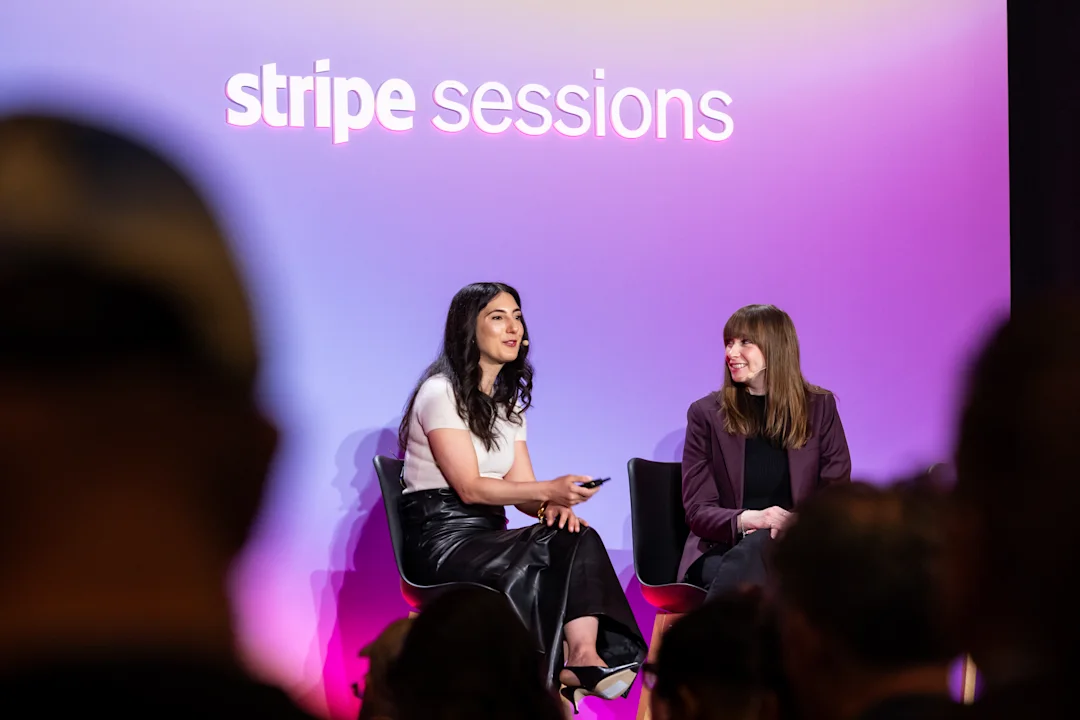
Consumers now move across six or more touchpoints before purchase, expecting experiences to feel connected and contextual. But fragmented systems—disconnected inventory, payment, and customer data—make that hard to deliver. See how unified commerce closes the gap—and how real-time inventory visibility, flexible fulfillment, and AI-powered personalization drive revenue, reduce costs, and prepare operations for what’s ahead.
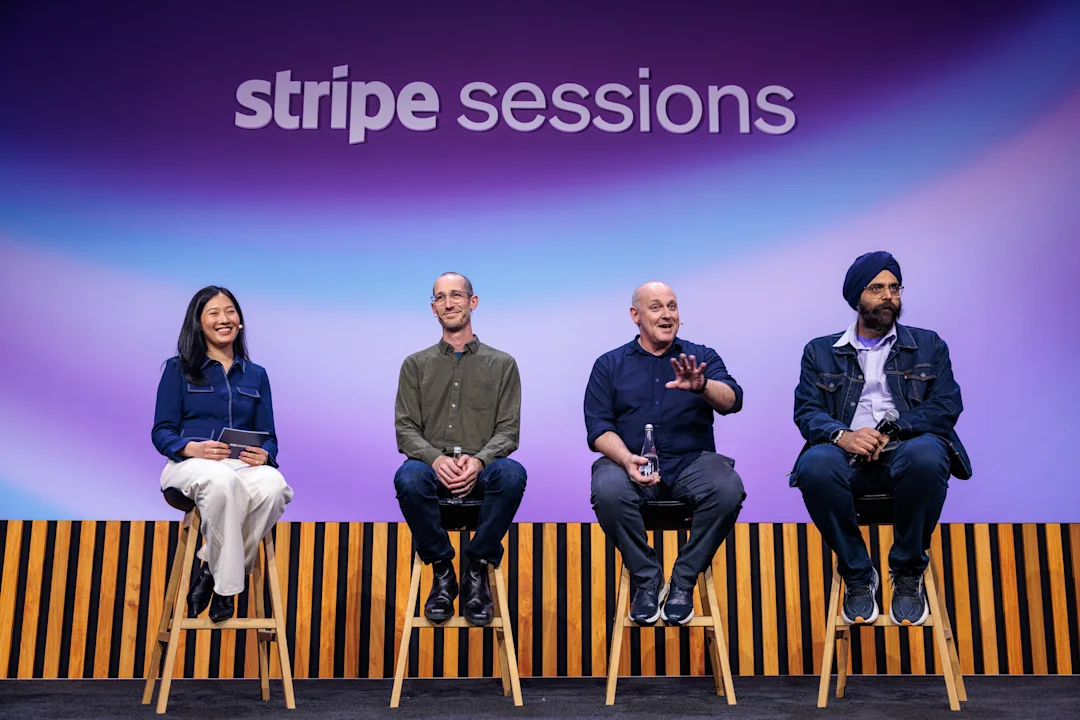
Speakers
Shayna Green, Director, Retail Experience and Strategic Partnerships, Indochino
Eric Shea, Partner, Commerce Lead, PwC
Ashye Marcus, Global GTM Lead, Retail, Stripe
ASHYE MARCUS: Hi everyone. Good afternoon. I’m Ashye Marcus. I’m Stripe’s head of retail go to market, and I’m delighted to be here today and talk to you about unified commerce because as consumers, we all experience unified commerce, whether we know it or not. So when you’re in the hardware store and they don’t have that little nuanced thing you need and they find it on Endless Aisle, and it magically arrives at your doorstep, that’s unified commerce. Or when you find the T-shirt that you love and you want it in every color, I often can admit to this being me, and the associate finds it. Those are wonderful experiences. Now on the flip side, it’s not always an amazing experience.
So I’d like to start with a story today about my outfit and getting ready because it actually wasn’t the most delightful experience. I went to one of my favorite brand’s websites, a website I often go to and shop, and I found what would be a beautiful top. And it arrives and it actually isn’t so perfect. The fit is just a little off. So I head over to the store on a Saturday morning and the associate tells me that they don’t accept online returns and my mind is just blown because working in retail for 20 years, I would say the last 10, we have been speaking about unified commerce and I am personally feeling the friction and the pain of fragmented systems. And so why am I frustrated? It’s because it just added more work on my plate. I’m a busy mom. I’ve got a play date in 30 minutes and now I have to do a return at the Post Office on top of everything else. So I decide to look around the store anyways and the associate comes up to me, really polite, asking, “Can I help?” and “Tell me a little bit about your aesthetic and can I help you?”
And my retail tech brain just goes into overdrive. And I start thinking, you actually have a treasure trove of data on me. You know my size. You have my full order history. You have my browsing history and you actually know what’s in my cart. Yet when I’m walking in and talking to you, I feel like a complete stranger in this brand that I love. So what happens was, I walk out, and I am not unique in this. I’m sure this has happened to many of you. So 64% of customers will abandon the brand after a single negative experience. So whether that’s online or in store, it doesn’t matter. You’re only as good as your last touchpoint.
So what are we going to cover today? I’m going to cover three trends that are reshaping retail and really forcing retailers to modernize. Then I’m going to bring out one of our amazing Stripe users, Shayna Green of Indochino. She’s the director of customer experience and partnerships, and she has been innovating the customer experience and really brings a delightful unified commerce experience to life. So you’re going to hear directly from a user on this. And then I’m going to bring up one of my favorite thought partners, Eric Shea. Eric Shea is partner at the retail practice at PwC. We do a lot of work together. He’s been driving enterprise transformation with retailers the past decade. And he has, I would say, a unique crystal ball into what is happening in the future of commerce and really how you can leverage what’s going on on your unified commerce journey into building for the future.
So that’s what we’re going to cover today. So let’s start with what’s happening right now. Now, you cannot have a conversation in retail without the mention of AI. AI is raising the bar for personalization, and it’s happening really, really, really fast. So what do we know? 73% of customers, they expect personalization to get better with AI. Now, put on your consumer hat. I know I do all the time. And in an eight-word prompt into one of my favorite AI chats on, “What should I get for my summer handbag?” Eight words. I was able to get really good recommendations. And why? It’s because it knows my price point preferences, it knows my brand preferences, and it knows my aesthetic preferences. I went into another AI chat and I flipped it and I said, “Hey, I need a bag for summer. Now you asked me what you need to know so that you can give me a meaningful recommendation.” It actually built upon that.
It asks and probed, “Okay, well, what’s the end use? Is it for day? Is it for evening?” And also asked, “What are the size specs?” And I also got really good recommendations. So now I’ve got a punch list of five different straw bags that I’m going to look at. So what does this mean? It means that the bar is being raised for you as a retailer, and customers are savvy. They know that you actually have years of data and loyalty on them. You have more years of history on their purchasing behavior than these new AI agents. So what do customers naturally want? They want the personalization to follow them. Now, think back to my experience of shopping with a brand that I love and feeling like they don’t know me at all. Imagine if the associate said, “Hey, Ashye.” Instead of, “I know that didn’t work, but how about we try this blouse? It’s in your cart and here’s another one. I just pulled it out of stock, haven’t even put it on the floor. And both of them match the pair of pants that you bought last month.” Now, that is a magical customer experience, and that’s the surprise-and-delight moment that customers will come to expect from you.
Now, how does Stripe know this? We’re data nerds. We do a lot, a lot of 1P research, and we’ve found that 45% of shoppers, they value recommendations in store based upon their online purchasing history. Now, the final trend I’m going to hit on is this notion of channel flexibility is driving purchasing decisions. So again, back to our being data nerds, we pulled just in this example, prior one was global, but 1,000 customers in the US. And we know that 70% of them said that they are likely to shop a retailer when they’re able to buy online and return in store. So the flexibility in the policies that you have and really thinking customer-first, how can I remove friction, are causing consumers to change how they’re allocating dollars across brands. And what are we all in the business of? Winning market share. So right now, customers expect more than ever.
They want personalization. They want convenience. They want speed. In many cases, they want to be treated like a VIP or in luxury, a VIC. And the only possible way you’re going to get there is if you have a unified data set. Now payments, they’re a rich set of data. It’s the where, it’s the why, it’s the how. It even has the shipping address. And it’s the foundation for the customer experiences that you want to deliver now. And it’s also so critical to the customer experiences of the future that we’re going to get into shortly. And so I like to frame everything right now is that what I love about retail and being, I would say, a student and also a black belt consumer is, retailers are being faced with the challenge of how are you moving at the speed of culture because your consumer is.
And so as you go through this content today, I want three things to keep in mind is one, what can you do to continue to elevate the customer experience? Because we know that bar is going up. Two, do you have consistency across channels? You might not. And it’s okay, but the important thing is, is you bridge and narrow that gap real fast. And the last piece is how can a partner help you? Partners can help you accelerate the speed and just get there faster and smarter. And so with that, I want to bring out Shayna Green, director of retail experiences and partnerships at Indochino, so you can hear directly from a Stripe user.
Welcome, Shana, to your first Stripe Sessions. We’re so delighted to have you.
SHAYNA GREEN: Thank you. I’m happy to be here.
ASHYE MARCUS: Okay. So for those of you that don’t know Indochino, Indochino is just a delightful customer experience overall, but what it is it’s, a suiting brand primarily. And you’ve been around 20 years, you innovated in this space, you were the first to deliver really suiting personalization at scale, which is really remarkable. And we’ve had a 12-year journey with Stripe. So, for those that don’t know it, I know I personally know it because my husband’s brothers used it for our wedding. Can you tell us a little bit about it?
SHAYNA GREEN: Yeah. So Indochino, we are all custom made to measure. So the way the process works typically is you’ll schedule an appointment, you come in, you look at fabrics, you choose customizations, we take your measurements, and your orders show up at your door within a couple of weeks.
ASHYE MARCUS: I love it. And so you get to pick out the trim and the fabric and all the detail. And you all are almost at a hundred stores now. So again, this is a business that is really operating at scale now.
SHAYNA GREEN: Yeah, absolutely. We stick with our customers in all of their major moments. So yeah.
ASHYE MARCUS: Now, it’s very interesting. We had a long discussion yesterday about how we think about channels and the interplay between online and in-store. And you are very, very thoughtful in your approach.
SHAYNA GREEN: Yes.
ASHYE MARCUS: Can you share just a little bit of like the behind the scenes? How do you think about the two channels complimenting each other and also knowing like you started online first?
SHAYNA GREEN: Yeah, you’re right. We did start online first, and really our channels don’t compete with each other. They are here to support each other. There’s an ebb and flow. We recognize that the customer will start online to do their research, find out, where do I go? How do I do it? What do I do? How does it work? And then they end up in a showroom where we can take them through that full cycle and that full process and measurements and customize and all of the IRL stuff, right? Yeah. To look at the fabrics and all that kind of thing. And then they’ll end up back online again when they’re ready to purchase again. So it’s just a full-circle complement.
ASHYE MARCUS: Every channel, it’s serving the overall customer experience and doing it in a way that’s unique to that.
SHAYNA GREEN: Yeah.
ASHYE MARCUS: So if I look at, Stripe loves to celebrate our users. And when I look at this 12-year journey, it makes me really, really proud. We started in 2014 with you. Can you share a little bit, as I mentioned earlier, you were an online brand that scaled. Can you give a little bit about the origin story and your experience with Stripe?
SHAYNA GREEN: Yeah. So in 2014, we recognized that we were looking for additional ways to serve our customer. Accessibility has always been a core tenet into our brand and into our ethos. And so with that comes flexibility in payments and options, right? So we needed more methods available. And so we laid that foundation online, obviously, and then in 2020 with buy now, pay later.
ASHYE MARCUS: Yes, you were very early in the buy now, pay later. Yeah. I remember in early 2000s, even pre-COVID, preaching that buy now, pay later will be table stakes. And you were actually one of those that made it table stakes and core to the brand.
SHAYNA GREEN: Yeah. Our customers are mainly millennials and Gen Z. And this consumer group really, really looks for just accessibility and how can we make it easy. And that was a big thing that we saw our customers were looking for.
ASHYE MARCUS: And you did it fast.
SHAYNA GREEN: Yeah. Like four days, we were live.
ASHYE MARCUS: That whole, oh, this long integration. Nope. Myth busting.
SHAYNA GREEN: Yep.
ASHYE MARCUS: Now, what I often see is with brands that started online and then they expand in store. You have a very sleek website, and then you want to bring that sleekness and beauty in the checkout process to the in-store. And so you have actually a very stark from and to. So I’d love to unpack that with you.
SHAYNA GREEN: Yeah. So really when you’re thinking about the customer, for us, I always think about it as I have two customers. I’ve got an internal customer and an external customer. So my internal customer is my team. Those are my employees. Those are the people who I need to make sure that they are set up for success to be able to sell this product and sell this experience. And then you’ve got your external customer, obviously, this is your consumer and we need to make sure that every single journey and touchpoint, everyone is set up for success. So these readers are super user-friendly and it’s just a seamless experience. Historically, we shop on iPads in-showroom. And before we had just readers that connect with microphone jacks and just a clunky—
ASHYE MARCUS: Prone for error.
SHAYNA GREEN: Lots of error opportunities and stuff like that. So being able to implement readers like this, it just really has been able to streamline and elevate that process.
ASHYE MARCUS: And then when I look at your omnichannel experience, I put my former brand GM hat on and I see, wow, this is just a beautiful, elegant cross-channel omni experience. But what’s under the hood is really the financial infrastructure. When we look at what’s under the hood, I ask retailers often, what is your experience with Stripe once you get it implemented? And what’s your usage of Stripe on a day-to-day basis?
SHAYNA GREEN: I don’t. I don’t think about it, and I don’t think I should think about it. That’s really the most seamless, most integrated payments process is what it should be. It should be invisible. It should be behind the scenes. It should just be doing its job.
ASHYE MARCUS: Yes. We always talk about invisible tech and that’s when you know you really get it right is because it just works. So often in conversation I have with retailers, they’re very curious about approach to rolling out, particularly it’s a rip and replace in the hardware. And you were able to do it across your entire fleet at once. And so I would love to just share some tips and tricks and best practices you have from that process.
SHAYNA GREEN: Yeah. Knowing your audience, right? I think it’s important to take a look at how you’re training your team, how you’re setting them up for success, making sure that learning behaviors are accounted for. Everybody learns differently, the different materials, send the hardware early, let people touch and feel it, get used to it. And then by the time the training comes out and you’re ready to go live, it’s just, “Oh, I’m used to this already.” Great.
ASHYE MARCUS: So it wasn’t a heavy lift on the training front, which is always of someone in the field management role. It’s absolutely critical.
SHAYNA GREEN: Yeah.
ASHYE MARCUS: It’s back to the two customers.
SHAYNA GREEN: Exactly. Absolutely. Just being connected I think is the most important part, right?
ASHYE MARCUS: Yeah. And then it’s one of the pieces that I like to celebrate, my favorite thing about my job is getting to celebrate our users. It’s that you have now taken the online principles of buy now, pay later, and you have incorporated that into your in-store experience. So can you talk us through that most recent journey?
SHAYNA GREEN: Yeah. I mean, as we’ve said, we’ve been offering online buy now, pay later through that channel for a while. And as of recent, we’re like, “Okay, let’s expand it into showroom, make sure we can better unify that experience.” So we’ve been able to roll out it in showroom with Affirm and it’s just been a really easy process. They can go through the flow right during the appointment flow.
ASHYE MARCUS: And for those that are not familiar, it’s just a simple screen and your checkout flow on the Stripe Terminal reader. So it’s a really simple UX. And so congrats on getting that rolled out. Yeah. The other piece that, coming from a retail background, we like to talk about what are the metrics that we obsess? What are the metrics that matter? And we’re all in the pursuit here in this room of, how are we maximizing and driving LTV? And so two of the metrics that you and I kind of talked about at breakfast is just like this notion of like constantly driving AOV, which the buy now, pay laters help, and then driving repeat purchase. Can you give us a little bit of sense of like what’s the behind the scenes of the brand take on these two metrics?
SHAYNA GREEN: They’re paramount, right? It’s the most important thing that we pay attention to. So if we can make sure that that experience is seamless at the beginning, then it just makes it that much easier for the customer to come back and point and click. So for us, we are addressing our customers for a lifetime of moments, and those moments follow them throughout their life, right? So that keeps them coming back. And I think being able to connect all of those dots at the beginning is super important.
ASHYE MARCUS: That’s really the beauty of unified commerce. And you all have remarkable repeat purchase staff, which I won’t share, but impressive.
So wanted to just wrap up with being really, really, really proud of this journey and just thanking Shayna for coming here and sharing your story with us. Truly a delight to work with you. And we, with that, would love to also welcome our partner Eric Shea to the stage. Eric, you and I spend a lot of time together, maybe more time than you would even like. And we spend a lot of time actually on agentic commerce, but what we have found is that all the principles that make one ready for agentic commerce and those, not the digital natives, but truly enterprise retailers that are moving fast, they unified their commerce. And so it was actually really fitting that we go back to the fundamentals. And the fundamentals are, you can’t go to, I always go back to my retail analogy all the days at Nike of like, you can’t go straight to the cherry on the top, okay?
You’ve got to build the foundation of the cupcake, add the icing, and then get to the cherry. So I want to go a little bit tactical on just the cake portion to make sure everyone has a really strong understanding. And first, I want to start with a little bit of a myth busting of, I mean, we’ve been talking about unified commerce for how many years and it hasn’t happened yet, but we are pretty convinced that it is because I believe AI is going to finally unlock personalization at scale.
ERIC SHEA: Yeah, absolutely. And I think there’s a bit of a misunderstanding that and misconception that we all have to have our perfect data and fully connected systems to enable unified commerce and anyone who’s been in retail for any amount of time knows we’ve been on that journey for decades, and I have bad news. It’s not ending anytime soon. We’re going to be working on that for a while, but that does not mean we can’t create some of these amazing unified commerce experiences that Shayna was talking about. What it does mean is, one, we are leveraging AI to actually accelerate that data and connection journey with many of our clients to get there faster with better and cleaner data at the right time. And then two, it’s really also about working backwards from the experience that you want to create for your customers and really understanding what’s going to drive value for them and then working backwards to really understand what data and systems you need to enable those kind of experiences because we can’t do everything all at once.
ASHYE MARCUS: Yeah. So it’s like very often it’s just depending upon the size of the enterprise and how you chunk it out and roadmap it, but just the notion of it’s not a one-and-done. Now, where do you find retailers most concerned in pushing back around, “Hey, I don’t want to disrupt business operations,” because we all know as retailers, we have to continue to drive transformation, yet you got to keep the lights on and keep the business running. So not interrupting. I’d actually love to hear from both of you on that.
ERIC SHEA: Yeah, maybe I’ll start. In retail, almost all of our systems are mission critical, whether that’s a planning system from our merchants, an online commerce system, or of course our stores, our associate point of sale and clienteling tools, of course payments, those have to run for us to do business. But at the same time, we’re forced with this tension that customers have higher expectations than ever before of how we are working with them, that we know them across all of our channels, and that means we need to modernize and we need to modernize at speed. And so some of the techniques we found really helpful is number one, being able to digitally decouple your systems. Essentially, think about driving the car while changing out the engine. You can still get the data, get the system connectivity while you’re modernizing those systems. And in many times when we’re transforming clients, we’re actually doing many systems at once. I had a recent global client where we modernize 17 systems all at once, and we’re using a lot of AI to make that happen as well.
SHAYNA GREEN: You’ve really got to have a vision to do that though. I mean, to be able to be running full steam ahead and still have all these decoupling happening just to get it all back together, you’ve got to have that North Star so that you know exactly where you’re pointing to and what everybody is really rallying around to work together. And that sense of vision is, I think, super important as we figure out, how do we change the wheels while we’re running a hundred miles an hour, right?
ASHYE MARCUS: Absolutely. And then I think the last, this is a question that is really kind of at the heart of, especially if you were at the developer or the keynote this morning, it’s, you can’t... We know agentic is just truly the future of commerce. And I’d love to just talk about, there is a world where our chat last night is, how do we get to agentic BOPIS? And things like that where, what do I want? We were talking about, I would really like my cardigan sent to me that I want tomorrow that I forgot to pack. And that is a data. There’s like multiple layers to unpack there, but that’s actually where these two worlds of agentic commerce and the physical retail experience come together. And those that are already unified are multiple steps ahead. So Eric, can you give me kind of where you’re seeing this on the enterprise retail side and how you see this playing out?
ERIC SHEA: Yeah, absolutely. And I’ve had the opportunity to spend a lot of my time over the last eight to nine months on agentic commerce, exciting new capability and customer experience we’re going to unlock. But that said, I think one, the clients that we see leading are the ones that had already leaned into unified commerce because they’re adapting with their customers and they need to have that experience across all the channels. So they’re more ready for it. But I think you make a really good point. I mean, there’s a lot of retail. It’s about the human connection and being in stores. And I think there’s a lot of opportunity for us to innovate around agentic commerce back into the store so we can have those great relationships.
ASHYE MARCUS: Because the store is still where 70% of the volume happens.
ERIC SHEA: That’s right.
ASHYE MARCUS: Which is critically important. And then Eric, I would say we have an audience here where a lot of people sent only one or two from their team. And so what advice would you have for leaders in this room to take back to their teams?
ERIC SHEA: Yeah. Maybe I’ll start, and Shayna would love you to chime in, but I’ll start with your example actually at the front, where you talked about ordering something online and then being disappointed with the return. I think there is a little bit of back to basics of really understanding what is your omnichannel and unified commerce journey for your customers, where are there gaps, and then what data and systems do you need to connect? And that sounds pretty fundamental, but there’s still a lot of opportunity in that space. And then two, I would say accelerate how you’re working, using techniques like AI to fix your data, build more connections, and get to that unified commerce baseline.
SHAYNA GREEN: And to build on that, I think the AI commerce and all of these agentic elements to it that are just going to elevate the experience and the user journey, they will never replace that one-to-one interaction that you’re having with a human in front of you to buy that sweater that you’re looking for, right? So—
ASHYE MARCUS: Or to bring me that top—
SHAYNA GREEN: A human has to do that.
ASHYE MARCUS: That would look perfect with the pants that I wore to Shoptalk.
SHAYNA GREEN: Exactly. Exactly. A person has to do that. So all of these tools are great, but they don’t do anything if you don’t invest in your customer experience. And I think that’s probably the most important takeaway from it, for sure. Yeah.
ASHYE MARCUS: I would say at the end of the day, we’re all in the customer experience economy. As I walk through, that was my kind of takeaway even walking through the expo hall and seeing the parallels between the retail and hospitality. But it’s interesting. We started the story of me feeling like a stranger at a brand that I love and questioning my loyalty. I ended up walking down the street and bought the skirt from another brand that I love. So it’s truly, there is that pragmatic allocation of dollars. And right now, what I believe, truly payments decisions right now, whenever I hear these are not strategic decisions, I get very spicy because they are actually customer and brand decisions and there is nothing more important than the customer experience. And particularly as you touched on is they remember their first and their last, and their last is the payments experience.
SHAYNA GREEN: Exactly.
ASHYE MARCUS: And as we look through, and I think what I love and probably everyone in this room and this stage, the beauty, and I think it’s both the risk and the energy in retail is the notion of retail as a world of constant reinvention where it used to be every 10 years there was a model shift, but now we’re in a world where things are changing so fast, and really what you can do is have the best financial infrastructure and then overall thinking about your architecture very, very, very thoughtfully, because if you don’t have the basics unified, you’re never going to be able to deliver the customer experiences of the future. And so the stuff that gets us really excited about like, how do we get to, in my world, that agentic BOPIS or that personalized experience in store, you don’t get to those without solving. And then more importantly, you don’t want to have friction and turn that customer away because that’s the exact opposite of driving LTV, is when I walked out and I have to go to the Post Office to then return it. And then I—
SHAYNA GREEN: You forgot all about the time that you had before even were shopping there, right? You forgot about all about the cute things you saw before you even got to the register.
ASHYE MARCUS: Yes. In the two years of order history I have. So thank you all for coming. Hopefully you’re able to take some insights back to your team. Thank you for joining everyone. Thank you.