Beyond checkout: Where agentic commerce actually starts
Charting the future of payments
Laufzeit
Füllen Sie das Formular aus, um das ganze Video zu sehen
Most agentic commerce discussions start at checkout. But the structural shift begins earlier, in how agents discover products, evaluate options, and act on behalf of consumers. In this session, Klarna will examine what full-journey agentic commerce requires, from structured discovery data and payment credentials to returns and refunds. Explore emerging architectural and commercial questions as agents move from checkout tool to end-to-end buyer.
Speakers
Darren Moore, Head of Agentic Commerce Payments, Klarna
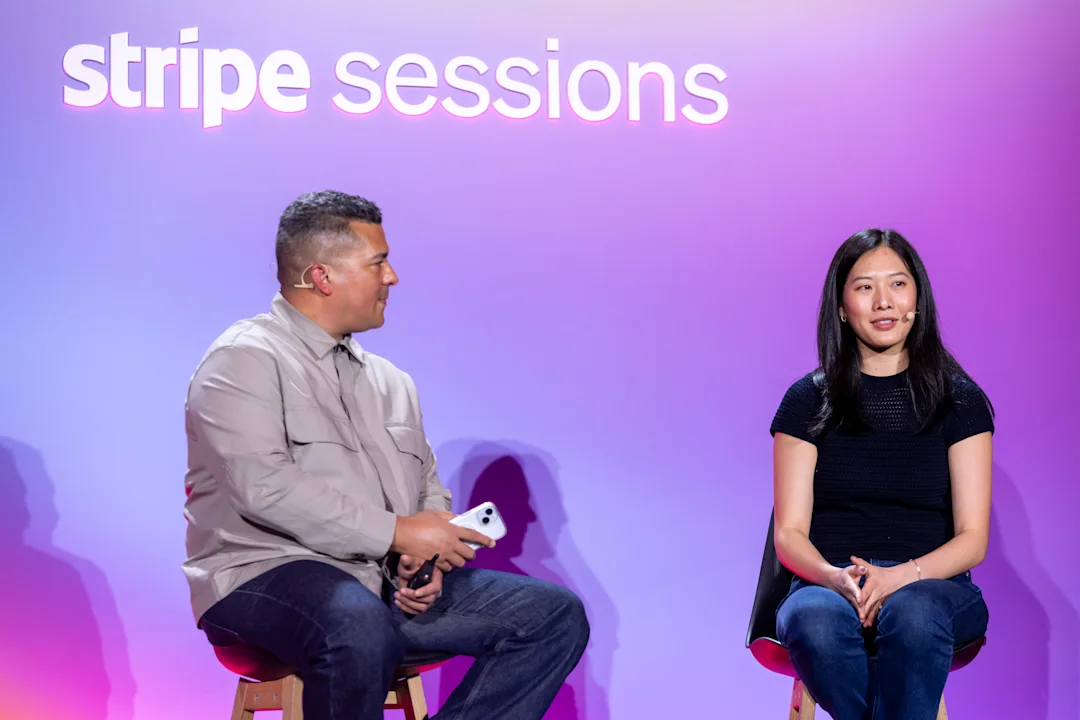
Allison Xu, Product, Agentic Commerce, Stripe
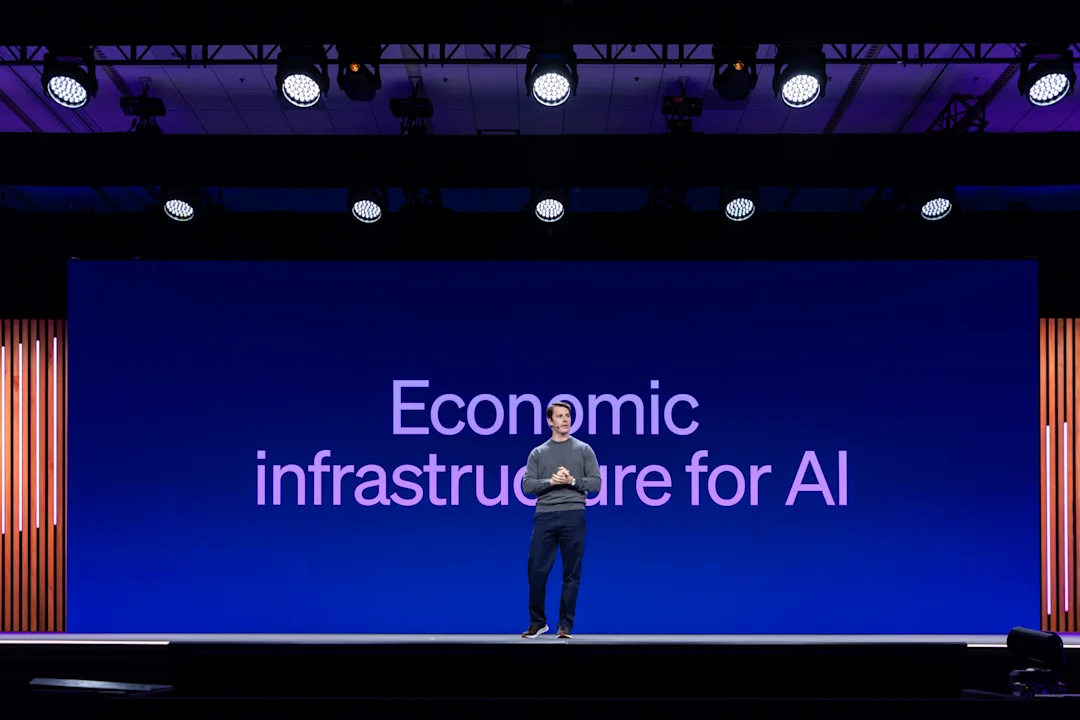
DARREN MOORE: Hello, hello, everybody. Welcome to Beyond checkout: where agentic commerce actually starts. Really great to see so many of you here today. My name is Darren Moore, and I lead agentic commerce at Klarna. And because of that, I have a lot of conversations every single day about agentic commerce. I read a lot about agentic commerce, and I’m sure many of you in this room do as well. So I’m not sure if you agree with me, but right now, the state of things is that there are very few absolute facts in agentic commerce, but there are a huge number of opinions, hypotheses, educated guesses. And that’s what makes this space so exciting right now. We are seeing in real time this play out, validating what’s actually going to work in the agentic commerce world. And I think that’s what we love to see.
So with that being said, some of what we’re going to talk about today may sound like another opinion, but I hope that as we go through some of these slides, you will see that that’s actually grounded in what we’ve learned so far about how agents actually behave when they are discovering products and when they are buying products on behalf of a consumer. So for those of you who managed to catch our theater talk yesterday, I promised a number. That number is still coming. I’m going to give you one number, one fix, and one fact to take home with you. “Discovery wins before checkout begins.” This is what happens when you work closely with your marketing team. You get a good catchy slogan. Catchy and in this case, very, very true. “Discovery wins before checkout begins.” So you might have caught this yesterday, but AI traffic is up 393% year-on-year.
That comes from the AI Adobe report for 2026, from Q1. And alongside that, with all of those agents driving growth, 66% of the product pages they are reading, they can’t actually read at all. That means a third of your product pages are missing completely. So while the industry is focused on the problem of the checkout, Klarna is not only prepared and building for that, but building to solve the discovery layer. And what we’re going to look at in a minute is the case of an actual merchant who not only are they one of those where a third of their product pages are not being read, but in fact, them alongside many, many other ecommerce merchants, have an even bigger problem, where the majority of their catalogs are not visible to AI agents today.
Massive inventory, minimal visibility: not a good combination, especially if you are a major global activewear brand that has 160,000 products. Those products are in stock, live, being sold in a number of different Klarna markets, but only 10,000 of those are discoverable by AI agents. That seems like a very, very small number. Probably something that if that had to happen to anyone in this room, that would be something that you would be prioritizing the fix for right away. So now you ask yourself, how does this happen? How does a major global activewear brand with 160,000 products only have 10,000 products available and discoverable by AI agents? So if any of you are able to do fast math, definitely not me, that’s 6%. That’s a tiny, tiny number. And if we ask ourselves, why is only 6% of this global brand’s catalog visible to AI agents?
It comes down to, in this case, one thing, which is the GTIN. The GTIN is the Global Trade Item Number, which is basically the barcode on the box. It’s a unique identifier that actually allows AI agents to reconcile your product listing against the same product sold by other retailers or other merchants. In this case, this brand has 0% coverage of the GTIN across all of their feeds. And for that reason, the AI agents are not able to confidently compare, rank, and recommend this product. Basically, they can’t build, the AI agent cannot build what is sometimes referred to as the “product card”—the product card that allows an agent to confidently surface your product to actually allow it to be purchased. So that comes back to the previous slide that “discovery wins before checkout even begins.” If you can’t be found in this level, in this layer, your product doesn’t ever have a chance of being purchased at all.
And that’s really why Klarna built the discovery layer that AI agents can actually query. One API normalized across merchants, LLM optimized and protocol agnostic. So what does this really mean? “One API” that allows agents to query the product graph, “normalized across merchants” means that we build a unique product—a unique, stable product entity—looking at the same product across different merchants and retailers, which allows the agent to do exactly that: to compare, rank, and recommend confidently. “Optimized for LLMs in real time,” that means that it’s structured JSON, which is built for AI consumption, not just for search indexing. And that means that when we have agents trying to do structured searches, natural language searches, and constrained searches—which is really the majority of real shopping intents today—that’s what allows those agents to search the product graph and find that product confidently. And then of course, “protocol agnostic.”
I’m sure over the course of this week and probably the last couple of months, you’ve heard about ACP, UCP, and whichever other acronym is probably launched this morning. The good thing is that your product will be discovered in the product graph, through the Agentic Product Protocol, no matter which protocol is used for the payment. And this is already product discovery that’s operating at scale with 100 million unique products, 400 million merchant offers across 4,300 product subcategories, and with one million merchant partners. This graph really is what allows your products to be found. And this comes back to having the structured data and the rich quality in order to allow those agents to query and find your product. If your product is not in the product graph, and it doesn’t have the GTIN and other structured attributes that make it discoverable, it’s kind of the equivalent of being at Stripe Sessions, having the opportunity to connect with a lot of great people, but you don’t realize you’re invisible. No one can see you. Except in this case, the conference is a multitrillion dollar industry, and the people that you want to meet are AI shopping agents.
So that brings us to what we’ve built with Stripe. We’ve already been talking about the fact that if today you’re on Stripe with Klarna, the payment layer is already built with Klarna available within the Stripe Shared Payment Token. And what we’re working towards is the full life cycle, where an agent will be able to query the product graph to find your product, get this Shared Payment Token to complete the payment, and then have the full Klarna life cycle for the post-purchase, all provided through the Stripe integration. Important to remember that when it comes to agentic flows, a declined transaction in agentic flow isn’t the same as an abandoned cart. An abandoned cart, you can retarget, you can send an email, you can try again. That’s very different when there’s a failed experience in an agentic flow because that’s something that a consumer might not recover from, at least not quickly. They might not trust that agent very quickly again, and that changes what agents optimize for. They optimize for consumer trust, payment flexibility, post-purchase liability, and approval certainty—in that order. And remembering that if your product can’t be discovered, we don’t get into this conversation at all.
So I want to just finish off with three attributes that really unlock discoverability: GTIN, shipping costs, and delivery time. I point these out because these are what so many merchant catalogs are missing today, and they don’t even know it. GTIN, you saw in the case study that I showed earlier on, that GTIN was zero across every feed, and that meant that the AI agent, when it was querying the graph, couldn’t build the complete product card to be able to confidently recommend that product. That meant that the products were invisible to agents. No one could find it. Shipping costs, because agents actually rank on a total price. So if you’re not giving a full picture to the agent and the consumer, your product won’t be picked. And then finally, delivery time, because when I tell my agent that I need these running shoes by Friday, unless that data is part of my feed and I’m providing that to where the agent is querying, I’m not going to be included in any time-constrained queries, which let’s be honest, is the part of all of major searching queries today.
So fixing these three is what allows your product catalog to be answerable by the majority of searching intents today. Fantastic. So now that we’ve had a chat about the discovery layer and how important discovery is in order to even get into the payment conversation, I’m really happy to dive into the payment layer. And to do that, I’m super pleased to have Allison Xu with me today from Stripe, who’s an agentic commerce lead. Allison, please join us on the stage. Have a seat.
ALLISON XU: Awesome.
DARREN MOORE: Cool. So maybe we can start off, I had the chance to introduce myself. So maybe you can introduce yourself to the people out here.
ALLISON XU: Happy to. Hi, everyone. I’m Allison. I work on the agentic commerce product team at Stripe. I’ve been working on agentic commerce for about a year now, which is really fun to say because that’s basically the entirety of how long we’ve been thinking about it. A year ago, that was not a team. And now at Stripe, as you can see across all of Sessions, it is very much a dedicated team and effort across the whole company, so it’s been really fun to watch the evolution.
DARREN MOORE: Cool. And have you enjoyed all the agentic commerce talk so far at Stripe Sessions?
ALLISON XU: If you didn’t want to hear about agentic commerce, this was not the event to come to, I would say.
DARREN MOORE: So let’s dive in with another one. So I mean, really what we want to talk about is a couple of things to really dive into how the payment infrastructure works for agentic commerce and what we can tell merchants and users about how to take advantage of that. So let’s start off with the basics of the Shared Payment Token. I mean, the Shared Payment Token is what really powers the agentic flows in a Stripe context. So maybe tell us a little bit about how you thought about, how Stripe thought about, building that—especially when it comes to plugging in different payment methods and making that seamless from a user perspective.
ALLISON XU: Totally. If you attended my talk yesterday, this might sound a little repetitive, but just taking a step back. So why Shared Payment Tokens, and why do they need to exist? In a traditional payment, I, as a buyer, would go to a seller and give them my payment credentials, and that seller is the one who processes the payment. Now with agentic payments, the key difference here is that that payment intent is being separated from the payment processing. So I, as a buyer, would tell an agent—let’s use ChatGPT, Copilot, any of these—that I want to buy a dress, for example, from, let’s say, Anthropologie. And Anthropologie, the seller, is still the one that needs to process that payment, not the agent. And so that credential needs to be handed off. Now you could pass raw card numbers and probably break a lot of rules and PCI compliance, and you wouldn’t like that. And so, therefore, we created the Shared Payment Token to be able to manage that handoff between agent and seller. Now one question I often get is, “The idea of tokenization is not new. We’ve been—”
DARREN MOORE: We’ve had tokens forever.
ALLISON XU: Absolutely. And I think what’s important to know is Shared Payment Tokens work with existing tokens, with existing network tokens, with existing device tokens, Klarna tokens. And you can… The best analogy I like to think of, every time I think of an SPT, I think of a little package being delivered. So like the agent has a home, and the seller has a home. And the agent has a payment credential and a payment method, and they wrap it up in this box—and that box is the Shared Payment Token—and they wrap it up and they write, “It’s going to X, Y, Z, and it needs to be delivered in this amount of time.” And so that’s the kind of special part of the Shared Payment Token. You’re able to scope it to a specific seller, a specific time, and then you issue that to the seller.
And the seller, at that time, when they receive it, can open it up and they can say, “I like what I see. I’m going to process this payment.” And they grant that token. Or they can decide not to based… If you’re working with Stripe and you work with Radar, we can give you risk signals and risk scores. And so again, there is kind of that added control or variability for a seller to decide whether to process that payment. So all of that to say, again, payment intent being separated from the actual payment, we are still working with the underlying payment methods and tokens to enable that. So it’s great that we very recently announced the Klarna partnership to be able to support SPTs with Klarna. Initially, when we launched—Stripe has over a hundred payment methods—when we launched Shared Payment Tokens, it supported cards only.
And so we are slowly building that up, actually not so slowly, but quickly building that up to support more and more different payment methods so that a consumer—regardless of whether it’s an agentic payment or a nonagentic payment—still sees the same payment interface and can kind of decide, or the agent can see it and decide, which one they want to use.
DARREN MOORE: Cool. And I mean, I think the important thing there probably is what often concerns merchants and sellers, which is like a loss of control in an agentic context. So I like what you said there about the fact that ultimately it’s still up to the merchant. It’s up to the seller if they want to accept and process that Shared Payment Token, which means that the control still stays in the merchant’s hands.
ALLISON XU: Exactly.
DARREN MOORE: So this is actually a question that I touched on in one of the slides earlier on, when it comes to what agents optimize for. I was really curious to hear your thoughts on that as well, considering that obviously you guys have been working with a couple of different agents and maybe seeing some early signs about what we can expect. So what can you tell us about that?
ALLISON XU: Totally. So caveat this by saying we’re still very early, and so we are very closely monitoring trends and behaviors of how agents behave differently than humans. And early in a number of different dimensions: one, of course, just transaction volume. Stripe processes, I think the latest number was 1.9 trillion. We are not at 1.9 trillion in agentic payments volume, in case you didn’t know that.
DARREN MOORE: Not yet.
ALLISON XU: Not yet, exactly. But also in the number of, let’s say, options shown at checkout. Again, as I just alluded to, we have a hundred plus payment methods typically supported by Stripe Payments, and we’re at a little bit less than a dozen today for the SPT. So with a limited kind of option set or limited menu today, I think we’re also kind of learning even with this kind of like smaller pool, how those behaviors differ. But I think that will continue to evolve, of course, as the option sets increase.
And then I think the other thing is at the stage where we are in the market today, particularly in consumer use cases, we’re largely still seeing human-in-the-loop transactions. And for the near term, I think we’re already starting to see B2B use cases emerge where there isn’t a human-in-the-loop. You saw some of those demos yesterday. But for consumer, I think that’s important to know because I actually think the agent is quite… The things the agent cares about are actually quite aligned with the consumer. The agent wants a… Let’s say they’re thinking about the financial impact of a transaction. Well, I care too. I look at fees. They care about payment success and payment flexibility, and the human cares. And there are a lot of maybe implicit decisions that a human when they get to a checkout page is kind of making. I’m choosing my payment methods based on habit, but that habit is because I know the fees, I know the—
DARREN MOORE: Because it’s worked before.
ALLISON XU: It’s worked before. Exactly. And it’s trusted. And I think that the agents will care about really similar things as well. And particularly as we move away or kind of graduate from fully human-in-the-loop, I still think we’ll have human guardrails. For example, I can tell my agent to work within a budget or work within a certain set of payment methods, or I want this to go through in this amount of time, and that, by default, will kind of limit the number of options. So I still think there will be a world where we get to set the guardrails and then, within there, have agents make more microdecisions, and we’re going to closely monitor what those look like as we get to more autonomous payments.
DARREN MOORE: Yeah. Coming soon. So then I think what probably many people in the room are interested in, especially those that are merchants or sellers, is: what is the merchant experience when it comes to activating agentic flows through Stripe? I mean, I, myself, have spoken about how easy it is. So what are the things that you actually need to do if I’m processing with Stripe today?
ALLISON XU: Yeah. Our motto at Stripe more generally is like we—this is not an official motto, by the way, but more of a philosophy—is like, “We want to do the grungy work so that our users can really focus on what they do best.” And so that same mentality applies to the agentic world, where we are building what we call the Agentic Commerce Suite to be that infrastructure layer to do some of that grungy work that you guys shouldn’t have to do. And so that spans across the kind of checkout lifespan, across discovery, checkout, fraud, and payments. And for a Stripe user, we are trying to make it as easy lift as possible. So we call it our, internally, we call it the “turnkey integration” because it is meant to be turnkey with all of the existing Stripe components and elements. I think the biggest lift probably is actually what you’ve spent the kind of first half of this talk talking about, which is discovery.
For discovery, this is kind of a newer motion, where merchants can upload product catalogs or using… It could be as simple as a CSV, it could be our import APIs, but also importantly, we’re opening to an ecosystem of commerce partners or catalog syndication partners so that you can take your existing stack and just plug it in, rather than having to reconfigure it. On the checkout side, again, we work with Checkout elements. The payment methods shown are the same payment methods that a merchant is already configuring in their Stripe Dashboard. And so all of that translates if you have enabled Klarna, it is already enabled in your agentic flows. And on the merchant, or I should say on the agent side, delegated Checkout API, which is the agent-facing UI, is actually already… It’s also built on Stripe Checkout elements. And so all of those payment methods will dynamically show by default.
And then fraud, if you were working with Stripe Radar, will also port over, and of course, Stripe Payments, if you’re a Stripe Payments user, it will also be seamless. So we’ve really built it so that, for a Stripe user, it can be as low lift as possible.
DARREN MOORE: Yeah. I mean, what I’m hearing is that if I’m on Stripe and I already have Klarna for normal ecommerce, bringing that over to my agentic flows is a very small lift.
ALLISON XU: It’s no lift.
DARREN MOORE: Even better, even better.
ALLISON XU: Exactly.
DARREN MOORE: So now that we’ve kind of nailed down how easy it is to activate, let’s look a little bit more into the future and think about what are the most important thing that you think right now—considering that we are still at such an early stage—what’s the most important thing that’s still being built, or what are you excited about?
ALLISON XU: Totally. This is really hard because there’s so many things that we are building and need to be built still.
DARREN MOORE: You can even have more than one.
ALLISON XU: And again, walking through the transaction life cycle, I kind of mentioned discovery, checkout, fraud, payments. There is a whole lot of things that happen beyond the payments and post-checkout. And we are still early in actively building those today. And so I’m very excited about how do you complete that visibility across the end-to-end life cycle. But I would also say, taking a step back, the thing that spans across the entire transaction life cycle and not just one part of it, to me, is identity. We are already doing some things to make sure transactions are secure. We verify agent identity, we verify merchant identity, we are doing transactional monitoring; so we feel good that we are still making a secure transaction, but I think there’s so many more sophisticated things that we could be doing on top with identity. Can we link your… If I know an agent is Darren’s agent, can I personalize the experience more towards your preferences, both from a discovery standpoint, but also I know which payment methods you like to use and configure the checkout.
And also, can I link it to—Darren has accounts at XYZ services or retailers—and can we link all of that loyalty? Can we link all of your existing services together? I think there’s a really powerful world where agent identity and the human behind that agent are more closely linked and are more threaded across experiences rather than every experience being a new one. I think if you saw the keynote, we just launched Link CLI Wallet and Stripe Projects. And I think we’re starting to see this idea of like a developer identity really emerge in the B2B world. And I’m just really excited to kind of use those concepts and bring that to the consumer world as well.
DARREN MOORE: Cool. I mean, I think fully agree on both of those points because what we’ve seen, I think, is something that, post-purchase, is something that merchants and sellers potentially haven’t fully caught onto how important it will be for agentic flows when it comes to full transparency in the post-purchase life cycle—how returns, disputes, tracking is handled, and how much that’s going to play into getting recommended again for this agent, right?
ALLISON XU: And by the way, I mean, I think that’s one of the… As, we’re at a Klarna talk, but when we’re thinking about payment methods, that’s one of those things that’s like really important and kind of differentiates certain payment methods. Klarna, for example, has dispute and return management in the app and more post-purchase visibility in the app. So as I think both in the way that consumers appreciate that, I think the agents will appreciate that data transparency pre- and post-purchase.
DARREN MOORE: No, 100%.
ALLISON XU: Shout out to Klarna.
DARREN MOORE: And I think then also to touch on the identity, that’s probably, especially on the account linking side, that’s probably one of the things in our conversations with merchants and sellers so far, that’s a theme that’s come across really clearly in terms of the fact that they have this established relationship with a consumer, which includes that consumer’s preferences, their discounts, special rates when it comes to shipping, and they don’t want to let go of that, right? Rightly so. It’s taken time to develop that relationship. And I think solving the account linking challenge is what will allow them to really bring that rich experience and the personalization into agentic flows as well.
ALLISON XU: Absolutely. That’s probably one of the number one pieces of pushback we hear from merchants when we’re talking about agentic commerce, which is: how do I maintain that relationship with my customer? How do I track that relationship with the customer over time? And account linking, of course, is going to be really important.
DARREN MOORE: 100%. I think it almost becomes like a table stakes at some point.
ALLISON XU: Totally.
DARREN MOORE: So then I think to kind of round this off, because we’ve gotten now, I think, a really good view of how the Shared Payment Token works, how easy it is to switch that on for Klarna, for merchants who currently have both, who want to get involved in agentic flows, and also what’s coming next. If, to some of the merchants and sellers in this room especially, if you’re to give them some advice walking out of this room today, very excited about the traffic that’s being driven through agentic flows, the conversion swing from like 38% worse to 42% better, if they want to take advantage of that 80-point swing, what should they do walking out of this room today, in the next weeks?
ALLISON XU: Yeah. I think it depends on, I guess, the level of maturity of the conversations that you’re already having. But to me, I see it as like two tracks, which is like business decisions and then technical decisions. I think, first, you have to really have those business decisions internally. So I hope Stripe Sessions has given you a really kind of well-rounded view of where we see the market going. And I think understanding what does success look like? What is the first way you want to dip your toe into agentic? Is it a small number of SKUs? Is it a full catalog? Is it one of your brands, if you have a portfolio? Kind of look at what that looks like internally. And then there’s the technical front, which is, what does your product catalog look like today—and have a real honest conversation—or is it structured? Do you have very clear attributes? Is your commerce stack or are your endpoints ready to be connected to an agent? All of the kind of just up and down the stack, do you have the right fraud systems in place? Now, if you’re on—this is a shameless plug—but if you’re on Stripe Radar and Checkout elements and all of that, we think that the answer is you’re pretty much there already, and with the agentic commerce suite, can get there very soon. But if not, always happy to have conversations and help our merchants get there.
DARREN MOORE: Yeah. And I just want to double up on the product and catalog data point. And if you want to talk further about that, please come find us at the Klarna booth later. But other than that, thank you so much, Allison, for talking us through a lot of these things.
ALLISON XU: Thank you.
DARREN MOORE: It was really great to hear about how Stripe is thinking about these things because I think it resonates so much with how we’ve been building towards, which is obviously why we’ve been working so closely on this for quite some time. And thanks everybody for coming.
ALLISON XU: Thanks.