Meet the new marketplace: AI, embedded finance, and borderless payouts
Growing platform economies
Esecuzione
Compila il modulo per guardare il video completo
More businesses are adopting a marketplace model to reach new customers. But the model itself is changing. Marketplaces aren’t just connecting buyers and sellers anymore; they’re becoming financial ecosystems by embedding wallets, lending, and cards. Hear from Depop, DoorDash, and SeatGeek on how they’re expanding and building loyalty with monetization, and get an inside look at Stripe’s emerging products built to power marketplaces.
Speakers
Rebecca Phillips, Senior Product Manager, Payments, Depop
Chris Sanger, VP, Payments and Compliance, SeatGeek
A.J. Tus, Payments and Fintech Partnerships, DoorDash
Timothy Glynn, Product Lead, Marketplaces, Stripe
Whitney Larsen, Product Marketing, Money Management, Stripe
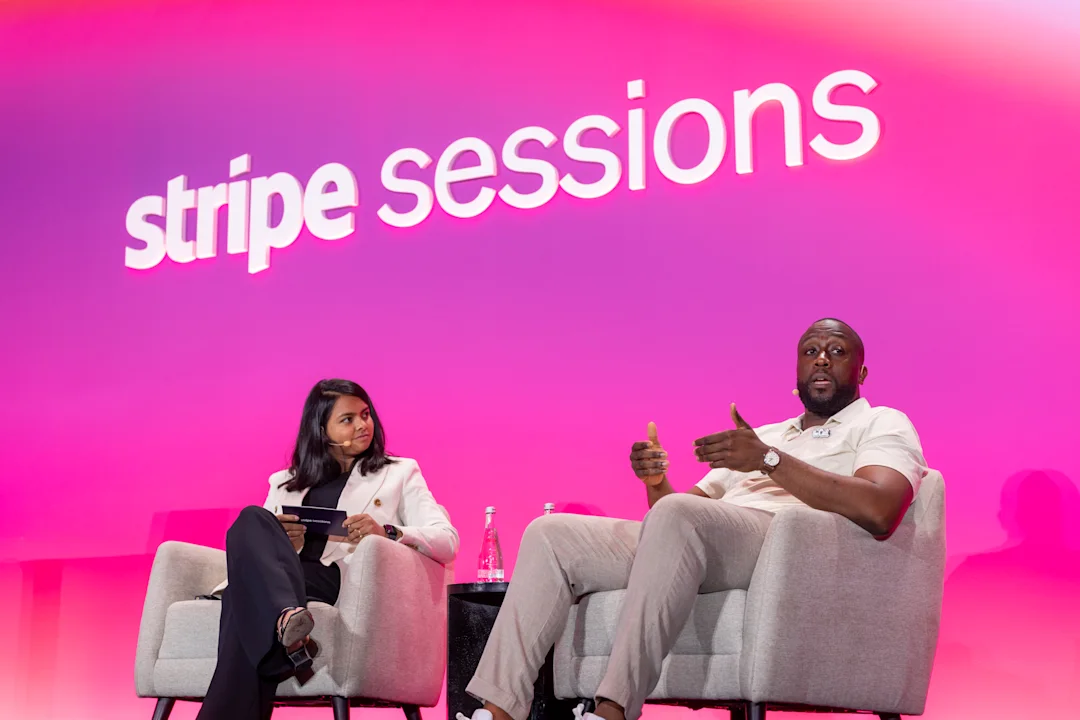
WHITNEY LARSEN: Thank you. I work on products that support marketplaces, mainly payouts and other capabilities to move money globally. One of the reasons I love this work is because I’m fascinated by how ubiquitous marketplaces have become. In one week, I used six marketplaces, from transportation and tickets, to delivery, and dog sitting, to travel, and clothing resale. Marketplaces like these are so woven into our day-to-day that our lives would be noticeably different without them. But what really drew me to this work is the infrastructure underneath. Powering global multiparty business models is genuinely complex, and that’s why we built Connect to orchestrate payments, payouts, onboarding, tax, compliance, and so much more. Connect now powers 16,000 platforms and marketplaces with 11 million connected accounts. That’s millions of sellers, service providers, creators getting paid on Stripe every single day. And the numbers back it up. Marketplaces are growing six times faster than traditional ecommerce. And by next year, marketplaces will account for two-thirds of online sales.
And this is why we’re seeing enterprise businesses like Nuuly, Toyota, and even the PGA stand up completely new business lines to connect customers with sellers and service providers. We’re also seeing SaaS businesses like Figma launch app marketplaces, and even AI platforms like ElevenLabs connect brands with creators in their ecosystem. So the real question isn’t whether marketplaces will continue to grow. It’s how they will evolve.
And we see three big shifts ahead. First, AI is going to reshape how customers discover and buy on marketplaces. Next, embedded finance will transform marketplaces into financial ecosystems of their own. And lastly, borderless rails will continue to drive marketplace growth, but faster, cheaper, borderless rails will create new opportunities.
Let me show you what Stripe is building to support these shifts. We’ll start with AI. So one in four Americans use AI to shop and agents convert at over four times the rate of traditional ecommerce. But at six months in, we’re still in the early stages. And here’s the challenge: every new AI shopping surface, whether it’s ChatGPT, Perplexity, and whatever comes next, could require a new integration. That’s not scalable. So we’re building an Agentic Commerce Suite that lets marketplaces build once and sell everywhere with a single integration, not multiple endpoints. And this enables you to do four things. First, you can make your inventory discoverable by agents across protocols. Second, you can check out across agents. Third, you can protect against new AI-initiated fraud patterns. And lastly, you can accept agentic payments using Shared Payment Tokens.
Now let’s talk about embedded finance. Marketplaces aren’t just connecting buyers and sellers anymore. They’re really becoming their own financial ecosystems by monetizing the economic activity that’s already happening on their platforms. And this is especially true for payouts, which have historically been a cost center and operational headache. Embedded finance turns these payouts into a revenue line. 87% of marketplaces have told us that instant payouts are critical for seller retention. And the embedded finance opportunity is enormous. It’s on track to reach $7 trillion by 2030. And for years, Stripe has offered embedded finance through instant access to earnings, lending, and card issuing. And now we’re adding embeddable wallets for marketplaces.
Depop, who you’re going to hear from shortly, are in the early stages of offering their own wallet so sellers can respend earnings on the marketplace. Because transfers happen instantly on the marketplace, interchange fees drop and seller loyalty goes up. And the stored funds, those can be monetized. Now, what if that wallet worked beyond just the one marketplace? You can imagine a SeatGeek wallet that includes merch credits at the venue or a DoorDash wallet that works for delivery and for buying coffee down the street. That’s the vision. Wallets that make the marketplace the center of gravity for economic activity. So one wallet, more share of spending, all on your marketplace.
And lastly, let’s talk about expansion. 67% of marketplaces have plans to expand to new countries in the next year. So the appetite is there, but the infrastructure really needs to keep up. And this is why we’ve improved and expanded our cross-border capabilities on Connect. With cross-border payouts, we keep you out of the flow of funds and compliant. We’ve also expanded to 30 new countries with more on the horizon. And lastly, for any marketplaces that sell in Europe, we know PSD3 is top of mind for you. We’re in the early stages of allowing you to settle funds from other payments providers to Stripe, then use those same funds to pay out to your connected accounts while keeping you compliant.
But the real accelerator here is stablecoins. 79% of marketplaces are interested in having the ability to pay out in cryptocurrencies. That’s not a niche. And this is why we’re launching the largest expansion of Connect coverage in years. Marketplaces in the US and Europe will be able to onboard sellers across more than 100 countries and then pay out in stablecoins. Here’s how it works: so today your marketplace accepts payments in dollars, and it used to be a five or so day process for earnings to settle in a seller’s bank account. But with stablecoins, this flow is instant once the marketplace has received the funds. Let me show you.
So Stripe converts those dollars into stablecoins using Bridge’s Orchestration layer. The stablecoins are moved instantly into a seller’s connected account, and then from there, sellers can instantly access their earnings through an external crypto wallet, or sellers can offramp the funds to their bank account in their local fiat currency in just a day. Faster, cheaper, and completely borderless. So now that we’ve covered where marketplaces are heading, from AI to embedded finance, to borderless expansion, the best way to hear and understand these shifts is to hear it from the people building the future right now. So with that, I’d like to welcome three marketplace leaders from Depop, DoorDash, and SeatGeek, alongside our product lead for marketplaces at Stripe. Thank you.
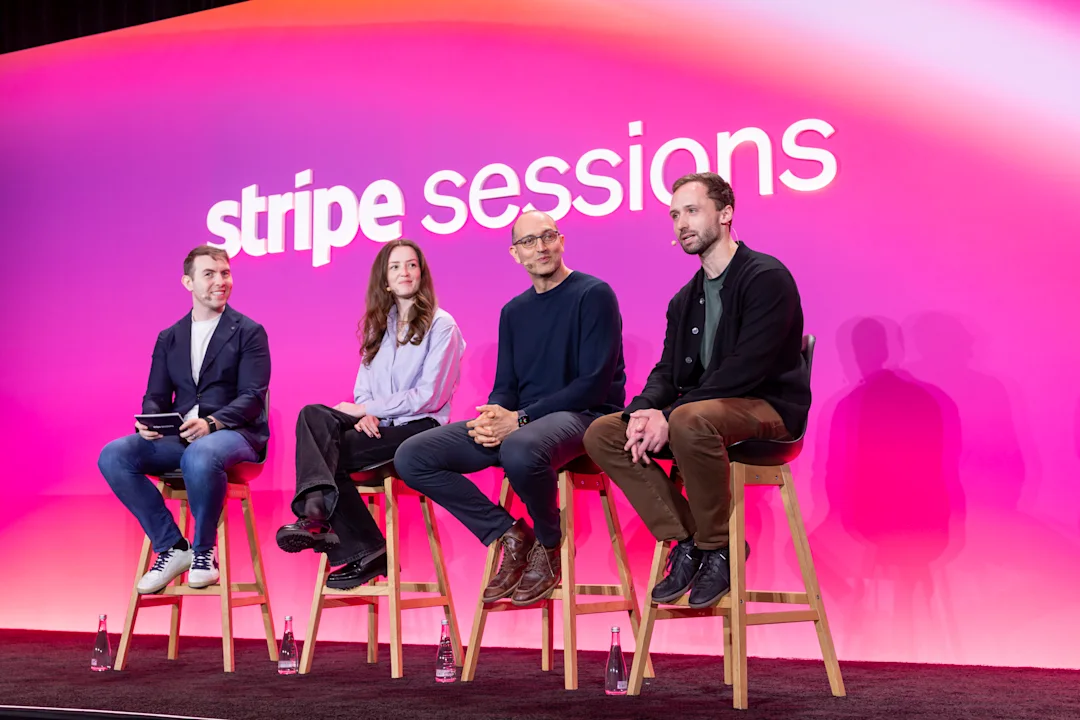
TIMOTHY GLYNN: Good afternoon, folks. I’m Timothy Glynn, product lead for marketplaces at Stripe. And one of the best parts about my job is that every day I get to work with some of the most innovative companies in such an exciting space. With that, I’m delighted to welcome Rebecca from Depop, Chris from SeatGeek, and A.J. from DoorDash. Starting with you, Rebecca, can each of you please introduce yourselves?
REBECCA PHILLIPS: Yeah, of course. I’m Rebecca Phillips and I look after payments at Depop. Depop’s a fashion resale marketplace, and we’re helping people to discover, buy, and sell secondhand fashion.
CHRIS SANGER: Hey there. My name is Chris Sanger, and I run payments for SeatGeek. SeatGeek’s a live event marketplace, and we also provide a primary platform, ticketing platform for clients, arenas, and stadiums.
A.J. TUS: And hey all, A.J. Tus. I work at DoorDash. Some folks in the audience may know us as Wolt or Deliveroo in markets abroad. I look after our payments and fintech business.
TIMOTHY GLYNN: Excellent. So to kick us off today, we’re going to have a little fun and play an icebreaker game. I’m going to name four technologies and I’m going to ask each of our guests to rate them either as overrated, accurately rated, or underrated. And then afterwards, we will dig into the rationale during the course of our discussion. The four technologies we’re going to cover are agentic commerce, stablecoins, instant payouts, and embedded finance. Let’s kick off with agentic commerce.
REBECCA PHILLIPS: I go first. I think it has to be accurately... Yeah, accurately rated.
CHRIS SANGER: I say overrated.
A.J. TUS: I’ll agree with Chris and say overrated.
TIMOTHY GLYNN: Okay. Some variety on the hottest topic in the industry. Let’s keep going. Stablecoin.
REBECCA PHILLIPS: Overrated, I’m afraid.
CHRIS SANGER: I’ll say overrated.
A.J. TUS: I’ll agree with both my colleagues and say a bit overrated.
TIMOTHY GLYNN: Another hot topic, but more consensus on this one. Instant payouts?
REBECCA PHILLIPS: Maybe more contentiously also overrated.
CHRIS SANGER: I’d say accurately rated.
A.J. TUS: Underrated.
TIMOTHY GLYNN: Mixed opinions. Okay. This is good. Maybe there’s some business model nuance there. Wallets and embedded finance.
REBECCA PHILLIPS: Underrated, 100%.
CHRIS SANGER: I would say underrated.
A.J. TUS: I’ll say fairly rated.
TIMOTHY GLYNN: This one seems like there’s excitement. Okay. So let’s dig into some deep dives. AI. AI is on almost every business leader’s mind at the moment. Chris, I might start with you. You mentioned that you thought agentic commerce was overrated, but I know in some of our conversations you’ve also mentioned that you think there’s some potential in search. Can you tell us more?
CHRIS SANGER: Yeah, absolutely. So I think for everyone that was in the keynote yesterday, and I think most of us were, Kevin Miller talked about agentic commerce being a continuum from discovery to selection and then to purchase. And I think in that continuum from discovery through automated purchase, I think the most interesting section right now is really at the top of the funnel. So for us, I think it’s going to be a while before all of us are actually making high-value purchases or delegating those purchasing decisions to agents at our favorite LLM, decisions that generally typically require consideration, thought, trust.
What I do know is that millions of people today are searching in context of discovery on ChatGPT, on Gemini, on other agentic interfaces, and they’re searching for open-ended questions. They’re searching for questions like, “What should I do this weekend? Where’s my favorite band playing?” For those types of questions, we absolutely want SeatGeek to be our events, our listenings to be front and center. So that feels much more relevant and proximate now. So that’s where I’d say that I think that’s underappreciated. The actual commerce transaction will get there. If you’re not discovered though, I think that the purchase is going to be pretty difficult for you. And so all brands need to be thinking about that.
REBECCA PHILLIPS: Yeah. I mean, I have to say, I completely agree with you. It’s going to be really interesting to see discovery pathways broaden. At Depop, when we think about scaling with AI, we are putting a lot of emphasis on how can we retain that individual-feeling experience, especially in this new world, that individuality, finding those unique items, and how can we really continue to hold onto that feeling and that experience?
A.J. TUS: Yeah. I really agree with Chris and Rebecca. I think as users of these products, it’s really easy to start thinking about where this goes in terms of buying things in commerce. And I think it’s safe to say there’s probably some fellow payments nerds in the audience here that immediately jump to solutioning, like how the transaction will actually work. But at DoorDash, we’re thinking about that first piece. How does discovery work? How do we actually bring folks into our flow and make sure that we’re capturing the transaction properly? I have some great colleagues here with me and the audience who are actively thinking about those questions. That’s where we’re focusing on today, and then we’ll start thinking about the payment solutioning.
TIMOTHY GLYNN: Great. Let’s move to stablecoins, an area all of you said was overrated. A.J., I do know that DoorDash are thinking about some projects here with our Tempo team. Can you tell us more?
A.J. TUS: We are. And I don’t want to temper the work myself and the team are doing in the stablecoin space with my answer that this space can feel a bit overrated. Similar to the last topic, I think it’s very easy to jump to the solutioning, and a lot of folks in the audience have probably had that pain point of a really slow or clunky transaction. And the promise of stablecoins bringing much less friction to those experiences is great. We’re particularly excited around our payouts experiences for our merchants and our Dashers, thinking about how we can make those easier, faster, lower cost over time. And so we’re excited to partner with Stripe and the Tempo team to think through how we can bring this new technology into that space.
TIMOTHY GLYNN: Chris, how does that track for you?
CHRIS SANGER: Yeah. I mean, I think from our perspective or from my perspective, when I think about stablecoin, I’m looking at our marketplace. We’re predominantly North America. We do have some, but limited cross-border money movement. So really until there’s consumer demand, I think just at this point, I’m not sure that the incremental volume or economics outweigh the added complexity of on- and offramps.
TIMOTHY GLYNN: Yeah, I think that’s a really good point. I think there’s a lot of geographic nuance to how early it is and how appropriate it is for everyone’s business. So instant payouts we have next, a topic that I’m personally excited about, and all of you heard from Whitney earlier that 87% of marketplaces see this as being key for retention, but you heard from our guests some mixed opinions. A.J., I might come back to you. You said that this was underrated.
A.J. TUS: Yeah, absolutely. I think instant payouts is a topic that maybe doesn’t get as much love at events like these. It’s not as much of a buzzword as some of the other topics. I’ve had the fortune at DoorDash my time here to travel around, meet with different merchants and Dashers who are part of our platform, and just these basic things about, hey, how do you get that payout a day or two earlier makes a real difference in that individual or that business’s life. And so I think it’s important to, again, talk to your users, think through how can I make their life a little bit easier? How can I reduce some of that friction? And we’ve seen a lot of progress in what instant payouts has been able to deliver to those audiences.
TIMOTHY GLYNN: Chris, can you tell us what you think about this?
CHRIS SANGER: Yeah. I said accurately rated. I agree with A.J. I think there’s absolutely value for faster payouts, especially when your livelihood depends on it, like gig economy workers. In the context of SeatGeek and live event ticketing, I would say that the use case resonates most if you’re a professional seller. If you’re a professional seller and you’re moving tons of tickets all the time, you’re buying and selling tickets, that’s a capital-intensive business to be in and access to cash means buying power. So I think there, I think there’s definitely room and interest in faster payments. I will also say though that faster payments is as much about trust as it is liquidity. So right now with the professional sellers that we trust the most, they’re generally getting paid out fast anyway and their priorities are more at predictability, reporting, some other things there. I think that on the consumer side, consumer sellers, if you’re selling a couple times a year, maybe because you couldn’t make a show and you want to recoup the funds because you spent a lot on that ticket, there’s I think a little bit less sensitivity. So I do think that the use case is relevant and we’ll explore it, but I wouldn’t overweight it in priority at this point for our marketplace.
TIMOTHY GLYNN: Rebecca, how does that track for you?
REBECCA PHILLIPS: Yeah, I mean, I’d said underrated and... Oh, sorry. No, I’d said overrated. So I think Depop, although we have some similar dynamics with having business-type sellers, we also have a lot of casual sellers. And I think inherently when you’re thinking about instant payouts, you’re thinking about moving money out of your platform as quickly as possible. And where we see a really big opportunity is actually in thinking about different things such as allowing a seller to respend their funds on the platform. And I guess that’s where wallets come in.
TIMOTHY GLYNN: Yeah. Very nice segue. Rebecca, obviously you and I and our team’s been working very closely on the wallet project, and I personally found it very interesting to see how much of an impact this is making in terms of trust and retention. Can you tell the audience a little bit more?
REBECCA PHILLIPS: Yeah, of course. So as a peer-to-peer fashion marketplace, we see a lot of organic overlap in buyers and sellers, and that presents a really clear opportunity for us to align those user experiences. So whilst we’ve been thinking about that, we’ve also been doing a lot of deep discovery into our seller payments needs. And what we’ve started to find is that actually trust and flexibility resonate far more deeply with our sellers than just speed of payouts. So then when you take those two things together, this organic overlap in both sides of our marketplace, and you add in this desire for flexibility and control, it’s painted a really clear picture that the ability to hold funds on our marketplace and give sellers the choice, whether they want to withdraw or whether they want to spend, is really shaping the future of what Depop’s payments experience is going to be.
TIMOTHY GLYNN: A.J., I know at one point you were also thinking about wallets and you’ve also got a host of financial services at DoorDash. Can you say more?
A.J. TUS: We are. Yeah. As we look at our marketplace, we really have three user groups: our consumers, our merchants, and our Dashers. And when we look at those user groups, each of them are already kind of coming to DoorDash with a financial need. Consumers want to buy things. Our merchants want to make incremental revenue. Our Dashers are looking for incremental earnings. And so we see that as a really natural entry point to consider, what are other financial services that can help their needs and might be relevant to offer. And so we are actively thinking through for each user group what products make sense. On the wallet front, we focused on our Dashers. We’ve designed a program called Crimson, that’s a bank account product the Dasher can adopt. It allows them to get paid out instantly after every Dash, again on the instant payouts front, a lot of value just from that feature, but then that becomes a platform to offer other relevant financial services. So we’re excited about that product and we’re actively thinking about what makes sense for our other audiences as well.
TIMOTHY GLYNN: Chris, how have you and the SeatGeek team been thinking about it?
CHRIS SANGER: Yeah. So embedded payments, I think just a little bit of context, not only do we have the fan marketplace, but we’re also providing software to our rights holders. So in the business, when we’re providing ticketing software to teams, we’ve found that coupling ticketing software with payments, embedding payments rather, provides a win-win. We can provide unique value that’s beyond the ticket. So what does that look like? For fans, that looks like we can create a seamless customer journey from the point of sale, from the purchase, to fulfillment, to scanning in at an arena, and then at an arena being able to have some sort of loaded value. That’s the kind of thing that we’re interested now in exploring is just what are the additional use cases we can do beyond just the ticket. And that’s just for fans and we can support the whole thing. It’s a unified support.
We own the transaction lifecycle and that’s a much less-fragmented experience for anyone that’s bought tickets. I think most people will appreciate a less fragmented, unified experience. In addition for our clients, our professional teams that we provide software to, having event-level visibility into money flows allows us to do things like split settlements into different bank accounts, depending on what the event type is. So you can have cash for your team, for your concerts, for your monster truck extravaganzas, whatever you have, like whatever content you’re putting on. We can also reconcile everything back to the sale, all the cash back to the sale. So we also are able to share more data, especially if we’re providing loaded value at the venue, we can provide more insights there and data. Who scanned into the arena, what was bought? And of course for SeatGeek could also, it’s another stream for us in addition to ticketing.
TIMOTHY GLYNN: Great. A lot of really good insight there. The less fragmented, the better. I like that one as well. So we’ve covered a lot of ground from AI to stablecoins, embedded finance as well. To close us out, what is the biggest insight you would like to share with the audience? I might start with A.J. on this one.
A.J. TUS: Yeah. I think coming to events like this, Stripe Sessions, I love being able to connect with colleagues and learn what some of our partners are building and new technology that’s coming out. If there’s one insight I’d leave the group with, it’s make sure you also listen to your customers. It’s easy to see the latest and greatest financial technology that’s coming out and immediately jump to, “Hey, what solution am I going to build and deploy?” But if you focus on just also chatting with your customers about the needs, they’ll tell you what they need. It might be the latest and greatest. It might be something that’s just sitting on the shelf, making sure that you are actually solutioning for them as opposed to just falling in love with a solution that is of personal interest. I think that’s critical as you build and scale these types of financial products.
TIMOTHY GLYNN: Chris?
CHRIS SANGER: Yeah. I would say that in addition to all of the amazing products that we’re talking about, the new, I think there’s quite a bit of energy and focus on just core payments. So things that we’re rolling out just this week, we’re rolling out PayPal, a new way to pay and get paid for our fans. We’re also interested in managing transaction expense, sending more data to our issuers, making sure that we can improve auth rates. These are core payments things, but things that are tangible and things that we will be working on and essentially getting the fruit of that work. So yeah, I’d leave it there.
TIMOTHY GLYNN: Great. Rebecca, how about you?
REBECCA PHILLIPS: Yeah, I mean, I think we often ask ourselves questions like, “How might we drive discovery to increase checkout conversion, and how might we make seller payouts faster?” And I wonder if maybe the question that we should be asking ourselves is how we can speed up the velocity of payments within our ecosystem.
TIMOTHY GLYNN: Great. Well, A.J., Rebecca, Chris, thank you very much for a great discussion and thank you to all of you for joining us today. Awesome.
A.J. TUS: Thank you.