Checkout, BNPL, and agentic commerce: What’s changing
Charting the future of payments
Laufzeit
Füllen Sie das Formular aus, um das ganze Video zu sehen
Businesses across the Stripe ecosystem are using buy now, pay later (BNPL) payment methods to increase conversion, unify online and in-store checkout, and expand globally with flexible financing. In this session, Affirm shares what’s working and why, drawing on examples from Stripe. You’ll also see how agents are changing the way purchase decisions happen, and why real-time, transaction-based financing is becoming central to the future of checkout.
Speakers
Vishal Kapoor, SVP, Product, Affirm
Tim Smith, Global Head of Customer Success, Stripe
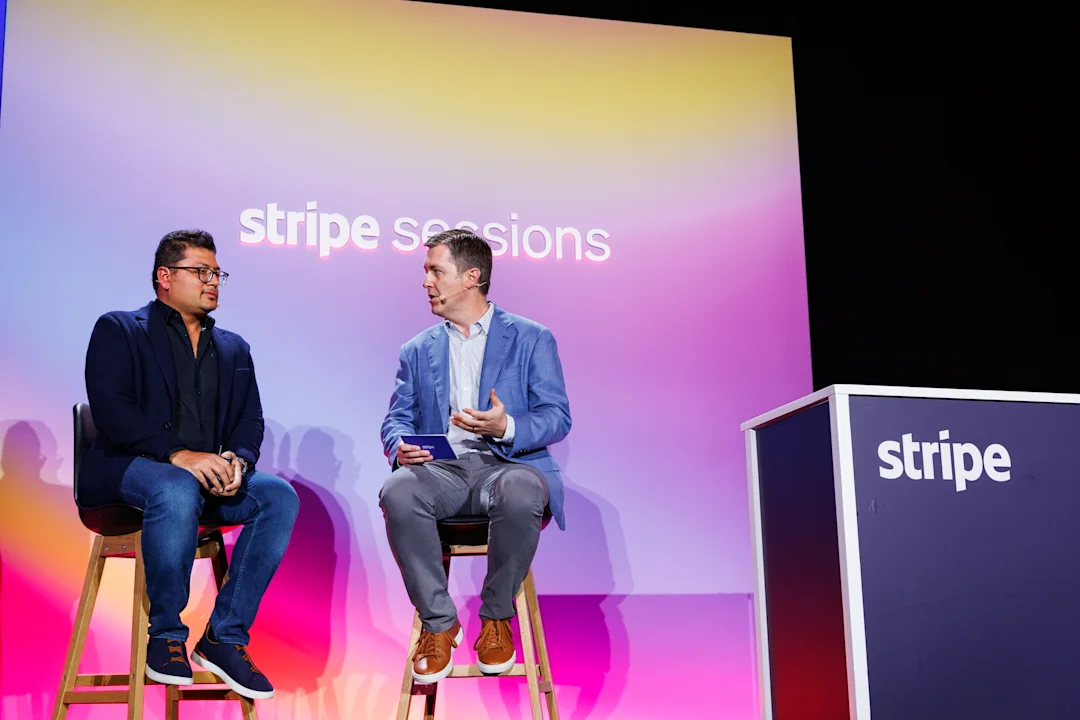
TIM SMITH: All right. Welcome and good afternoon. I’m Tim Smith. I run the global customer success team at Stripe, and I’m here with Vishal Kapoor, who’s the SVP of product at Affirm. He leads all of the product across merchant, consumer, platform, and really all the things we’re been working on, even including agentic. So really happy to have you here today. I’d love to just start, maybe you could do a top of mind. What are you thinking about right now?
VISHAL KAPOOR: Well, first of all, thank you for having me. This is a full house.
TIM SMITH: Yeah, it’s great.
VISHAL KAPOOR: There’s a lot of interest in the subject. What’s top of mind for us? If I say, “Agentic,” will I get booed or maybe yays? No, it’s not actually agentic. I will take a different tact on this topic, which is consumer sentiment is very much top of mind for us. So we at Affirm have been on this mission to reinvent finance and modern credit from the ground up because one of the core beliefs that we have is that credit is broken for many. And so on that mission, over the last 15 years or so, we have seen many ups and downs on consumer sentiment. And right now we are seeing that consumer sentiment is actually at one of its lowest points.
And the customer is getting more deliberate. So that’s like one thing that is top of mind. The second thing that is a corollary of that is that BNPL has moved from being just a feature to a network, and we are seeing a lot more secular demand for this kind of product because it’s more discretionary for customers, and it gives back control to them. And the last one is the partnership with Stripe. We have built a lot of stuff, and what is top of mind is like what all can we be building together to deliver the value for both consumers and merchants together with Stripe.
TIM SMITH: That’s great. That’s a great list. So in this session, we’re going to walk through six different areas. We’re going to talk about what’s going on with consumers. What do we see around conversion trends today? What the best Stripe merchants are doing with our solutions together? What about AI is going to change all this in the coming years, and where we’re going together in our partnership. And then we’ll close out with some mindset shift topics. Maybe we’ll go back to the basics, right? Which is, I think we remember at the advent of BNPL, I think people didn’t think it was going to be real. They thought maybe it was a flash in the pan. It’s just for like a subset of young consumers that don’t have credit records, and they don’t want to have a credit card. And so it was just viewed as this alternative thing, and it was a flash in a pan, and it wasn’t going to work.
But it’s come so far since then. And I think as a merchant, there was this time a few years ago where you would, you’re like, “All right, I got to make my one pick. Who’s it going to be? And then this is my decision forever.” And I think what has changed is like, these operate much more like a network now. So you’re not just getting access to one set of consumers. It comes with all the relationships that they have. The adoption is much broader. The demographic is not as narrow as it was before. You’re actually seeing these show up in way more categories than you used to see them show up. So it’s been a huge change. And I think most of the merchants in the room know this, but I’d like to just go back to the basics. What do you see that is really changing in recent years around purchasing and checkout decisions on BNPL?
VISHAL KAPOOR: Yeah. I think your point about being a gimmick actually is a really good one because even before I started at Affirm, long before—and I have the receipts to prove this—I bought a Casper mattress, and I thought it was a scam because I was like, “Why would someone give me 0%?” For whatever I was getting. I was getting 24 months, 0%. I’m like, “This seems I shouldn’t enter my details in this particular box.” But then someone said, “Okay, this is true. I’ve used it.” I’m like, “Okay, phew, this is the real thing.” And the company started on that basic premise that considered purchases, people want to actually take decisions and finance them over a period of time. The concept of lending is not new. It’s as old as time. But the way that Affirm has actually executed is the differentiator because we look at every single transaction and underwrite it based on the consumer’s creditworthiness.
And so, that transition—let it sit for a second—from gimmick to an actual network, didn’t happen overnight. It happened because consumers, like me, found religion and then used it more and more. I actually want to know, how many in this room have used Affirm in the last 12 months? I’m taking a leap of faith here. Okay, that’s pretty decent. And you are potentially in the outlier group of high-FICO, which I’ll talk about in a second. But our product is serving the greater American population, and we have about 25 million actives right now. And what we notice in the consumer is, as I was saying earlier, the sentiment is shifting for the negative. Every spring feels like déjà vu to me. There’s something or the other from pandemic to Ukraine to tariffs to gas prices to war. It just is like every single spring, people come back from vacation, and there’s something or the other happening. And the markets rebound. They’re actually all-time high. But the consumer sentiments stay where they were, and they go lower and lower. So I think that is very, very top of mind.
TIM SMITH: And it’s like a little counterintuitive because I think at every turn, people have said, “Oh, these shifts are going to push people away from these payment methods.” And actually it’s like driving more consumers than ever to work with Affirm, which has been a huge countertrend.
VISHAL KAPOOR: That’s exactly what we noticed. When consumer sentiment goes down, when people are uncertain, they look for confidence, and that is what Affirm gives back to them, and clarity and relevance. And what we have seen in that particular era that we are living in, is that as the confidence is going lower, we do a lot of surveys and University of Michigan actually does one as well—75 years old—they’re seeing the lowest point in the curve right now. 65% of middle Americans are saying that, middle-income Americans, are saying that they’re delaying or deferring a purchase of a larger size, and then about 59% are saying that they’re reluctant to take on more debt, as the economy doesn’t really serve their needs.
TIM SMITH: Yeah. The one other thing I want to ask you about that I don’t think we’ve really mentioned either is like some of the network effect, and the like, these aren’t one-time conversion effects. These are also you bringing consumers back for repeat purchases. You are using your app to drive your consumers into the merchants and just like, what do you see the response to that?
VISHAL KAPOOR: Tremendous. So if you go and look at the app store, Affirm is one of the top shopping apps, which is a little bit interesting because people are actually coming to the Affirm app in tens of millions, actually, actives, to look for the best financing offer that they can find for their particular purchases. So it’s both a discovery, but it’s the affordability that they’re showing up for. The other amazing stat that I like to throw on as a party trick is that about 70% of our consumers are either prime or near prime, which is also counterintuitive because when it started, as you were alluding to, people were like, “Okay, maybe these folks don’t have alternatives, and they don’t have any other access. So we are providing access.” In fact, we are also, in addition to access, we are providing, as I said, relevant, clear terms that they’re not seeing other places.
TIM SMITH: Yeah, super helpful. So we talk about, we know consumers sometimes have hesitation around certain kinds of purchases like the, you want to buy the TV or some piece of electronics, or like more and more, it’s like moving into services and other areas. And so, the buying decision, like we’ve always thought about what I pay with as like it’s a checkout problem, right? But I think the funnel has really expanded beyond that. So can you talk a little bit about like, what are you seeing in the like full funnel that moves the hesitation into conversion?
VISHAL KAPOOR: Yeah. So, if affordability is top of mind, if you look at the consumer sentiment, the secular trend is that customers are very budget-conscious in terms of what they’re actually trying to buy. And “Can I afford it?” is a top-level question that we are seeing that really translates into either an anxious customer trying to find the best price or the best deal they can get. That’s one angle. Or a confident customer that shows up to a website knowing, “I can afford X. I know I will get these terms at the end of the checkout journey. I’m going to take the plunge because I’m confident, and the terms that I’ll see are going to be more relevant.” So what turns uncertainty into certainty is confidence and relevance, and Affirm does both for the customers, which is the key job to be done. And when we see that shine is actually when the merchants are taking that into their own base and enabling Affirm a funnel, so when people see As-Low-As messaging, as they enter the website, and we see that secular trend across a host of different merchants, many of them on our joint network, be it SeatGeek, who is doing ticketing and considered purchases for experiences, where customers are looking at World Cup is a thing that is coming up. “Can I afford it? Should I go?” They’re using Affirm to buy things on SeatGeek, and we see an average order value twice as much on SeatGeek versus when Affirm is not offered.
TIM SMITH: And from what I read about those tickets, you pretty much need Affirm to get them.
VISHAL KAPOOR: More and more so. As someone who actually did buy some World Cup tickets, it’s very expensive, and affordability, again, is top concern even for myself. And I’m like, Affirm is a really good way for me to pay for these tickets. But the secular trend goes to other use cases, right? So another interesting thing we’re seeing is through GlossGenius, we are seeing things to Tekmetric, which is a local auto shop. So it’s not just singular merchants, it’s platforms, it’s SaaS providers, it’s across a host of different surfaces and modalities. And what we see is that someone who might need their hair done every six months or someone who has an immediate urgent auto matter, these are all places where consumers are shaky, and they’re not certain. And if they see Affirm available, they’re like, “Okay, I know what I’m spending, and why am I spending this.”
TIM SMITH: Nice. And I know for the payments people in the room, they’re like big on statistics. So any good statistics on what this drives?
VISHAL KAPOOR: So as I said, on SeatGeek, 2X more AOV, and you can actually see that in the A/B testing that we have done jointly.
TIM SMITH: That’s huge.
VISHAL KAPOOR: On GlossGenius, we are seeing 4X more sales. On Tekmetric, again, the AOV is expanding as well as conversion is expanding. So one key takeaway for everyone in the room is that when Affirm is present versus not, the conversion is higher, secularly in all the places, as well as the average order value is higher, secularly in all the places, and that is the key reason for enabling Affirm on a particular platform—
TIM SMITH: Totally. And we know in this like the K-shaped economy that we all hear about, that like top-line growth in a responsible way is like the big thing at the moment. And so, this is a tool you can use to drive that. All right. So yeah, coming off talking about hesitation and conversion, I guess zooming out a level, like just real tactically, like the best merchants are optimizing beyond checkout, they’re thinking the whole path to purchase. So, what are the most effective Stripe users doing up-funnel?
VISHAL KAPOOR: Yeah. We are seeing, actually, a lot of interesting ways that merchants are enabling Affirm and testing and also sharing the data back. One consistent thing is to show the Affirm ALA messaging—As-Low-As messaging—as early as possible so the customers feel very confident walking into that particular journey. So that is very important because we believe that the purchase decisions are happening much, much earlier in the discovery process—the affordability thing that we were just discussing. So that is like a one very, very, very good and well known best practice. The other one is consistency. So making sure that if you have multiple omnichannel products—and shout out to Stripe, we are the one and only BNPL on Terminal right now. So if you have in-store, as an example, if you have online, if you have other sales assisted channels, all the places where Affirm is found, that just brings the consistency of the experience up-front. And then the power of the network.
So I alluded to it in the beginning. So Affirm has 25 million+ active customers, which means in the trailing 12 months, they have taken out a loan with us. All those customers are actually repeating in a much more deterministic fashion. So we have about 6 TPUs—it’s growing every year, 20% or 30%, depending on how you want to count it. All those customers are waiting to see the Affirm logo on any of these websites. So when Affirm shows up, these customers look at it, they know what to expect, they know there’s no late fees, it’s broken down—that drives positive behavior. 90%, another stat, 90% of our total network is repeating on the network in any given year, that means that the GMV is produced by 90% repeat usage, that, for all the product people in the room, means stickiness, product love, and a lot of these things are virtuously increasing over time.
TIM SMITH: Totally. And I think the terminal thing is interesting because it really, it’s like network, bordering on loyalty, of like your Affirm consumers are showing up, and they’re seeing that as like a sign of this being a merchant I want to work with.
VISHAL KAPOOR: That’s right. And payment acceptance mark, I mean for all the payments folks in the room, is a very, very aspirational but true part of being a network, truly, where if you’re walking into a store, you don’t see your particular payment method, you’re like, “Ah, maybe I’m not going to consummate that purchase.”
TIM SMITH: Totally.
VISHAL KAPOOR: And so that is like the brand that is associated with having Affirm on these particular merchants and websites. The last thing I’ll also add from the best practices is that zero percents really, really work. So in our last earnings, we talked about 0%; 60% of new customers that are coming into the network—there’s the 10% that is the new ones—60% of them actually scaffolded on a 0% deal. So they’re seeing a 0% as an attractive offer. They’re taking up on it, and then they’re using Affirm for other purposes.
And then we are also seeing that merchants are actually using 0% deals to make sure that they can offer specific conversion-driving growth levers for their customers because instead of doing price discounting, they can just use zero as a way to actually give them a better deal. And we are seeing, we just did a 0% Day[s] [event] in October, and we saw a big uplift of new customers, high-FICO customers. Our card product actually took off and thousands of merchants actually subsidized the zeros. And then it was so popular and so effective that we are going to do another one in May right now. So that’s another way that merchants can actually use the power of zeros to attract new customers, convert them, and make sure that they stay on the network.
TIM SMITH: That’s incredible. All right. Well, we’ve reached the point where we need to talk about AI. It’s obviously that we’re required in any session, and agentic in particular. Everybody’s familiar with the Gartner Hype Cycle, where you hit the early peak, and then the thing’s going to change the world, and then the trough of disillusionment, this is like never going to work, and then it becomes productive. I feel like on agentic commerce, we’ve done the whole Gartner Hype Cycle, and it only took like two weeks, and we’re like going back through it again. It’s like fastest cycle time ever. So yeah, I think everybody was like bullish six months ago. We were all going to stop shopping, and just agents were just going to buy everything, and it was going to happen immediately, which obviously that’s not how these journeys go because we’re still humans. But I think, so some people got a little bearish, but I think, I know at Stripe and Affirm, we’re like long on this, like this is going to happen, and we’re going to have to go figure out all the nuances of it.
But I think it’s not only like how I shop, how it’s AI-driven. Kevin had like the sliders this morning on this of how far I go on these things, but it’s also like how payment options get surfaced. It’s about experience and the checkout. And so, why should the merchants in this room still be paying attention to this? And what are the things they should be doing now that are really going to put them in the right place when this cycles through again?
VISHAL KAPOOR: First of all, I’m really proud of us for waiting half the session to talk about agentic.
TIM SMITH: It took a lot of restraint.
VISHAL KAPOOR: I know. Like, we’re jumping into it. But jokes aside, I actually, at one of the dinners I had with Tim, I was mentioning that my first agentic experience with shopping was Subscribe & Save because I have a little one at home, and I just said, “I need all of these baby supplies, and it just comes, and that’s my agent that is doing the work for us.” But in the hype cycle, a lot of tokens have been burned, and we are now here to talk about where we are in the cycle. And I think the merchants are right in the room to be going from one side of the spectrum to the other because we have talked a bunch of things. But as you were mentioning, we are both, as companies, very long on this because we do believe that the mechanical work about shopping is going to go away.
So if you take shopping as a pleasure activity, a need activity, or a mechanical one, the mechanical work will go away. So the act of finding the best price or finding the best product, which size, which color, I think a lot of that work will be done by some kind of agent in the future. I think we can all agree to that. Beyond that, what’s the taste? What are you going to actually be influenced with? And most importantly, for Affirm, we are building affordability as the layer in the AI agentic world. And the reason is that for the 15 years that have been present, we have been actually working towards this future that was now going to come in the sense that we have a data-preserving, message-passing network that sees the entire spectrum of who said what at what point in the journey, in all this multifaceted ways.
And, right now, the best part of Affirm, because we can do real time underwriting, is that we can take all that power and translate that into affordability, which in this agentic workflow, is going to become even more important because I think you heard Ginger talk about it as well. If you think about policy, like what are the people going to be putting? It’s like, “I want this thing at that price. I don’t want this at that. I just want to give this mandate.” That’s where Affirm actually can translate that intent into actually budgeting because once you have found the best thing, and you want to actually ask the agent to do the shopping for you, you actually want to know what can you afford? That question doesn’t go away. That question actually becomes even more important in a world where you’re giving a lot of the control to a thing that you don’t know exactly what are they going to pull the trigger on.
TIM SMITH: And we all have a mental model around this, right? All of us where we’re like, “I’m at the grocery store, I’m going to use my debit card, and I have this splurgy purchase, and I’m going to wait till I get my tax refund or whatever.” We’ve all programmed it in. It almost becomes a subconscious. This almost requires us to think a little bit more about it as consumers, and these tools are going to have to adapt to the way that we shop and know that a certain purchase might be a, this will be an Affirm purchase because it’s of this dollar value, and here’s what I’m going to wait to do it, or I’m going to do it now.
VISHAL KAPOOR: And that is another good part of where the agents, when they’re doing the shopping on your behalf, they’re going to be looking at what terms. So, for companies who have clear terms, and the agents can actually do the compute part of it, it’s like, “This is going to cost you this much in that much amount of time.” They will surface those options much earlier and much smoother to the customers versus how much does a credit card that revolves on 25% APR for a coffee going to cost you? That’s a very difficult question because it depends on a lot of different variables, and those things are probably going to get hidden if you ask the question, “How much is this particular thing going to cost me over next six months?”
TIM SMITH: It is interesting because you think about for agentic to really get unlocked, the concept of identity has to become quite strong. And you’ve seen some of the demos we’ve done, but Affirm is inherently a payment method that’s tightly linked to identity, right? Whereas a card has some identity, but it’s like what’s printed on the card. I’ve got to log in, and you know who I am, and you probably have a cookie, and all these other things, and that’s going to be really important in the context of a agentic transaction over time.
VISHAL KAPOOR: That’s right. And that goes back to the data-preserving, vertically integrated part because we know exactly, “Tim is on this website trying to buy this particular item.” This is the previous history because 90% of folks are repeats. What have you seen before? What can we offer? What is the relevant offer that you will see that will convert? And that, all data actually is very, very pertinent in the agentic workflows because they’re also going to be doing the similar things.
TIM SMITH: Absolutely.
VISHAL KAPOOR: Actually, this is my cue to ask you because you had a layup for me. I’m going to ask you, we have talked a lot about payments where it’s heading, even the keynote even today. How do you perceive the partnership that Stripe and Affirm have formed over many, many years, and what are you excited about when you look through the looking glass a little bit?
TIM SMITH: Yeah. I mean, I think the beauty about this is that… I remember I started at Stripe in 2019, and it was so interesting because outside the US, there were all these payment methods you could use. And in America, you had cards and ACH. And cards are good. ACH is not great. It doesn’t really work for anything. And we just didn’t have much diversity. And so then I think as BNPLs come in, it’s been really interesting, and we have a bunch of merchants who want to try it. And the biggest challenge is like, for 10 years ago, everybody had their own homegrown customized checkout, and then it worked good. But then if you wanted to change it, right? It’s like, oh, this will be like a six month engineering cycle. And then it’s like a thing where it’s like, well, it’d be this cycle, but I don’t even know how much consumer demand am I going to get for this, and is it worth it? What will the ROI be?
And so I think this is where our partnership really works. Stripe has this Optimized Checkout Suite and you saw the Checkout studio that we announced this morning, which is like, I don’t know, I think we have like several hundred engineers that build Checkout. And I would say we probably have one of the very best checkouts in the world. And the idea that you can just go in the Dashboard and flip a switch and turn on Affirm. And it can be tied to eligibility around MCCs, or you can choose when it’s presented, or we can dynamically present it for you. We actually have the machine learning on who are the consumers likely to use this. And so when I go back to that, the conversation in 2019 and 2020, is like when can I put this on my engineering roadmap?
If you’re using any of the Checkout tools that Stripe has, whether it’s Optimized Checkout Suite, payment element, Checkout Sessions, we have a hosted Checkout, you can just flip those on with a switch. And so that’s where I see our partnership really works. And somebody from Affirm might’ve been talking to that merchant and again, the roadmap problem. So we can do that together. And then we also showed this morning, we’ve got the A/B testing capability. So again, I can go from like, “I’m curious what the ROI looks like on Affirm” to… “I’m testing it with a population of my users” within days, and then going big, it’s just a flip of a switch to keep going. And so, for me, that’s like, I’m a customer success leader. I work with our biggest users, and they’re all looking for ways to drive more growth, drive more GMV, get more merchants on their platform, if they’re a SaaS platform company. And so there are very few things I have to offer them that are like this easy.
So that’s probably the biggest thing for me. And then I look at the things we’re building like fraud tooling is super important. As we get into agentic, we’re really trying to make agentic work in a way that’s like, if you’ve already done an integration with Stripe, you probably already have 80% or 90% of the context we need about you to go do agentic. And then Affirm is just going to be part of that solution with Stripe. So I love that. Anytime it doesn’t… I know we can vibe code a lot of things, but I think anything that doesn’t have to go on the eng roadmap and can drive revenue and conversion, like I’m going to be pretty happy about.
So I love that part of the partnership. I love that it’s simple. I love that you don’t need to sign another contract. You can just do it. And so that’s part of what really makes the partnership work.
VISHAL KAPOOR: And well said. And on the agentic part, in some ways you were alluding to when you joined, cards and ACH for the de facto, similar to Affirm, right? We, in some ways, are still retrofitting a lot of our technology based on current networks and current technology stack. With agentic, we feel we have an opportunity to actually redo some of the wrongs from the ground up. And Stripe has been an amazing partner to actually think about some of the protocols. And we talked a little bit in the keynote as well with like, how do we redefine this from the ground up? How do we build the right protections? How do we get the right value? And the beauty about working with tech companies together is that we can actually start thinking through from first principles on, where we working backwards from, where are some of these things that the customers have been feeling the pain from a card network perspective, and then how can agentic actually take a leap forward rather than trying to retrofit a lot of these things together?
TIM SMITH: Yeah. I think one thing that you guys don’t even really see is, in this agentic cycle, we’ve built a lot of things and some with you guys, and some of it works, and some of it we just like throw in the garbage and start again, and because that’s like how fast the cycle is moving. And I think when we find the things that click, those are the things we’re going to bring to you so that you can just get that speed and ability to move quickly.
VISHAL KAPOOR: Excellent.
TIM SMITH: Yeah.
VISHAL KAPOOR: Last thing I was going to say on the agentic part before we move on to the closing thoughts: merchants are also facing this kind of existential issue, is like, is my brand going to get disintermediated? Am I just going to be a feature inside an LLM at some point? Is shopping going to take part in a different part of the network? And we fundamentally believe that brands are going to be even more important. In a world where LLMs are doing the mechanical work, as I said before, the brand equity of a particular brand is going to be the number one thing. And that is what Affirm and Stripe can actually help do is like brand integrity. I talked a bunch about offering the best value to our customers together, and that is where the agentic future actually shines a spotlight into what are the merchants doing in that world because the translation of everything gets commoditized, as you were saying, we don’t shop anymore. That’s not going to happen, but when the mechanical things get put on the side, what does the brand actually stand for? Are you a good customer support? Do you have great people who are actually saying positive things about you in the ether because agents are going to pick up all of that, including what the experience with Stripe and Affirm is, and start to give people honest answers on this brand, this payment method, this and that is going to be good.
TIM SMITH: Yeah. It’s interesting. I had a conversation with ecommerce provider and journalism, formerly newspaper, online news org. And it kind of made me realize in the agentic world, all merchants are basically content creators, is like a thing I hadn’t really thought about before. And I think that’s like, we’re fundamentally promerchant, and we want you guys to be successful. And I think we realize like surfacing all that goodness that everybody’s been building has got to be a core part of the agentic journey. That’s when it’ll really click. It’s the catalog stuff.
VISHAL KAPOOR: I was going to say, that came up actually in one of the CAB. I sit on the Stripe CAB, and that was a great conversation we had with like, in this new world, the content is actually the more important part. The mechanical stuff will actually start getting in the site.
TIM SMITH: Totally. All right. Well, we’re down to our closing question, which is just, what’s the one mindset shift merchants should make heading into the next phase?
VISHAL KAPOOR: Yeah. I think just to wrap a lot of these things that we’ve talked about, previously, in the old world, if BNPL was a feature at the end of the checkout, that has all shifted dramatically, right? So checkout is not the starting point. It’s actually the end of the journey, as you all know. And so the winning merchants are using BNPL as a capability because Affirm is a network. It has many, many millions of active customers. How do you actually target them and bring into your particular website because demand generation is not the issue, it’s the conversion, because of consumer confidence, which is plateauing and declining, how does Affirm help you convert? So I think that is one. And I think the key question for all of us is that as agentic takes shape, what are all the things that will get reimagined, but what are the things that will then get more in the spotlight?
And in that world, what customers have been craving for for a long time is to give them actually the honest truth about financing. That is where agents will know that, the humans-in-the-loop will know that, the platforms will know that. And so, you as the merchant, one thing you can do is just do your research on, BNPL is not a commodity. It does increase conversion, but which BNPL is helping your customers, not charging you late fees, not actually taking compounding interest, giving them upfront pricing? These are all things that we think are good concepts, but they’re going to become imminently, profoundly consequential concepts in this agentic world. So that’s the other word. And the last one is success in this new world will come by showing up and doing the right things for the customers because as all the fog separates out, be it normal ecom, be it in-store, be it agentic, be it something else that we are using, I think that the key value prop for customers is, “Can I afford this?” And if you can answer that question for them as front as possible, you have actually won a customer for life, because their anxiety, their uncertainty, their low confidence is going to turn into actual a winning customer and a loyal customer for life.
TIM SMITH: Great. Thanks for that. So just two things to take away: one, the consumer has changed. This is not what we were dealing with six or seven years ago. And so, they want clarity, that’s how you get to conversion. And the last thing is just really thinking about that the rails for this are expanding dramatically. It’s not just ecommerce. It’s things like terminals, so card present, platforms where you distribute your products, and then agentic are all going to change the way that your end consumers and buyers buy. So really appreciate you joining us today. If anybody has any questions, you can catch us up at the front here when we’re done, but thank you so much.
VISHAL KAPOOR: Thank you.